The most expensive instrument on this shelf and the only one with a pedal that follows the travel of a foot: a cabinet piano with the PHA-4 Standard keyboard, SuperNATURAL sound, 3D headphone ambience and a bench included.
What it amounts to The one piano here with a pedal that reads how far the foot has gone, and the only one that does anything about headphone fatigue. It is also furniture at nearly five times the price of the next instrument on this shelf, and it does not publish how many pedals it has.
A PHA-4 Standard keyboard. A Progressive Damper Action pedal. SuperNATURAL piano sound. 3D Ambience for headphones. Bluetooth audio. A traditional cabinet with front legs, a hidden-icon display, a BNC-05 height-adjustable bench and three months of Pianote lessons.
Three of those are unique on this shelf.
The progressive pedal is the one that changes playing. On most digital pianos the damper is a switch — sustain on, sustain off. A progressive pedal reads how far the foot has pressed, so a note can be half-damped, which is how a pianist shapes a legato line and the thing that is impossible on a switch. Seven pianos on this shelf, and this is the only one published as progressive. A cabinet piano here publishes three real pedals and does not say whether any of them reads travel.
3D headphone ambience is the second, and it answers a real complaint. Headphones put the piano inside the head, which is nothing like sitting at one, and an hour of it is tiring. Roland processes the output so it seems to come from in front. It is the only headphone processing published on this shelf, and late practice is the usual reason a digital piano is bought at all.
Bluetooth audio is the third: a phone plays into the instrument, so a backing track and the piano share one set of speakers at one volume.
The bench matters more than it reads. Height-adjustable, included, and the only bench on this shelf besides one bundle’s. Posture at a piano is decided by the seat, not the instrument.
What it costs is the obvious thing. At $1,759.99 this is nearly five times the next piano on this shelf and more than twice the most expensive portable. It is furniture: it assembles, it stays, and it does not travel. The page for the other cabinet piano here puts both halves of that trade plainly — a cabinet does not move while you play, and it is the wrong answer if it ever has to be carried.
And what it does not publish: a pedal count, where the other cabinet piano publishes three; a polyphony figure, which no piano on this shelf publishes; and a speaker specification.
The product record gives 45,813 g (1616 oz).
Availability
Read on the day this page was built: $1760 at the American Amazon shop.
Read from Keepa on the day this page was last revised; stock and price both move without notice.
Prices quoted in this text were read on 2026-10-07. The live price is at the top of the page.
In its favor, and its limits
Strengths
The only pedal on this shelf published as progressive — half-pedalling works rather than being on or off
The only 3D headphone ambience and the only Bluetooth audio here
A height-adjustable bench is included, and three months of lessons with it
Compromises
The most expensive instrument on this shelf by a wide margin, and it is furniture that does not travel
No pedal count published, where a cabinet piano here publishes three
No polyphony, as with every piano on this shelf
Specifications
Keys
PHA-4 Standard keyboard, which Roland states gives all the feel and touch of an acoustic piano
Pedal
A Progressive Damper Action pedal — the only pedal on this shelf published as following the travel of the foot rather than switching
Sound
SuperNATURAL Piano technology. The FP-10 on this shelf publishes the same engine family
Headphones
3D Ambience for headphone practice — the only headphone processing published on this shelf
Wireless
Bluetooth audio, to play along from a phone — the only Bluetooth on this shelf
Cabinet
A traditional cabinet with front legs. One other piano on this shelf is a fixed cabinet; the rest are portable
Included
A BNC-05 height-adjustable bench, and three months of Pianote lessons
Display
Icons hidden when not in use, for a clear front panel
Polyphony
Roland puts nothing in writing on this. No piano on this shelf publishes one
Pedal count
Roland publishes the damper action and not a count. The Arius on this shelf publishes three pedals
Manufacturer reference
RP701-DR
Amazon reference
B08S8W45HZ
EAN
0761294516423
The questions players ask
What does a Progressive Damper Action pedal change?
Half-pedalling. On most digital pianos the damper pedal is a switch: the sustain is on or off. A progressive pedal reads how far the foot has pressed, so a note can be partly damped — which is how a pianist actually plays a legato line. It is the only pedal on this shelf published as progressive. A cabinet piano here publishes three real pedals and does not say whether they are progressive, and the portable pianos publish a footswitch or a pedal without qualifying it.
Is 3D ambience a gimmick?
It addresses a genuine problem. Headphones put the sound inside the head, which is nothing like sitting at a piano in a room, and over an hour that is tiring. Roland processes the output so it appears to come from in front and around. Whether it works is a judgment; what can be said is that it is the only headphone processing published on this shelf, and that late practice is the main reason a digital piano is bought in the first place.
This one’s price among music instruments and gear
Details checked on October 7, 2026.
Who should pick this one, among music instruments and gear
A piano with a permanent place in a room, where the pedal and the headphone practice matter as much as the keys.
Sources
Specifications: the manufacturer sheet for musical instruments and gear and the matching Amazon product page. Prices and availability: Keepa. Every figure on this page names its source.
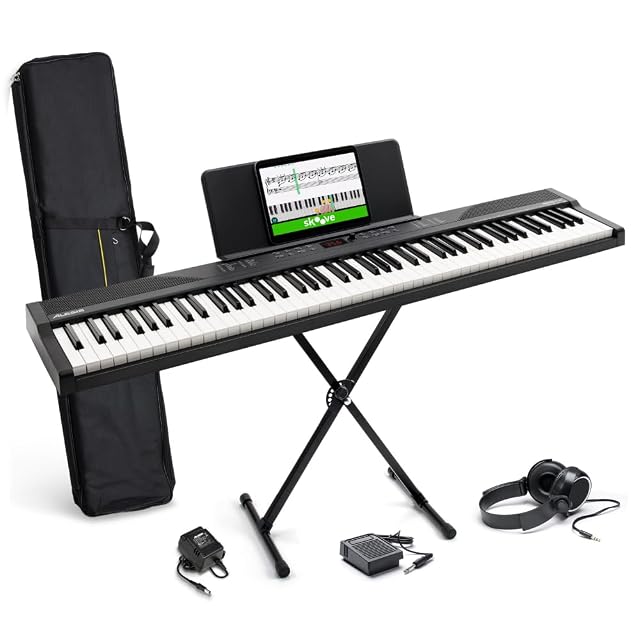
88 touch-sensitive keys · 480 sounds · full accessory bundle
Not a weighted piano and not sold as one: 88 full-size touch-sensitive keys, 480 sounds, and a bundle that includes the stand, pedal, headphones, bag and adapter. The most complete box in this group.
Best for: A first instrument for someone who is not yet sure they will keep playing.
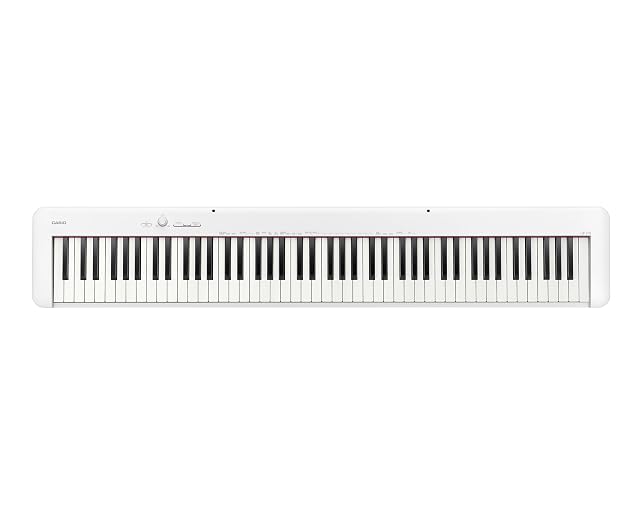
88 weighted keys · 10 sounds · pedal and stand included
A slim 88-key board with Casio’s Scaled Hammer Action II and, unusually at this price, the SP-3 pedal, music rest and power adapter already in the box. Ten sounds rather than hundreds — the money went into the keys.
Best for: A first weighted piano where the pedal and adapter should not be a second order.
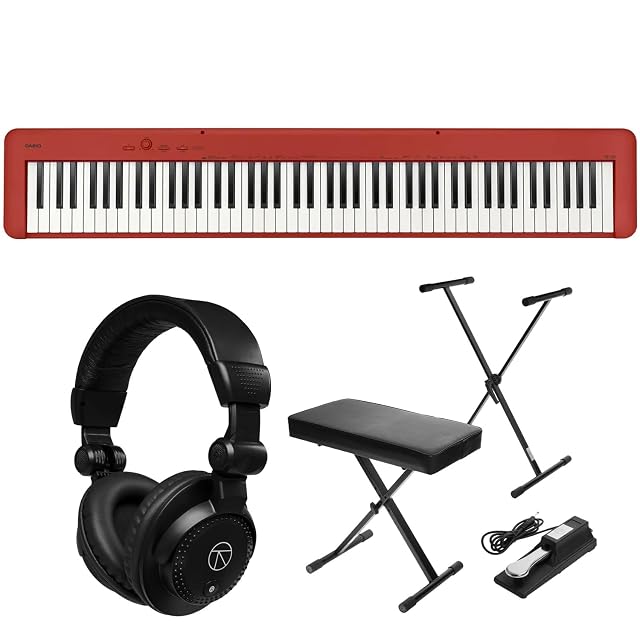
88 keys with touch response · 13 hours on batteries · 23.1 lb · stand and bench in the bundle
A bundle rather than an instrument alone: the CDP-S160 with a stand, a bench, a pedal, a music stand, an adapter and headphones — and the only piano here to publish a battery life and a weight.
Best for: A first piano that has to arrive complete, stand and bench included, and be carried occasionally.