Skip to content

The best tuners and metronomes for 2026

A clip-on tuner reads the vibration of the instrument and therefore works in a noisy room, which is why it has replaced the microphone-based tuner almost everywhere. Accuracy is stated in cents — ±1 cent is ample for guitar, ±0.1 cent is for intonation work — and the specifications that matter beyond it are calibration range, support for flat and alternate tunings, and whether the display can be read from the playing position. Pedal tuners add one question of their own: true bypass, and whether the signal passes through untouched when the tuner is off.

What we recommend

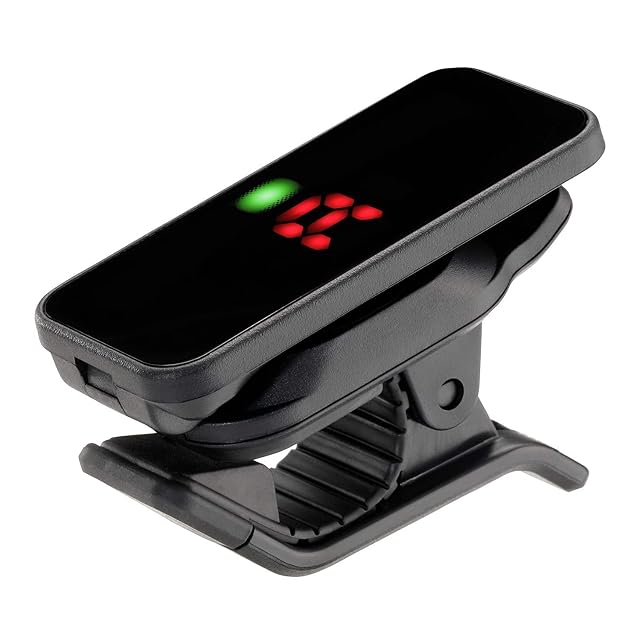
  1. Korg Pitchclip PC-2 clip-on tuner attached to a guitar headstock

    Korg Pitchclip PC-2

    Korg’s compact clip-on tuner. It clamps to the headstock and reads string vibration through the wood, which makes it immune to the noise of a room full of other people tuning.

    Type
    Clip-on, vibration sensing
    Mount
    Headstock clamp
    Brand
    Korg — a tuning reference brand
    Amazon reference
    B07DZRSV54 (identical on 5 markets)
    EAN
    4959112179103
    • Works in a noisy room, which no microphone-based tuner does
    • Korg has been making tuners longer than most of this catalog’s brands have existed
    • A clip-on cannot tune a wind instrument or a voice — there is nothing to clip it to

    Best for: Guitar and bass, especially anywhere other people are also tuning.
    Search Amazon for this model
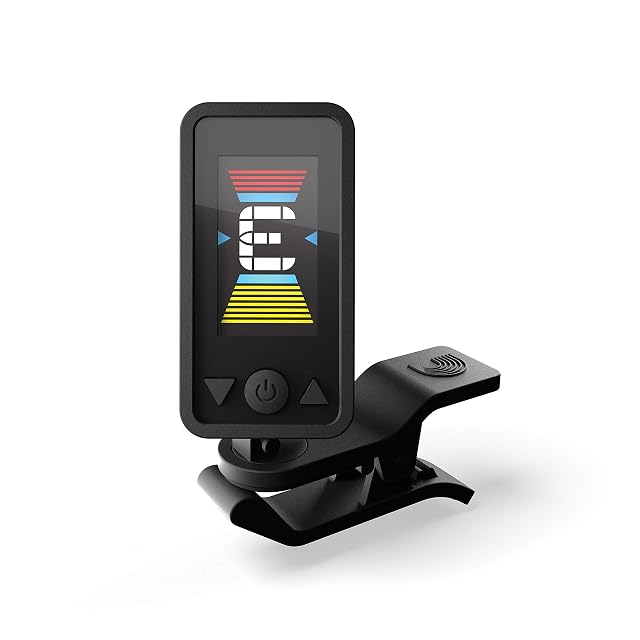
  2. D'Addario Eclipse clip-on guitar tuner in black

    D'Addario Eclipse Clip Tuner

    A compact clip-on tuner with a display that rotates to face the player. At eighteen dollars on the American store, it is among the cheapest things in this catalog that improves how an instrument sounds.

    Type
    Clip-on tuner
    Display
    Rotating, for reading from the playing position
    Use
    Guitar and bass
    Amazon reference
    B01IBI88R4 (identical on 6 markets)
    EAN
    0019954191580
    • Eighteen dollars on the American store, with almost no spread across the six measured
    • The rotating display means it is readable whether you are sitting or standing
    • No stated accuracy figure in the listing, so none is reported here

    Best for: A first tuner, a spare tuner, or the one that lives in the case.

    ≈ $18
    Check price on Amazon

Need by need, within tuners & metronomes

Playing in tune and in time

A tuner and a metronome cost a few dollars and fix the two flaws a listener hears most.

D'Addario Eclipse Clip Tuner

Not eating a battery per rehearsal

A tuner left switched on turns up dead on the day of the gig. The stated battery life and auto-off are what save carrying a spare cell in every pocket.

D'Addario Eclipse Clip Tuner

Who each family suits, across tuners & metronomes

Guitar and bass
A clip-on tuner reads the vibration of the wood and works in a noisy room. The most practical format.
Wind and classical string instruments
A microphone tuner picks up the sound and requires quiet. The format for instruments you cannot clip onto.
Rhythm work
The metronome is the most thankless and the most effective tool for improving. Nothing really replaces it.

What you gain and what you give up, on tuners & metronomes

Clip-on tuner against microphone tuner
The clip-on ignores ambient noise and only works where you can attach it. The microphone picks up everything, including what you do not want.
App against dedicated device
An app is free and depends on the phone’s mic and the ambient noise. A clip-on tuner is more reliable in rehearsal.
Mechanical metronome against electronic
The mechanical winds up, never breaks down and does one steady tempo. The electronic offers subdivisions and compound time.

Frequent questions on tuners & metronomes

Clip-on or microphone tuner?

The clip-on works in noise by reading the instrument’s vibration; the microphone picks up the sound and requires quiet.

Is an app enough?

At home, often yes. In rehearsal or on stage, ambient noise makes it unusable where a clip-on still works.

How often should I tune?

Every session, and several times during it on an instrument with new strings or after a change of temperature.

What is the reference pitch?

The reference frequency the tuner is set to. The standard value suits almost every case, but it is adjustable.

Should I practice with a metronome?

It is the most effective tool for building a steady tempo, and the most thankless. Nothing really replaces it.

At what tempo should I work a difficult passage?

Slowly enough to play it without mistakes, then up in small steps. Working too fast installs the errors.

Can a metronome hurt musicality?

Working exclusively to a metronome can stiffen the playing. It is there to build steadiness, not to replace musical breathing.

Does a tuner show sharps and flats?

Chromatic models show all twelve notes and allow open or half-step-down tunings. A non-chromatic tuner only knows the six standard strings.

What stays with you, on tuners & metronomes

A clip-on tuner works in noise where an app fails: that is what counts in rehearsal. The metronome is the most thankless and most effective tool — work slowly enough to play without mistakes, then move up in steps.