Skip to content

The best guitar and bass amps for 2026

For home use, the two numbers that matter on an amp are not the ones printed largest. Stated power tells you very little across different circuit types; speaker size and the presence of a headphone or line output tell you whether the amp is usable in a flat. An amp with a speaker-emulated headphone socket can be played at any hour; one without means the volume knob is the only control you have. We compare stated power, speaker diameter, channel and effects counts, headphone output, and whether a USB or line output allows recording straight into a computer.

The models we recommend

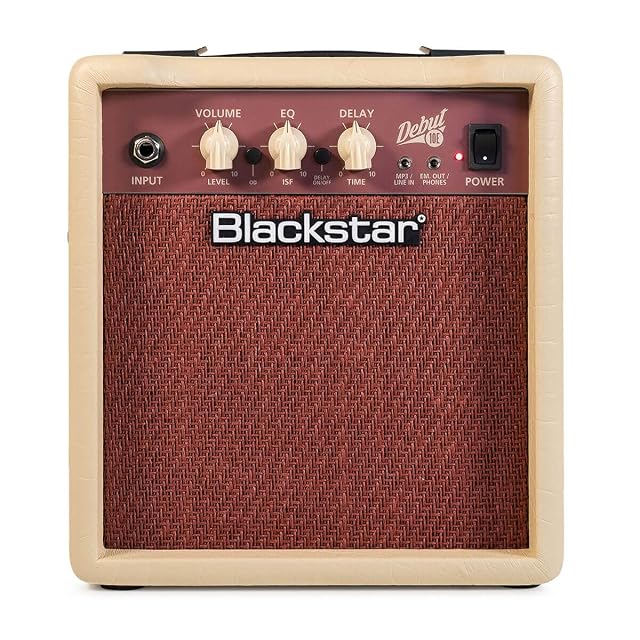
  1. Blackstar Debut 10E

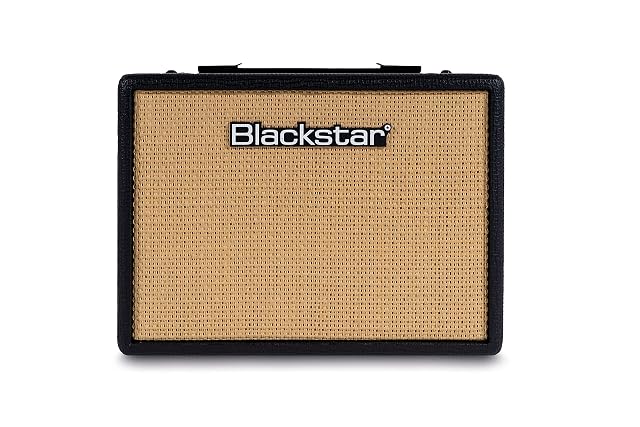
    10 W · ISF tone control · tape delay · headphone and line in

    The same 10 W class as the Fender, with two things it does not have: Blackstar’s ISF control, which sweeps between British and American voicings, and a built-in tape-style delay.

    Best for: A first amp for someone who already knows they want effects.

    7.2/10

    ≈ $120

  2. Fender Frontman 10G

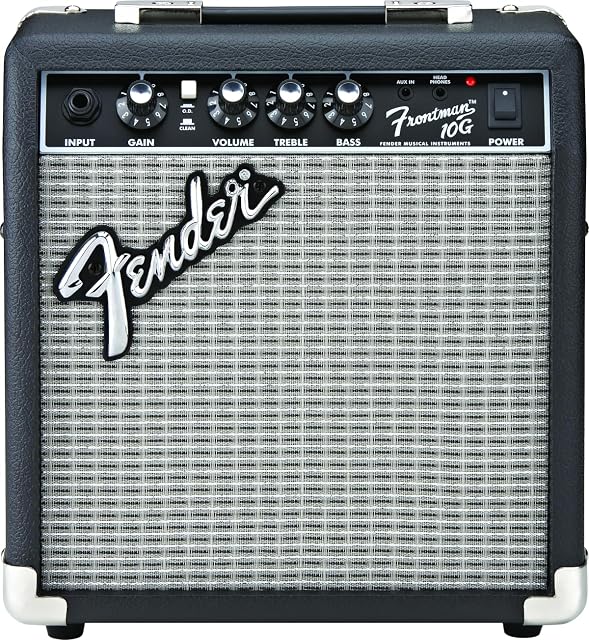
    10 W · 6" speaker · gain and overdrive switch · headphone jack

    The practice amp that ships inside half the guitar packs on the market, sold on its own: 10 W through a 6-inch speaker, a gain control, an overdrive switch and a headphone socket.

    Best for: The first amplifier, or a spare to leave permanently plugged in somewhere.

    7.2/10

  3. Coolmusic DM20

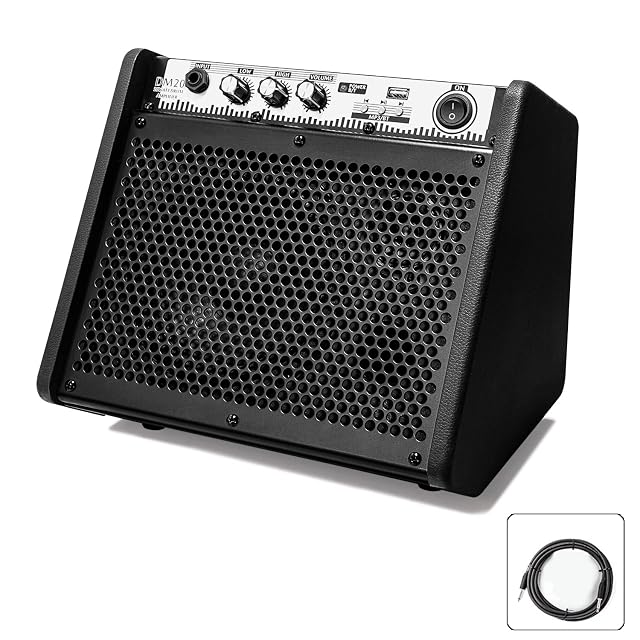
    20 W · 6.5 in woofer and 2.5 in tweeter · LOW and HIGH tone controls · 286 × 246 × 236 mm (11.3 × 9.69 × 9.29 in)

    A twenty-watt personal monitor for an electronic kit or a keyboard, with two published driver sizes, separate bass and treble controls, a slanted cabinet aimed at a seated player, and its own dimensions and weight in writing.

    Best for: A seated player — an electronic kit or a keyboard — who needs to hear themselves in a bedroom and play along to a phone.

  4. Blackstar Debut 15E

    15 W · ISF · delay · headphone and line in

    The 15 W Blackstar: the same ISF control and built-in delay as the Debut 10E, with half again as much power for a room that is bigger than a bedroom.

    Best for: A living-room amp that still has to be usable in headphones at night.

    7.8/10

  5. Coolmusic SB-122

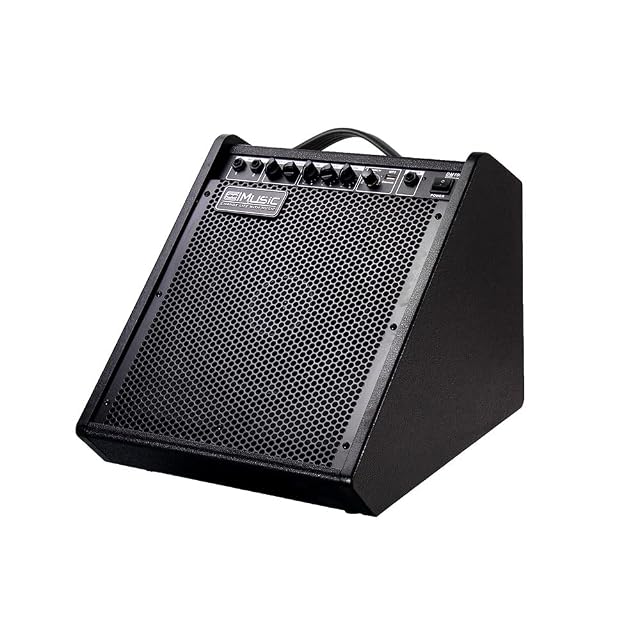
    100 W · 10 in woofer and 3 in tweeter, coaxial · DI out · 3-band EQ · two channels

    One hundred watts through a coaxial 10-inch woofer and 3-inch tweeter, with two instrument channels, a three-band EQ and the only DI output on this shelf — which is what takes an electronic kit from a bedroom to a stage.

    Best for: An electronic kit that has to be heard in a rehearsal room and sent to a desk at the same time.

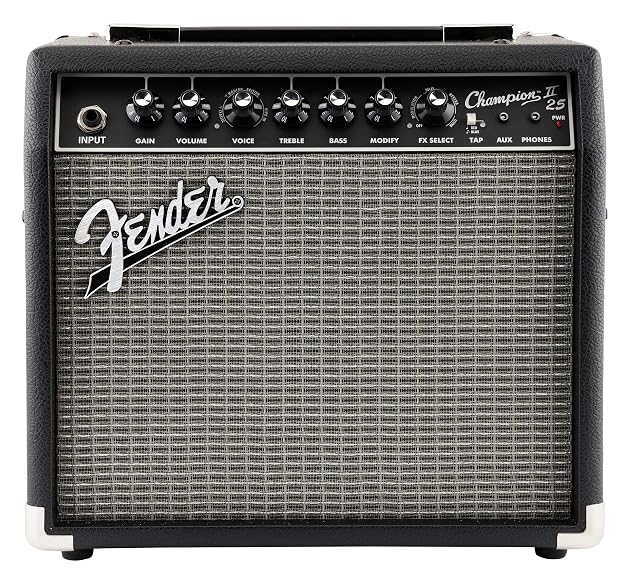
  6. Fender Champion II 25

    25 W · 8" Fender speaker · built-in effects · TAP tempo

    The step up from a practice amp: 25 W through an 8-inch Fender Special Design speaker, Fender clean and overdrive voices plus British and modern distortions, and a proper effects section with tap tempo.

    Best for: A second amp, or a first one for somebody who intends to play with other people.

    8.4/10

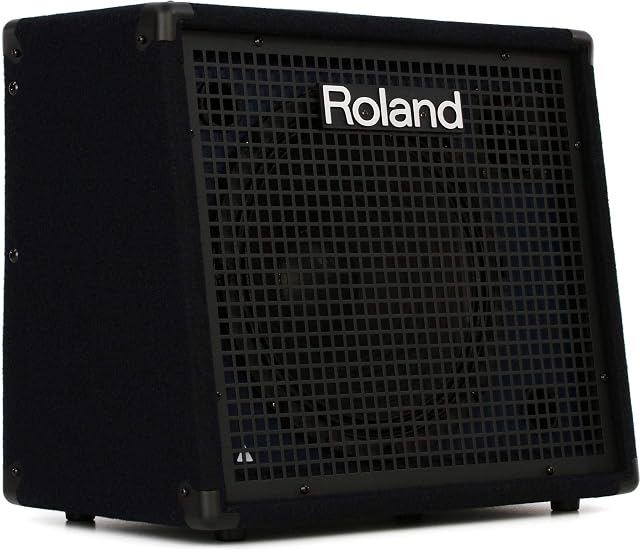
  7. Roland KC-200

    100 W · 12 in woofer · four line channels · XLR mic input · metal jacks

    A keyboard amplifier with a mixer built in: four quarter-inch line channels, an XLR microphone input, a dedicated monitor channel for click and guide tracks, a 12-inch woofer and metal jacks throughout.

    Best for: A keyboard player who performs: four sources, a microphone, a click in one ear and a line out to the desk.

Need by need, within guitar & bass amps

Playing in a band

Power decides whether you can be heard over a drum kit. Below a certain threshold, the amp distorts before it gets loud enough.

Coolmusic SB-122

Practicing at home

A small amp reaches its good sound at a volume a flat can bear. A big amp sounds bad below a certain level.

Blackstar Debut 10E

Being carried to the car single-handed

A thirty-watt valve combo weighs over twenty kilos, and nobody carries that twice a week. The stated weight decides how many dates get accepted.

Fender Champion II 25

Who each family suits, across guitar & bass amps

Practice at home
A handful of watts is ample and lets you reach the sound you want without shaking the walls. The headphone output is a decisive criterion.
Band and stage
You need headroom above an acoustic drum kit. An amp at the limit of what it can do distorts where you do not want it to.
Sound exploration
Modeling amps offer several amps and effects in one box. The best possibilities-to-price ratio available today.

What you gain and what you give up, on guitar & bass amps

Power against usable volume
A powerful amp needs volume to give its best sound, which makes it unusable in a flat. Louder is not better at home.
Valves against transistors
Valves react to your playing and need periodic replacement; transistors are stable, lighter and less alive. Modeling now blurs that boundary.
Built-in effects against pedals
Built-in effects save buying pedals and adjust less finely. Pedals cost more and are replaced one at a time.

Frequent questions on guitar & bass amps

What power for playing at home?

Few watts are enough. An over-powerful amp never reaches the volume at which it sounds good, which is frustrating in use.

Do I need a valve amp?

Valves have a response to playing that many people seek. They weigh more, cost more and need periodic replacement.

Is the headphone output important?

For practicing in a flat or in the evening, it is often the decisive criterion. It lets you play at the sound you want without disturbing anyone.

Can a guitar go into a bass amp?

That direction is harmless, unlike the reverse. The sound will simply lack brightness.

What is an overdrive channel for?

Getting distortion without turning the volume all the way up. That is what makes overdrive available at a reasonable level.

What is a modeling amp?

A digital amp that reproduces the behavior of several amps and cabinets. The most versatile format for a given budget.

Do I need a separate cabinet?

Combos have everything built in and are enough in the vast majority of cases. Separate heads and cabinets belong to more specialized use.

The amp gets hot — is that normal?

Valve amps get very hot and must be ventilated. Unusual heat on a transistor amp does deserve attention.

What stays with you, on guitar & bass amps

More powerful is not better at home: a big amp only sounds right at a volume a flat cannot take. The headphone output is often the decisive criterion, and an overdrive channel gets you distortion without pushing the volume.

Summed up: guitar & bass amps

  • Highest figure for power: Roland KC-200 (100 W, with Roland stating a redesigned power amp and power supply for stability and bass reproduction).

The full table of guitar & bass amps

A column is opened only if four devices in five publish the figure. Below that, it would set blanks against blanks.

ModelPricePower
Blackstar Debut 10E$12010 W
Blackstar Debut 15E—15 W
Coolmusic DM20—20 W
Coolmusic SB-122—100 W — one of two amplifiers on this shelf at this power
Fender Champion II 25—25 W
Fender Frontman 10G—10 W
Roland KC-200—100 W, with Roland stating a redesigned power amp and power supply for stability and bass reproduction

Our guides on guitar & bass amps

Sources, and how the order is set

Specifications: manufacturer sheets for musical instruments and gear and the matching Amazon product pages. Prices and availability: Keepa. Every figure in this table names its source.

Most recent revision in this category: October 7, 2026.

The method applied to guitar & bass amps

Prices quoted in these summaries are dated readings. The live price is shown next to each product.