Skip to content

The best studio headphones for 2026

Studio headphones split on one line in the specification: closed back or open back. Closed backs keep the click track out of the microphone and are what you record with. Open backs sound more spacious and leak in every direction, which is why they are used for mixing and never for tracking vocals. The second line that matters is impedance: a 250-ohm pair driven from a phone is quiet and lifeless, while the same pair on an interface headphone output behaves as designed. We report both figures as published, along with cable type, whether earpads and cables are replaceable, and which adapter is in the box.

The models we recommend

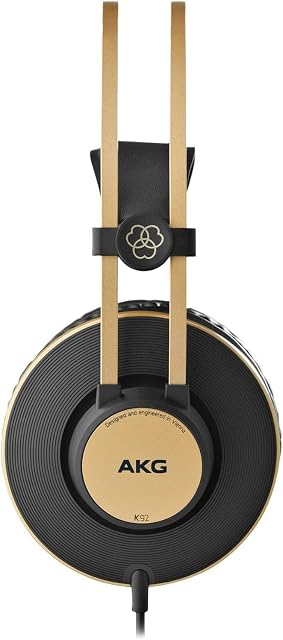
  1. AKG K92

    Closed back · 40 mm (1.57 in) drivers · low impedance

    The cheapest way into closed-back monitoring here. AKG states 40 mm (1.57 in) drivers, a low impedance chosen so phones and interfaces can drive it, and replaceable earpads at a price where that is unusual.

    Best for: A second pair, a practice pair, or a first pair on a strict budget.

    7.2/10

    ≈ $70

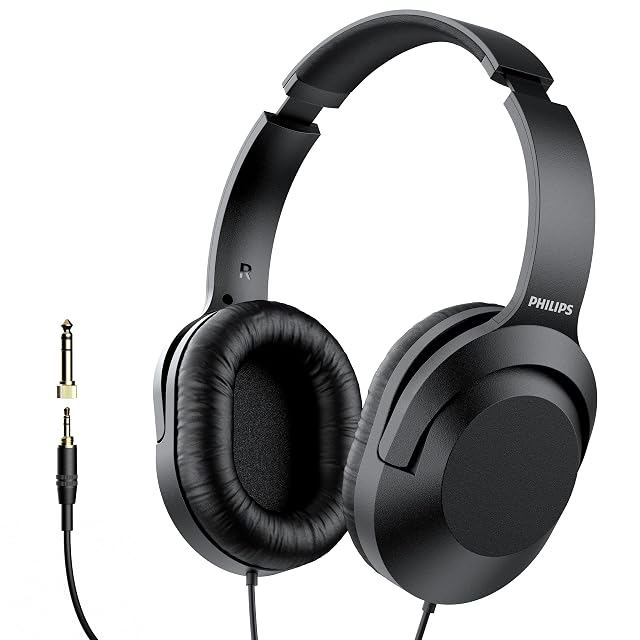
  2. Philips P2000

    40 mm (1.57 in) drivers · 2 m (7 ft) cable · snap-on 6.3 mm (0.25 in) adapter · 90° rotating cups

    The least expensive pair here: 40 mm (1.57 in) drivers, a 2 m (7 ft) cable with a snap-on quarter-inch adapter, and earcups that rotate 90 degrees for one-ear monitoring.

    Best for: A first monitoring pair for a keyboard or an interface, where the adapter should already be attached.

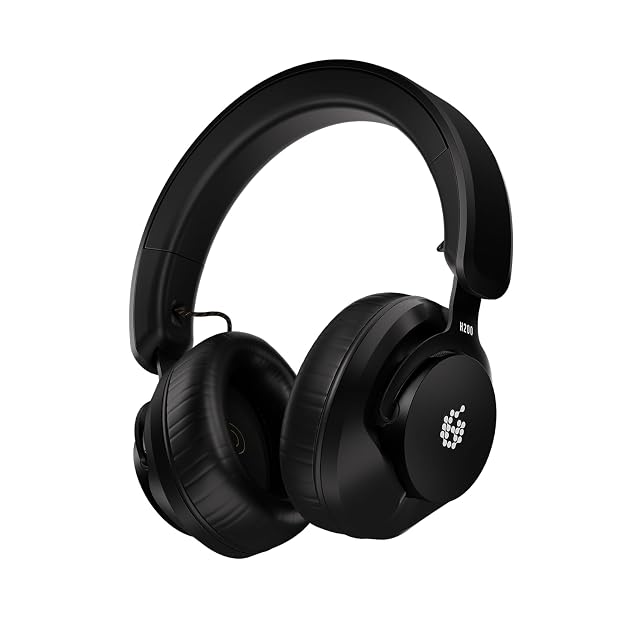
  3. ADAM Audio H200

    Closed back · 40 mm (1.57 in) PEEK drivers · DAW plug-in included

    Berlin-designed closed backs with 40 mm (1.57 in) PEEK drivers, a stated 2 Hz – 23.5 kHz response and 112.5 dB SPL, plus a Headphone Utility plug-in with crossfeed for the DAW.

    Best for: Mixing on headphones, where crossfeed makes a stereo image less exhausting.

    7.8/10

    ≈ $180

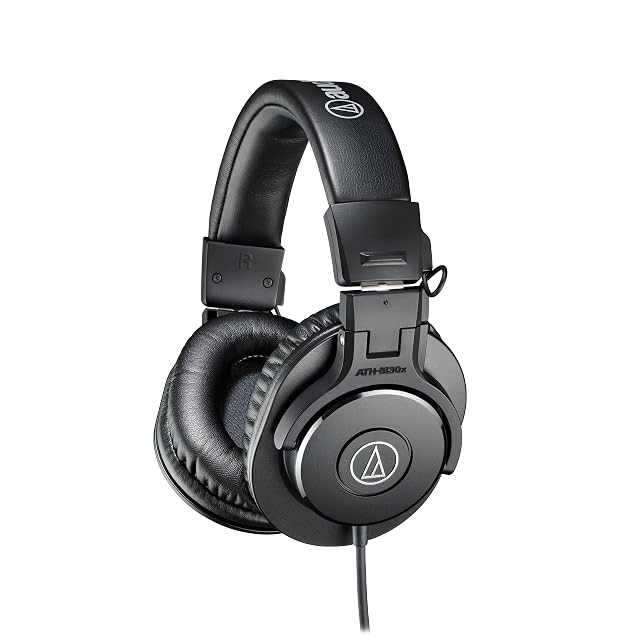
  4. Audio-Technica ATH-M30x

    40 mm (1.57 in) drivers · rare-earth magnets · copper-clad aluminum voice coils · collapsible

    The only American listing here to name what its voice coils are made of — copper-clad aluminum wire over rare-earth magnets — in a collapsible closed-back with a single-side cable exit.

    Best for: Tracking and everyday monitoring where isolation matters and the pair will be folded into a bag.

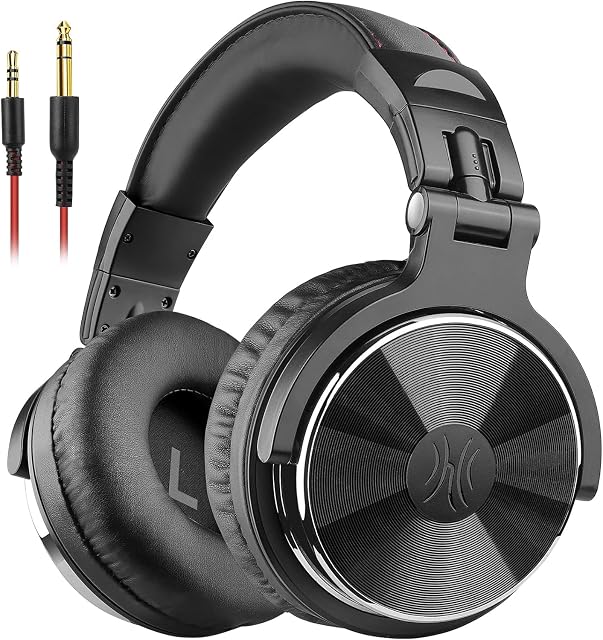
  5. OneOdio Pro-10

    50 mm (1.97 in) drivers · neodymium magnets · shared audio port · 90° swivel

    One of two pairs here with 50 mm (1.97 in) drivers, and one of two with a shared audio port: a second pair plugs into the first with no splitter, and the cups swivel 90 degrees for single-ear monitoring.

    Best for: Two people working from one laptop, where the second pair should not need a splitter.

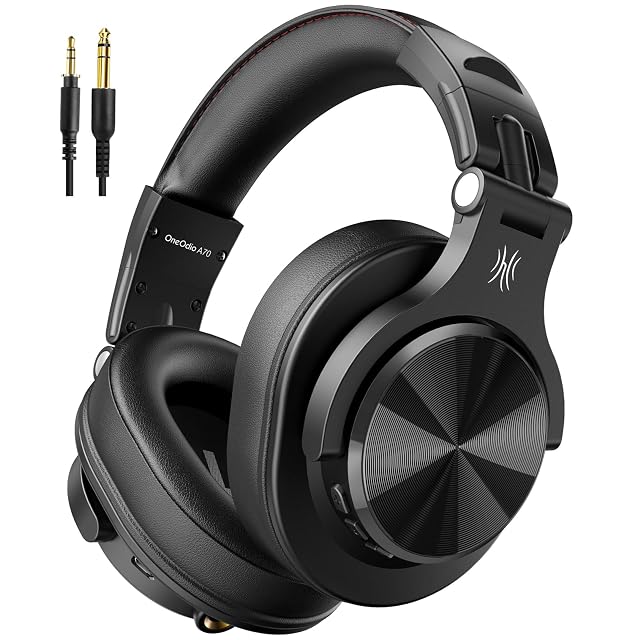
  6. OneOdio A70

    72 h wireless · two cables supplied · jack lock · 40 mm (1.57 in) neodymium drivers

    The only pair here that works without a cable: 72 hours of wireless playtime, two wired cables in the box including a 3.5-to-6.35 mm (1.38 in) lead, a locking jack and a built-in microphone for calls.

    Best for: A pair that monitors on a cable at the desk and plays music on the train, where 72 hours means not thinking about charging.

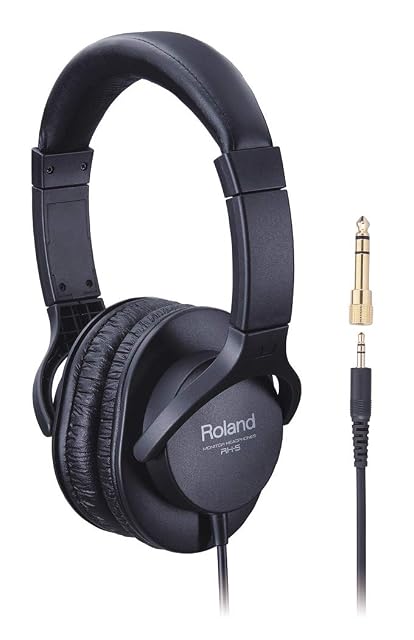
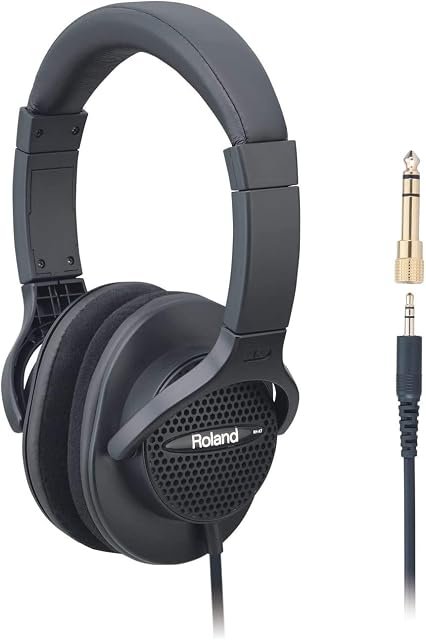
  7. Roland RH-5

    40 mm (1.57 in) drivers · closed back · conversion plug included · a troubleshooting bullet

    The entry model of Roland’s RH range, published for digital pianos, synths and electronic drums, with a conversion plug in the box — and a sixth bullet that is a troubleshooting note rather than a feature.

    Best for: A digital piano or an electronic drum kit at home, where the quarter-inch socket is the one that matters.

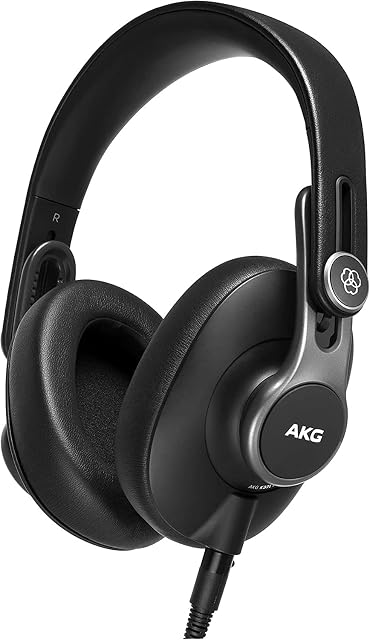
  8. AKG K371

    Closed back · 50 mm (1.97 in) drivers · 32 ohms · foldable

    AKG’s closed-back reference: 50 mm (1.97 in) drivers, 32 ohms and a stated 114 dB SPL/V sensitivity, tuned towards the AKG Reference Response curve. Low impedance, so it also works from a laptop.

    Best for: One pair for recording and for checking a mix, driven from an interface or a laptop.

    8.4/10

    ≈ $190

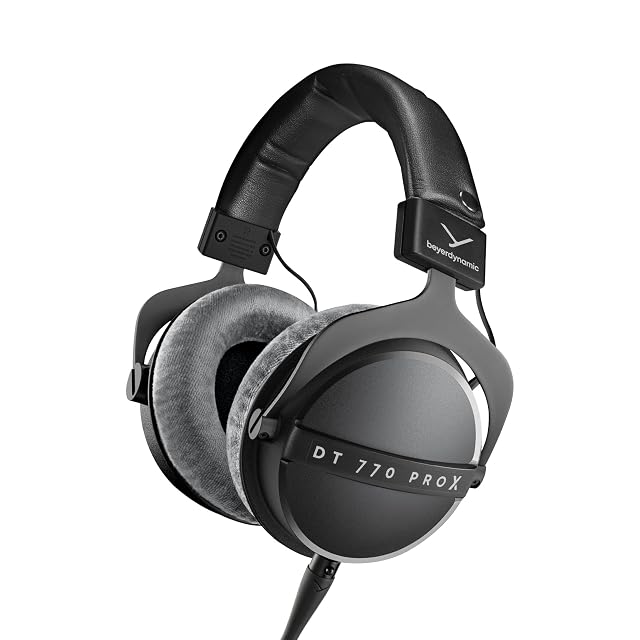
  9. beyerdynamic DT 770 PRO X

    Closed back · STELLAR.45 driver · detachable cable

    The closed-back studio standard, rebuilt around beyerdynamic’s STELLAR.45 driver and given a detachable cable. Made in Germany, and designed to be worn for hours rather than minutes.

    Best for: Recording, where leakage into the microphone is the thing that ruins takes.

    8.4/10

    ≈ $230

  10. Roland RH-A7-BK

    The only open-back pair here · 40 mm (1.57 in) drivers · suede earpads · published for teaching

    The only open-back pair on this shelf, and the only listing to say what an open design is for: it lets a student hear the teacher’s instructions while playing. Suede earpads, 40 mm (1.57 in) drivers, a breathable fit.

    Best for: A piano lesson, or hours of practice where hearing the room matters more than keeping it out.

Need by need, within studio headphones

Hearing the bottom of the spectrum

A large-diameter driver moves more air and reproduces the bass better. It is what small headphones lack most.

AKG K371

Light headphones that travel

A smaller driver allows a compact set you can carry. Comfort over long sessions depends directly on it.

ADAM Audio H200

Being repaired rather than replaced

A working headphone dies from the cable, the pads or the headband, never from the driver. Models whose spare parts are published last ten years; the others last two.

ADAM Audio H200

Who each family suits, across studio headphones

Recording
Closed-back headphones stop the monitor mix leaking into the mic. A technical necessity, not a preference.
Mixing
Open-back headphones give a wider image and less fatigue. They let sound in and out, which rules out tracking.
Four hours of mixing without an earache
Weight, clamping pressure and the pad material decide more than the frequency response. Uncomfortable headphones do not get worn.

What you gain and what you give up, on studio headphones

Closed against open
Closed isolates and skews the image a little; open sounds more natural and leaks both ways. Each has an exclusive use.
Neutrality against listening pleasure
Studio headphones aim at neutrality and often sound less flattering than consumer ones. That is precisely what is asked of them.
Impedance against gear
High-impedance headphones need an amplifier to reach their level. Plugged into a phone they stay quiet and lifeless.

Frequent questions on studio headphones

Closed or open?

Closed for recording, otherwise the monitor mix leaks into the mic. Open for mixing, with a wider image and less fatigue.

Can a mix be done entirely on headphones?

It is possible and it requires knowing your headphones. A check on speakers and on a consumer system remains very useful.

What is impedance?

The electrical resistance of the headphones. High impedance calls for a dedicated amplifier to reach a decent level.

Can the pads be replaced?

On most studio headphones yes, and that is what makes them last. Flattened pads also change the perceived sound.

Do headphones need burning in?

The effect is much debated and stays small if it exists at all. The ear getting used to them probably matters more.

Why does my mix sound wrong elsewhere?

The headphones flatter or hollow out certain areas that you compensate for without knowing. Listening to familiar references on the same headphones helps you calibrate.

Is a detachable cable important?

It is the part that fails first on studio headphones. A replaceable cable markedly extends their life.

Are studio headphones any good for listening to music?

They give a flatter, less flattering picture than a consumer headphone, which is exactly their purpose. Many people find them tiring over time for pleasure listening.

What stays with you, on studio headphones

Closed for recording, open for mixing: an exclusive use, not a preference. Studio headphones aim at neutrality and sound less flattering — that is what is asked of them — and the detachable cable is what makes them last.

Summed up: studio headphones

  • Dimensions: 180 to 338, on 3 of the 10 models.
  • Highest figure for drivers: OneOdio Pro-10 (50 mm (1.97 in) with neodymium magnets — one of two listings here with 50 mm (1.97 in) drivers).

The full table of studio headphones

A column is opened only if four devices in five publish the figure. Below that, it would set blanks against blanks.

ModelPriceDesignDriversFrequency responseImpedance
AKG K92$70Closed back, over-ear40 mm (1.57 in)—AKG states a low impedance for phones and USB interfaces
ADAM Audio H200$180Closed back, over-ear40 mm (1.57 in) PEEK with neodymium magnets2 Hz – 23.5 kHz (ADAM states)—
AKG K371$190Closed back, oval over-ear, foldable with 8-position hinges50 mm (1.97 in), OFC voice coils5 Hz – 40 kHz (AKG states)32 ohms
beyerdynamic DT 770 PRO X$230Closed back, over-ear———
Audio-Technica ATH-M30x—Circumaural closed back, stated to contour around the ears for isolation in loud environments40 mm (1.57 in) with rare-earth magnets and copper-clad aluminum wire voice coils — one of two listings on this shelf to name a voice coil materialAudio-Technica puts nothing in writing on this.Audio-Technica puts nothing in writing on this in the bullets read. Two listings on this shelf publish one, and both are European
OneOdio Pro-10—Closed back, over-ear, with a self-adjusting stretchable headband50 mm (1.97 in) with neodymium magnets — one of two listings here with 50 mm (1.97 in) driversOneOdio puts nothing in writing on this.OneOdio puts nothing in writing on this. Two listings on this shelf publish one, and both are European
OneOdio A70—Closed back, over-ear, rotatable and foldable40 mm (1.57 in) neodymium, behind a custom aluminum fasciaOneOdio puts nothing in writing on this.OneOdio puts nothing in writing on this. Two listings on this shelf publish one, and both are European
Philips P2000—Closed back, over-ear, with a cushioned adjustable headband40 mm (1.57 in)Philips puts nothing in writing on this.Philips puts nothing in writing on this. Two listings on this shelf publish one, and both are European
Roland RH-5—Closed back, over-ear, described as a secure and comfortable lightweight design40 mm (1.57 in)Roland puts nothing in writing on this.Roland puts nothing in writing on this. Two listings on this shelf publish one, and both are European
Roland RH-A7-BK—Open-air — the only open-back pair on this shelf. The other nine are closed40 mm (1.57 in)Roland puts nothing in writing on this.Roland puts nothing in writing on this. Two listings on this shelf publish one, and both are European

Our guides on studio headphones

Sources, and how the order is set

Specifications: manufacturer sheets for musical instruments and gear and the matching Amazon product pages. Prices and availability: Keepa. Every figure in this table names its source.

Most recent revision in this category: October 7, 2026.

The method applied to studio headphones

Prices quoted in these summaries are dated readings. The live price is shown next to each product.