Almost every home studio that “does not work” is a working studio with the wrong cable in it. A 6.35 mm (0.25 in) jack comes in two versions — TS with one ring, unbalanced, for instruments, and TRS with two, balanced, for monitors and line signals — and they fit the same socket while behaving differently. An XLR cable carries a microphone and its phantom power; a jack cable cannot. A guitar plugged into a line input is quiet and dull; a microphone plugged into a line input is silent. This family maps every connection in the other twenty-three, states which cable it needs, and says which adapters are harmless and which cost signal.
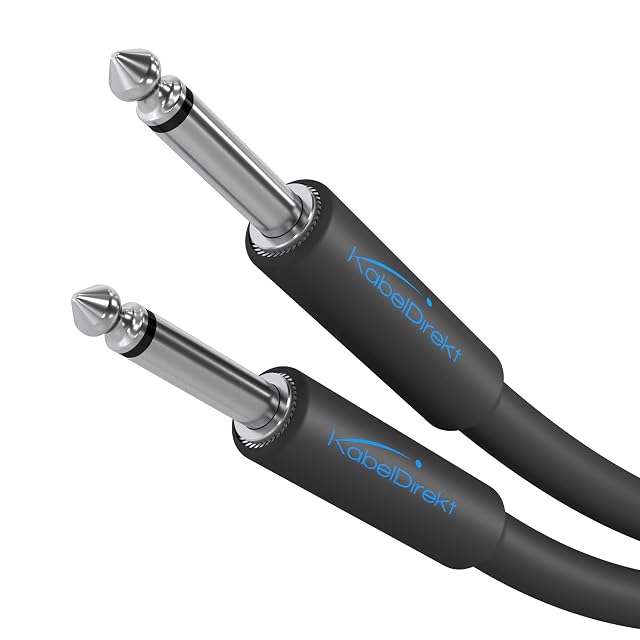
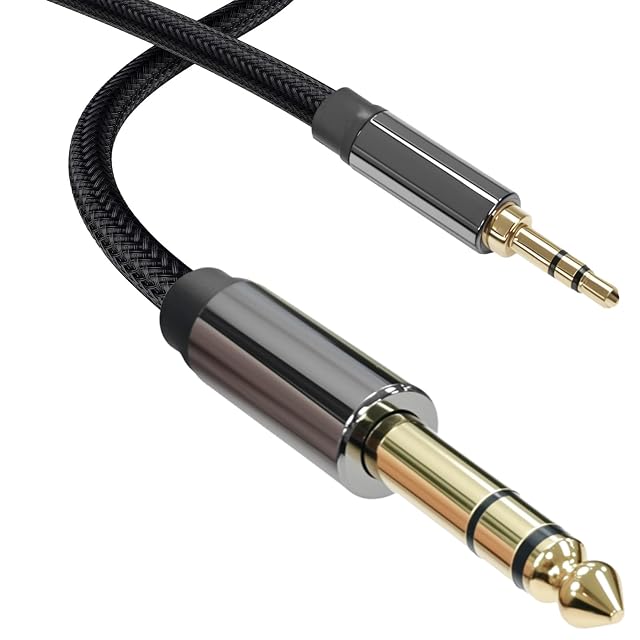
A three-meter mono jack lead: one ring on the plug, unbalanced, which is exactly what an electric instrument sends to an amplifier. It is not the cable a monitor speaker wants.
Connector
6.3 mm (0.25 in) mono jack (TS)
Length
3 m (10 ft)
Signal
Unbalanced
Use
Instrument to amplifier or interface instrument input
Amazon reference
B07PG8ZTTL (identical on 6 markets)
EAN
4260414846007
Three meters is enough to stand up and move without being enough to pick up hum
Mono TS is the correct type for a guitar or bass, and the listing says so
Unbalanced: not the cable for a studio monitor or a long line run
Best for: Guitar or bass into an amplifier, or into the instrument input of an interface.
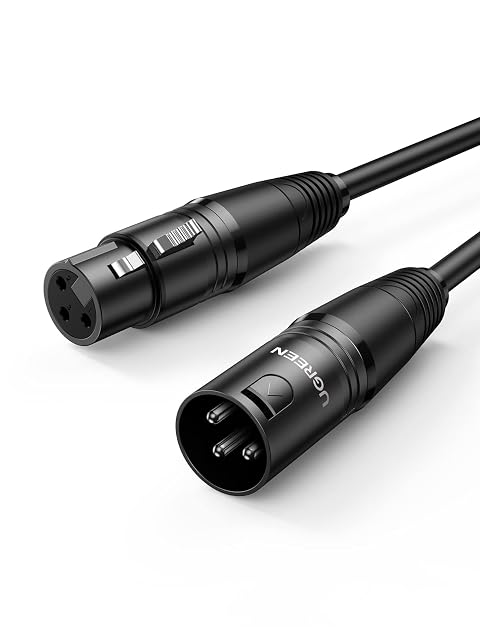
A three-meter three-pin XLR lead. Balanced, so it rejects interference over distance — and the only cable type that carries 48 V phantom power from an interface to a condenser microphone.
Connector
3-pin XLR, male to female
Length
3 m (10 ft)
Signal
Balanced
Carries phantom power
Yes — 48 V from the interface to the microphone
Amazon reference
B016D50A1Y (identical on 6 markets)
EAN
6957303827114
Balanced: it can run across a room without collecting the hum a jack lead would
The locking connector will not fall out of a microphone mid-take
No US offer at the time of writing, and the Spanish price stood at roughly double the German one
Best for: Any XLR microphone into an interface or a mixer.
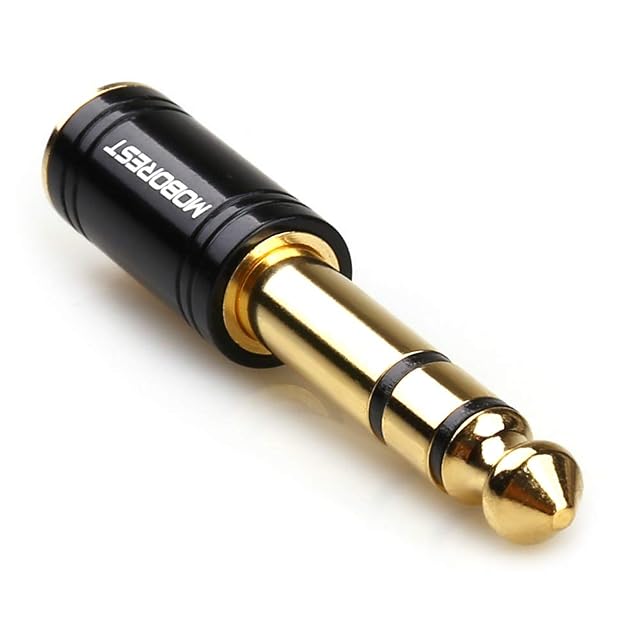
A 1/4-inch plug with a 3.5 mm (0.14 in) socket in the end of it, in one piece of metal, at the lowest published price on this shelf. What it does not say is whether it carries stereo.
Direction
6.35 mm (0.25 in) male to 3.5 mm (0.14 in) female — it goes into a 1/4-inch socket and takes a 3.5 mm (0.14 in) plug (from the title)
Contacts
MOBOREST puts nothing in writing on this. The listing never says TS or TRS, so whether the adapter passes stereo or sums it is unpublished — and that distinction is the subject of another page on this shelf
Housing
One-piece metal, stated durable enough to be tossed in pockets, bags and travel cases (maker’s bullet)
Conductor
Solid pure copper with 24K gold-plated connectors (maker’s bullet)
Grip
360-degree grip treads, stated to make plugging and unplugging easy and secure (maker’s bullet)
Pack
One piece — 1P in the title (from the title)
Finish
Black (maker’s bullet)
Price
$5.99 — the lowest published price on this shelf
Manufacturer reference
MOBOREST puts nothing in writing on this. No maker’s reference appears in the listing at all, only the Amazon one below
Weight
18 g (0.6 oz) in the product record
Amazon reference
B088DV177F
EAN
0633337843011
At $5.99 the least expensive item on this shelf, and often the part that was actually missing
One piece of metal: there is no molded join to work loose, which is where cheap adapters fail
The listing never states TS or TRS, so whether it carries a stereo signal is unpublished
Best for: Plugging 3.5 mm (0.14 in) headphones into the 1/4-inch socket of an amplifier, a digital piano or a keyboard.
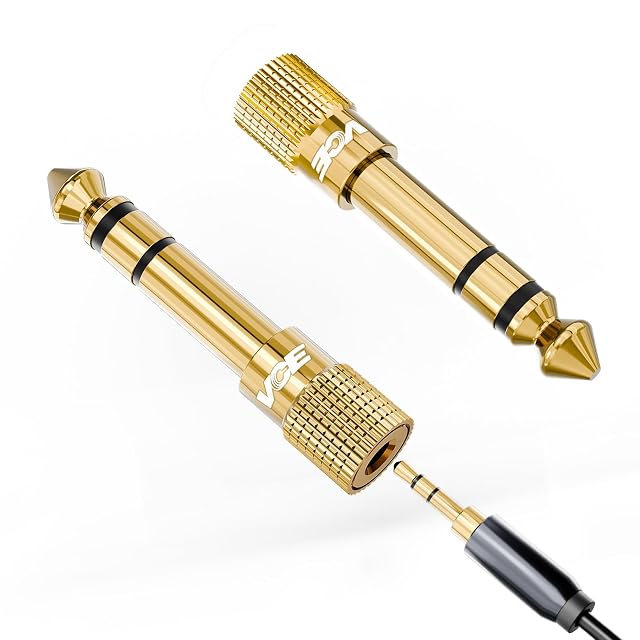
The same job as the single adapter here, done twice for less money each, in solid brass — and the only adapter on this shelf whose listing says TRS, which is what decides whether a stereo signal survives it.
Direction
6.35 mm (0.25 in) male to 3.5 mm (0.14 in) female — a 1/4-inch stereo port connects to a 3.5 mm (0.14 in) plug (maker’s bullet)
Contacts
TRS — a precision-engineered TRS interface, stated to deliver true stereo (maker’s bullet). The only adapter on this shelf that states a contact type
Pack
Two pieces, at $6.39 for the pair — $3.20 a piece, the lowest per-piece price on this shelf (from the title)
Body
Solid brass, with knurled 360-degree grip treads described as non-slip even in tight spaces behind amplifiers or mixers (maker’s bullet)
Plating
24K gold-plated connectors, stated to resist corrosion and minimize signal loss (maker’s bullet)
Size
45 × 10 × 10 mm (1.77 × 0.39 × 0.39 in) in the product record — the only adapter here with published dimensions
Named compatibility
Electric guitars, bass amps, keyboards, digital pianos, studio monitors, AV receivers and mixers (maker’s bullet)
Manufacturer reference
W9776-2P
Weight
17 g (0.6 oz) in the product record
Amazon reference
B01EJ5UV3C
EAN
0751570405190
Two in the packet, at the lowest per-piece price on this shelf — which is the whole answer to a lost adapter
The only adapter here whose listing states TRS, so a stereo path is not a guess
Brass is softer than steel, and a knurled finish wears smooth with heavy use
Best for: A desk or a gig bag that needs the adapter to exist in two places at once.
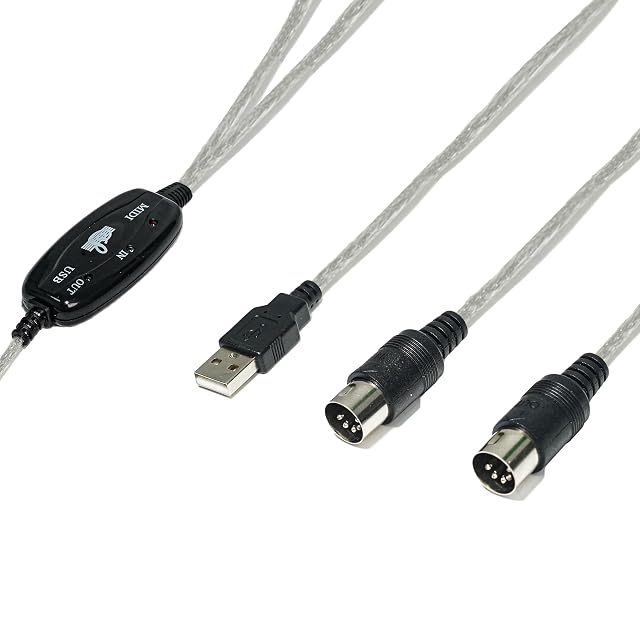
A 5-pin MIDI socket on one end, USB-A on the other, 16 channels, and no software to install. The cheapest route from an older keyboard into a computer, with lights that show which direction is actually passing data.
Connection
5-pin MIDI to USB-A — a MIDI keyboard, piano or synthesizer to a Windows, Mac or Android device (maker’s bullet)
Channels
16 (from the title)
Driver
None required — stated plug and play, no software installation (maker’s bullet)
Indicators
LED signal lights for MIDI input and output activity, stated to remove the guesswork from troubleshooting (maker’s bullet)
Latency
Described as engineered for low latency and precise timing. No figure is published (maker’s bullet)
Stated compatibility
Most MIDI instruments — keyboards, controllers, drum machines — with Windows 10/11, macOS and major DAWs (maker’s bullet)
Length
GREATLINK puts nothing in writing on this. One of the three MIDI cables on this shelf publishes a length
Price
$8.99 — the least expensive of the three MIDI cables on this shelf
Manufacturer reference
MIDI Cable for Computer 001 — a description rather than a code, which is how the maker publishes it
Weight
Not in the product record
Amazon reference
B0F9WMH1MV
EAN
0686585205797
The cheapest route from a 5-pin MIDI instrument into a computer on this shelf, at $8.99
Separate in and out activity lights, which turn a silent setup into a one-glance diagnosis
USB-A, so a laptop with only USB-C ports needs a hub or an adapter as well
Best for: An older keyboard or synthesizer with 5-pin MIDI sockets and a computer that still has a USB-A port.
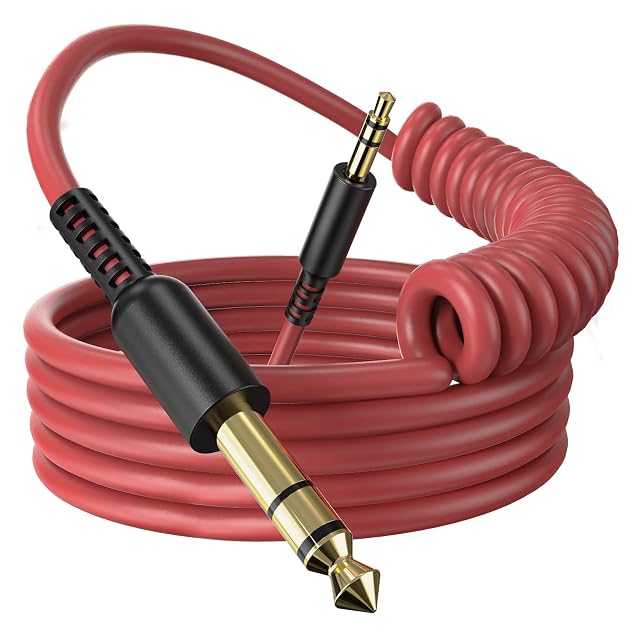
A spring-coiled lead that extends from 6.6 to 9.8 feet and pulls back out of the way, with a bend count in the listing that nothing else on this shelf publishes.
Connection
6.35 mm (0.25 in) to 3.5 mm (0.14 in), stated for amplifiers, electronic keyboards, mixers and guitars (maker’s bullet)
Length
6.6 to 9.8 ft — a range, because the cable is coiled and stretches (from the title)
Construction
Spring-loaded coil, described as tangle-free and stretchable. The only coiled cable on this shelf (maker’s bullet)
Durability
Stated tested to withstand 15,000+ bends. No other listing on this shelf publishes a bend count (maker’s bullet)
OneOdio Pro10, Pro30 and Pro50 headphones, named in the title alongside amplifiers, keyboards and mixers
Color
Red (from the title)
Contacts
Described as a stereo adapter cable. The listing does not use the words TS or TRS (maker’s bullet)
Manufacturer reference
43222-9282
Weight
499 g (17.6 oz) in the product record, which is 1.1 lb almost exactly — a shipping figure rather than a weighed cable. Nothing on this page is ranked on it
Amazon reference
B06XBLQJRV
EAN
0709466429478
A coil takes up the slack itself: the length is there when you step back and gone when you do not
The only listing on this shelf that publishes a durability figure at all — 15,000 bends and over
A coil pulls: on a light headphone or a desk stand it drags the plug sideways
Best for: A player who moves between a seat and an amplifier, where a straight lead would lie on the floor.
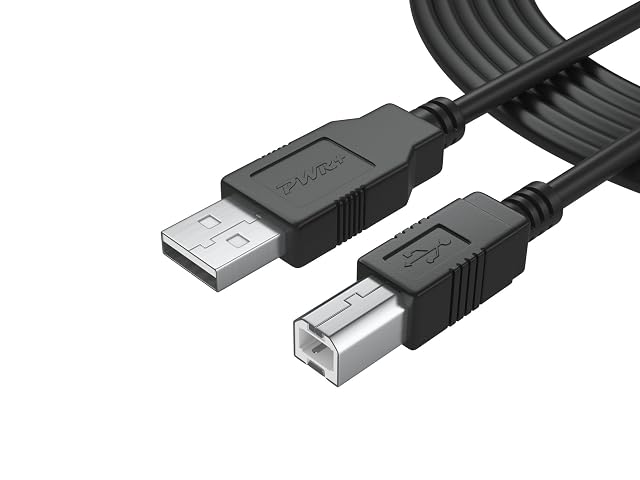
A six-foot USB 2.0 A-to-B lead — the socket on the back of nearly every audio interface and USB keyboard. It is the only cable on this shelf that publishes its speed, its wire gauge, its certifications and a warranty.
Connection
USB 2.0 Type-A male to Type-B male, 6 ft (from the title)
Data rate
Up to 480 Mbps — the only transfer rate published on this shelf (maker’s bullet)
Conductors
28AWG/2C + 26AWG/2C — the only wire gauge published on this shelf (maker’s bullet)
Certifications
CE, FCC and RoHS — the only certifications published on this shelf (maker’s bullet)
Warranty
30-day refund, 24-month exchange — the only warranty published on this shelf (maker’s bullet)
Named instruments
Yamaha digital pianos, Roland workstations, Donner DEP and DDP pianos, Alesis, Korg, Casio, AKAI Professional, Arturia KeyLab and MiniLab, Midiplus, Nektar Impact, Novation, M-Audio, Pioneer, Hercules, Numark, Behringer U-Phoria, PreSonus AudioBox (maker’s bullet). No other listing on this shelf names an instrument model
Also fits
Printers, scanners, hard drives, servers, DACs and development boards — the same socket, which is why the lead is cheap (maker’s bullet)
Maker
Stated a Washington, USA based company (maker’s bullet)
Manufacturer reference
6FTUSB-PRINT_AB
Weight
Not in the product record
Amazon reference
B01BIE98PO
EAN
5055890389099
The one cable on this shelf that fits the socket on the back of an audio interface or a USB keyboard
Four published figures — speed, gauge, certifications and warranty — that no other listing here gives
USB-A at the computer end, so a laptop with only USB-C sockets needs an adapter too
Best for: An audio interface or a USB keyboard whose box did not contain a lead — which is most of them.
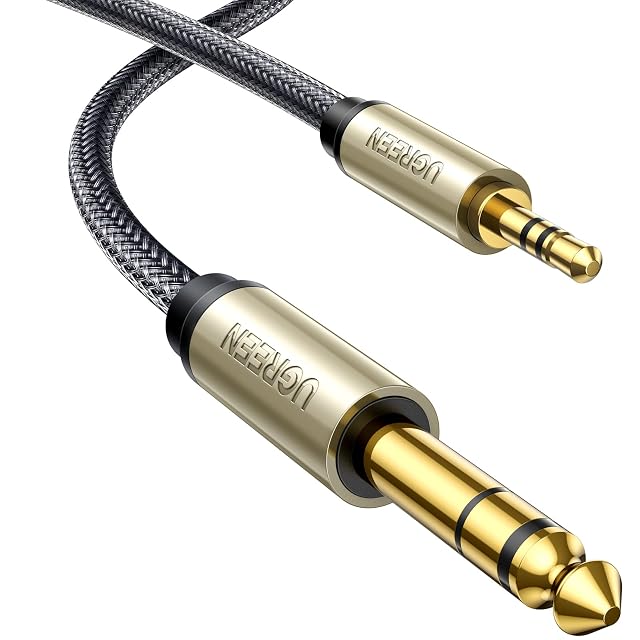
A 3.5 mm (0.14 in) to 1/4-inch male-to-male lead with double shielding under a nylon braid — and the only listing on this shelf whose own bullets warn that an electric guitar outputs mono and cannot be made stereo by a cable.
Connection
3.5 mm (0.14 in) TRS male to 6.35 mm (0.25 in) male, 6.6 ft — stated explicitly as male-to-male, not male-to-female (maker’s bullet)
Shielding
Double shielding — the only shielding published on this shelf (maker’s bullet)
Jacket
Double-layer nylon braid over a zinc alloy case, stated to survive being tugged across sharp edges (maker’s bullet)
Conductor
Pure copper core with 24K gold-plated connectors (maker’s bullet)
Published warning
Twice in its own bullets: the playback device must support stereo processing for stereo output, and an electric guitar outputs a mono signal by design — it is not a stereo source. No other listing on this shelf states a limitation of its own (maker’s bullet)
Named compatibility
Yamaha, Casio and Roland keyboards, digital pianos, home theatre, speakers, bass amplifiers, recorders and mixers (maker’s bullet)
Length
6.6 ft (from the title)
Manufacturer reference
10628
Weight
50 g (1.8 oz) in the product record
Amazon reference
B00Y2LANNW
EAN
0069573038162
The only published shielding figure on this shelf, and it is double
A maker that writes down what its own cable cannot do — which is rarer than any specification
Male-to-male, so it replaces a cable rather than adapting the one you already have
Best for: Running a phone, laptop or interface output into a 1/4-inch input, where the hum has to stop.
A three-and-a-bit-foot stereo lead in oxygen-free copper under a braided jacket. The shortest cable on this shelf, which on a desk is the point rather than a compromise.
Connection
3.5 mm (0.14 in) TRS to 6.35 mm (0.25 in) TRS, stereo, male to male (from the title)
Length
3.3 ft — the shortest length published on this shelf (from the title)
Conductor
Oxygen-free copper with shielding — the only listing on this shelf to name oxygen-free copper (maker’s bullet)
Signal
Stated to support balanced to unbalanced transmission, with strong anti-interference capability (maker’s bullet)
Jacket
Braided outer cover with gold-plated connectors (maker’s bullet)
Named compatibility
Yamaha, Casio and Roland keyboards, digital pianos, bass amplifiers and home theatre systems (maker’s bullet)
Shielding
Described as shielded. No layer count or coverage is published; one cable on this shelf publishes two layers (maker’s bullet)
Manufacturer reference
190 0027
Weight
30 g (1.1 oz) in the product record
Amazon reference
B0FPQZ3SZQ
EAN
0826341058438
The shortest lead on this shelf, which on a desk means no coil on the floor and less aerial
TRS at both ends and said so, where most listings here describe stereo without naming contacts
3.3 ft will not reach from a desk to an amplifier across a room
Best for: A desk: interface to monitor, or laptop to a 1/4-inch input, with nothing left over.
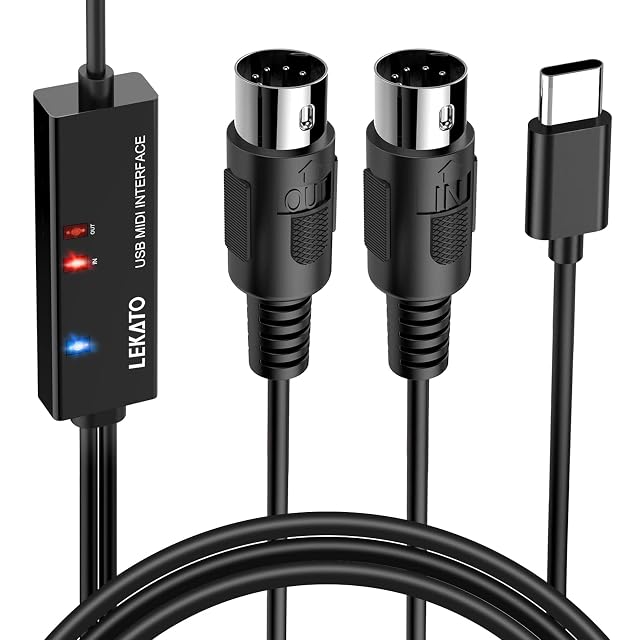
MIDI in and out on one end, USB-C on the other, over six and a half feet — the only MIDI cable here that publishes its length, with lights that say which color means what.
Connection
5-pin MIDI in and out to USB-C, with a built-in driver for direct connection (maker’s bullet)
Length
6.5 ft — the only MIDI cable on this shelf that publishes a length (from the title)
Channels
Up to 16 input and 16 output channels (maker’s bullet)
Indicators
Red for power, blue for signal transfer and connection — the only listing on this shelf that says which color means what (maker’s bullet)
Conductor
Soft bare copper, with stated resistance to electromagnetic interference (maker’s bullet)
Driver
None required — stated plug and play on Windows 7, 8, 10 and macOS (maker’s bullet)
Published caution
In the maker’s own words: some older or vintage synthesizers may require specific driver settings or proprietary interfaces, and may not be recognized. The only MIDI listing on this shelf to publish a limit of its own (maker’s bullet)
Stated devices
Electronic keyboards, digital pianos, synthesizers and drum pads, to Mac, Windows PC or iPad (maker’s bullet)
Manufacturer reference
LUM-03
Weight
100 g (3.5 oz) in the product record
Amazon reference
B09KZ3X59K
EAN
0793811894240
USB-C at the computer end, which is the only socket on a good many current laptops
The only MIDI cable here with a published length, and 6.5 ft reaches a stand across a desk
Twice the price of the USB-A MIDI cable on this shelf for the same 16 channels
Best for: A current laptop with USB-C sockets and a keyboard whose only MIDI connection is 5-pin DIN.
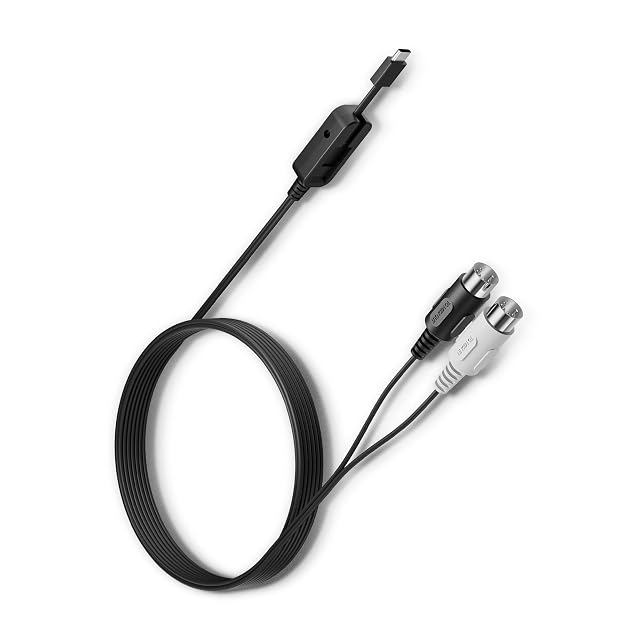
A USB-C MIDI cable with a 32-bit processor inside it. It can filter, remap and route MIDI through free software, and in its second mode it links two instruments directly with no computer in the chain.
Mode 1
USB MIDI interface — computer to MIDI hardware over USB-C (maker’s bullet)
Mode 2
Smart MIDI Cable — links two MIDI devices directly, without a computer, powered from the MIDI Out port. The only cable on this shelf that works with no computer (maker’s bullet)
Processor
32-bit — the only processor published on this shelf (maker’s bullet)
Processing
Routing, filtering and mapping, configured in the free UxMIDI Tools software for macOS, Windows, iOS and Android. The only configuration software on this shelf (maker’s bullet)
Message support
Stated to transmit all MIDI messages including clock, sysex, MTC and MPE — the only listing on this shelf to name a message type (maker’s bullet)
Platforms
macOS, Windows, iOS, Android, Linux and Chrome OS (maker’s bullet)
Plug
Retractable USB-C, with dual-tone MIDI connectors (maker’s bullet)
Channels
CME puts nothing in writing on this. Both other MIDI cables on this shelf publish 16
Length
CME puts nothing in writing on this. One of the three MIDI cables here publishes a length
Manufacturer reference
S-F000C12
Weight
89 g (3.1 oz) in the product record
Amazon reference
B0DQYJJ3L2
EAN
8885011101517
Connects two instruments with no computer in the chain — nothing else on this shelf does that
Filtering, mapping and routing in a cable, configured from a phone as well as a computer
Five times the price of the least expensive item on this shelf, for a cable
Best for: A rig where a controller has to drive a synthesizer without a laptop, or where incoming MIDI has to be filtered before it arrives.
Short, tidily run cables limit loops and interference. Length you do not need only serves to tangle.
Stage
You need length and ruggedness: on the road it is the connector, not the cable, that fails first.
Instrument
An instrument cable is unbalanced and shielded. Confusing it with a speaker cable is a common and audible mistake.
What you gain and what you give up, on cables & adapters
Balanced against unbalanced
Balanced rejects interference over long runs; unbalanced is simpler and picks up noise as soon as it gets long. The destination decides, not preference.
Length against interference
A long unbalanced cable acts as an aerial and picks up the mains. The most common cause of unexplained hum.
Price against connectors
Saving on a cable means saving on the connectors and the soldering, which is exactly what fails. A false economy.
Frequent questions on cables & adapters
What is the difference between balanced and unbalanced?
Balanced uses two conductors to cancel interference picked up along the way. Over several meters the difference in noise is clear.
Can a speaker cable be used for a guitar?
No: it is unshielded and picks up every kind of interference. They look alike physically, which explains the mistake.
What is a cable that carries phantom power?
A complete balanced mic cable, which carries the voltage from the interface to the mic. An incomplete cable stops the mic working.
Why do I have a hum?
A ground loop, an unbalanced cable that is too long, or proximity to a power supply. Move the cables before changing gear.
How should cables be stored?
In loose loops, never pulled tight or bent sharply. A cable bent in the same place ends up breaking inside.
How do I test a cable?
By swapping in another one, or with a continuity tester. A cable that crackles when you move it has a failing solder joint.
Do adapters degrade the signal?
A quality adapter is neutral; stacking them multiplies contacts and points of failure. One cable in the right format beats three adapters.
Can you actually hear an expensive cable?
Over studio lengths, the audible difference comes from shielding and solder joints, not from the metal. Past a certain price you are paying for connector strength, which is still a real gain on stage.
What stays with you, on cables & adapters
A speaker cable is not an instrument cable, however alike they look: the second is shielded, the first is not. Saving on a cable means saving on the connectors, exactly what fails — and a hum is fixed by moving cables before changing gear.
Summed up: cables & adapters
Highest figure for weight: OneOdio 6.35 mm to 3.5 mm Coiled Cable (499 g (17.6 oz) in the product record, which is 1.1 lb almost exactly — a shipping figure rather than a weighed cable. Nothing on this page is ranked on it).
The full table of cables & adapters
A column is opened only if four devices in five publish the figure. Below that, it would set blanks against blanks.
499 g (17.6 oz) in the product record, which is 1.1 lb almost exactly — a shipping figure rather than a weighed cable. Nothing on this page is ranked on it
Specifications: manufacturer sheets for musical instruments and gear and the matching Amazon product pages. Prices and availability: Keepa. Every figure in this table names its source.
Most recent revision in this category: October 7, 2026.