Skip to content

The best digital pianos for 2026

A digital piano is bought for its sound and lived with for its keys, its pedal socket and its headphone jack. Eighty-eight keys with a hammer action feel like an instrument; sixty-one springy keys feel like a controller with speakers, and no amount of onboard voices closes that gap. We compare key count and action type, stated polyphony, whether the pedal input takes a single footswitch or a three-pedal unit, and whether the headphone output is a 3.5 mm (0.14 in) socket or a full 6.35 mm (0.25 in) jack — the detail that decides which cable you also need to buy.

The models we recommend

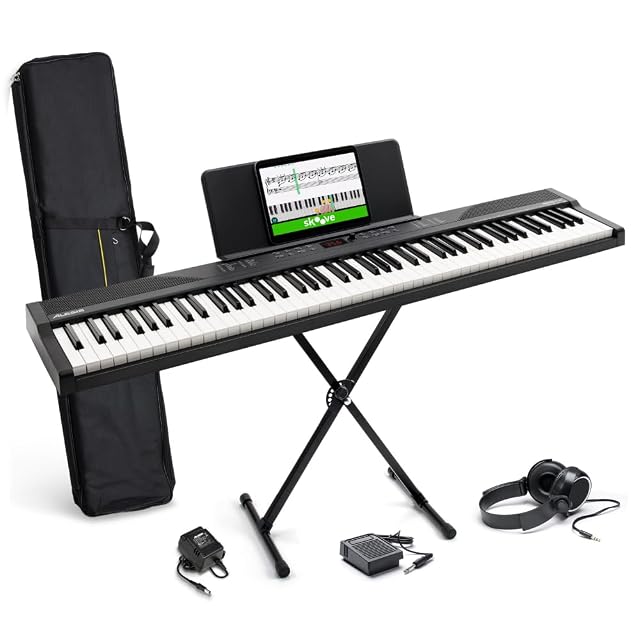
  1. Alesis Recital Play

    88 touch-sensitive keys · 480 sounds · full accessory bundle

    Not a weighted piano and not sold as one: 88 full-size touch-sensitive keys, 480 sounds, and a bundle that includes the stand, pedal, headphones, bag and adapter. The most complete box in this group.

    Best for: A first instrument for someone who is not yet sure they will keep playing.

    7.3/10

    ≈ $190

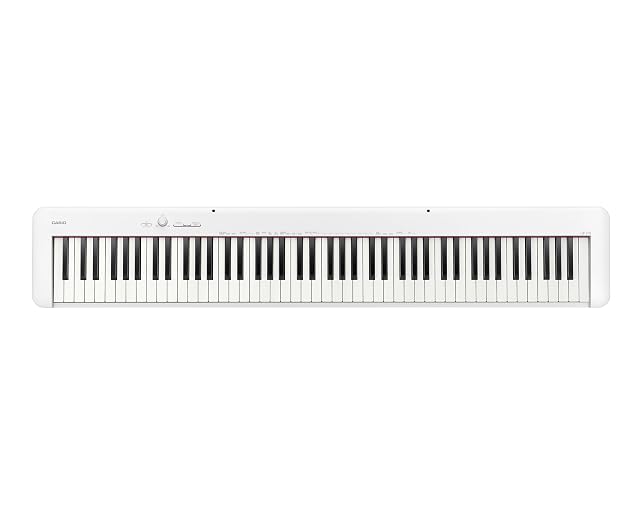
  2. Casio CDP-S110

    88 weighted keys · 10 sounds · pedal and stand included

    A slim 88-key board with Casio’s Scaled Hammer Action II and, unusually at this price, the SP-3 pedal, music rest and power adapter already in the box. Ten sounds rather than hundreds — the money went into the keys.

    Best for: A first weighted piano where the pedal and adapter should not be a second order.

    7.9/10

    ≈ $820

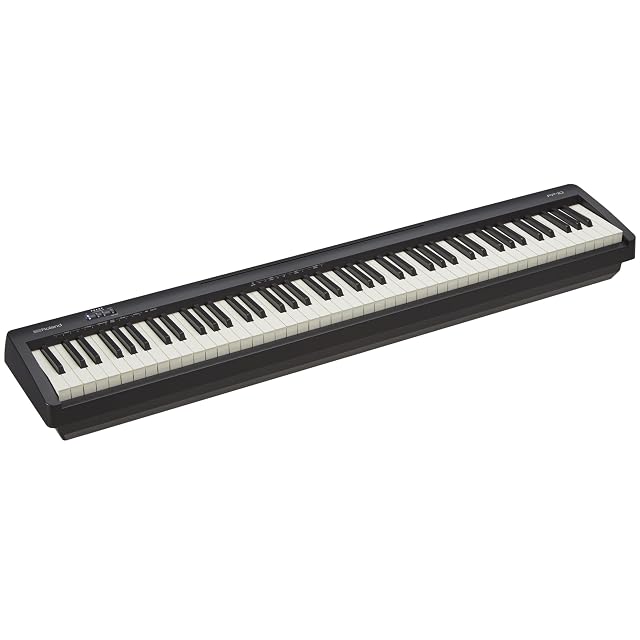
  3. Roland FP-10

    88 keys · SuperNATURAL · headphone output

    Roland’s entry into the FP series: 88 keys with an ivory-feel surface, the SuperNATURAL engine, and a keyboard mechanism Roland describes as quiet in itself — the detail that decides whether a flat-dweller can practice at night.

    Best for: Someone who will practice mostly in headphones and wants the action to be the strong part.

    7.9/10

    ≈ $500

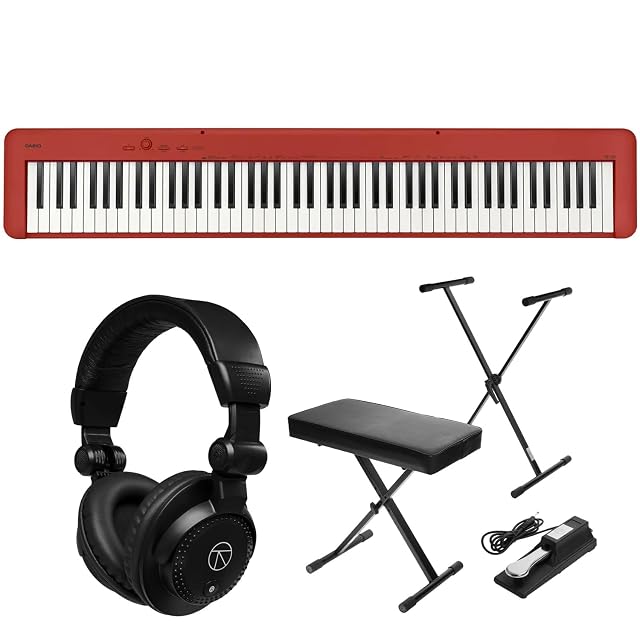
  4. Casio CDP-S160

    88 keys with touch response · 13 hours on batteries · 23.1 lb · stand and bench in the bundle

    A bundle rather than an instrument alone: the CDP-S160 with a stand, a bench, a pedal, a music stand, an adapter and headphones — and the only piano here to publish a battery life and a weight.

    Best for: A first piano that has to arrive complete, stand and bench included, and be carried occasionally.

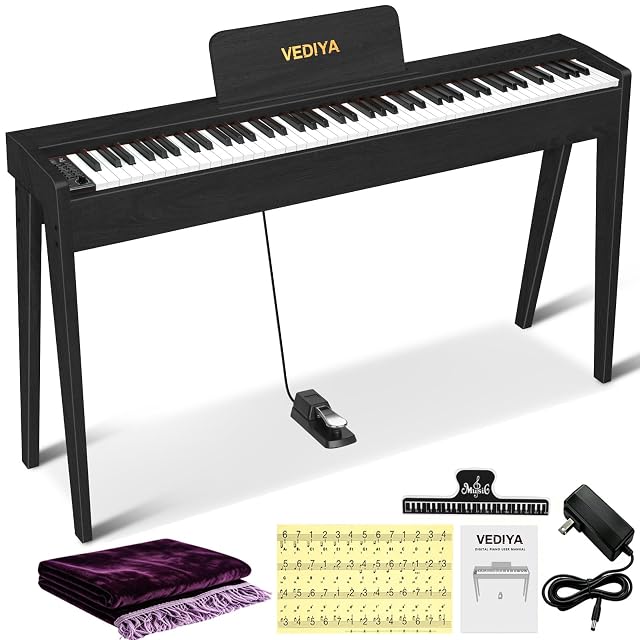
  5. Vediya VE203

    88 semi-weighted keys · wireless MIDI and audio · 800 tones · 600 rhythms

    The least expensive 88-key instrument on this shelf, and the only one with wireless MIDI — but with 800 tones and 600 rhythms it is an arranger in a piano aisle, and this page says so first.

    Best for: A beginner who wants 88 keys, a backing band and a pedal in one order, and has not yet decided whether they want a piano.

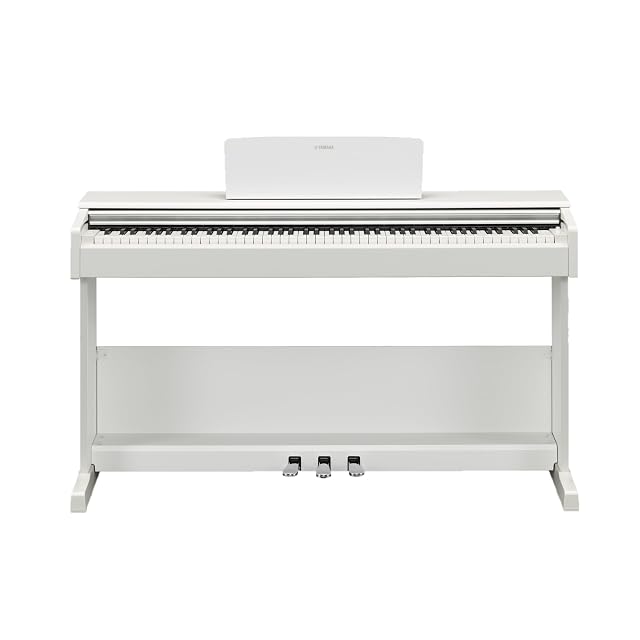
  6. Yamaha ARIUS YDP-105

    88 GHS keys · three pedals · console cabinet

    A console piano rather than a portable one: 88 Graded Hammer Standard keys, three pedals and a cabinet that stays where you put it. Yamaha also fits a volume limiter, which sets a ceiling on output.

    Best for: A permanent practice piano in a room where it can stay assembled.

    8.3/10

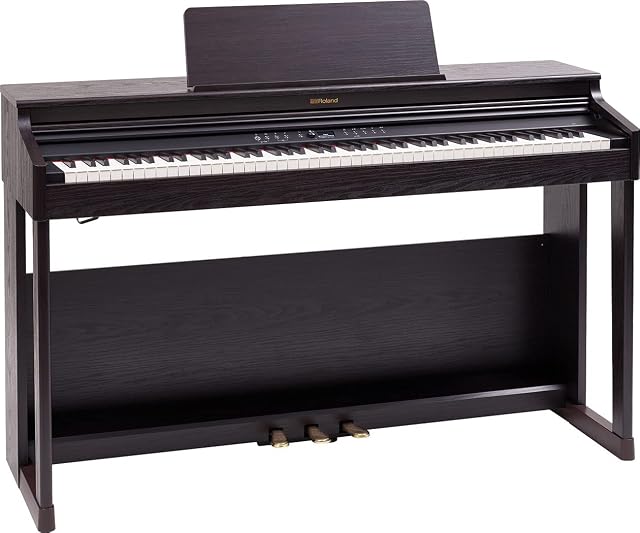
  7. Roland RP701-DR

    PHA-4 Standard action · Progressive Damper Action pedal · 3D headphone ambience · Bluetooth

    The most expensive instrument on this shelf and the only one with a pedal that follows the travel of a foot: a cabinet piano with the PHA-4 Standard keyboard, SuperNATURAL sound, 3D headphone ambience and a bench included.

    Best for: A piano with a permanent place in a room, where the pedal and the headphone practice matter as much as the keys.

Need by need, within digital pianos

Working through the classical repertoire

A full keyboard lets you tackle music written for piano without transposing or running out of range. That is what separates a piano from a stopgap keyboard.

Casio CDP-S110

Playing in a small space

A short keyboard fits a flat and moves on its own. The trade-off is a limited range that makes itself felt quickly as you progress.

Roland RP701-DR

Starting without committing much

A great many attempts stop in the first year. An affordable instrument lets you find that out without having paid the price of a piano.

Alesis Recital Play

Who each family suits, across digital pianos

Learning the piano
Weighted action with a hammer mechanism is what matters most. A light action installs habits that moving to a real piano forces you to unlearn.
Playing in a flat
Headphones are the digital’s decisive argument over the acoustic. They make late practice possible without a neighbor dispute.
Piano for the living room
Cabinet models sound better thanks to their casework and no longer move. That is a purchase for a room, not a portable instrument.

What you gain and what you give up, on digital pianos

Weighted action against instrument weight
A hammer mechanism gives the resistance of a real piano and weighs tens of kilos. A light keyboard travels and does not prepare the hand.
Number of sounds against the piano sound itself
An instrument with several hundred sounds often dilutes its sampling. A digital piano with few but well-sampled sounds is better where you actually play.
Built-in speakers against headphone listening
The speakers are enough for practice and give a narrow sound image. Good headphones reveal nuances the internal electronics do not deliver.

Frequent questions on digital pianos

How many keys are needed to start?

A full keyboard covers all the written repertoire. A short format suits the first months and becomes limiting as soon as the two hands spread apart.

What is a weighted action?

A mechanism where each key offers graded resistance, heavier in the bass. It is what builds strength and dynamic control.

Are weighted keys necessary for learning?

It is the most important criterion for anyone aiming at the piano. A light action trains the hand differently and is paid for later.

Does a digital replace an acoustic piano?

It comes close and does not reproduce the resonance of the wood or the behavior of the strings. For practice it does the job; to the ear the difference is there.

Does a digital piano need tuning?

Never: one of its major advantages over the acoustic, which needs an annual visit.

Which pedals are needed?

The sustain pedal is enough to begin with. Three-pedal units become useful after several years of practice.

Can a digital piano be connected to a computer?

Most have a MIDI or USB output, which lets you play virtual instruments and record. A very common use today.

Is an adjustable bench worth it?

Seat height changes the position of the forearms and therefore the playing. An adjustable bench is a modest outlay for its effect.

What stays with you, on digital pianos

Weighted action counts for more than the number of sounds: it is what prepares the hand. A full keyboard opens the whole repertoire, headphones make practice possible in a flat, and a bench at the right height changes the playing more than you would expect.

Summed up: digital pianos

    The full table of digital pianos

    A column is opened only if four devices in five publish the figure. Below that, it would set blanks against blanks.

    ModelPriceKeys
    Alesis Recital Play$19088 full-size, touch-sensitive (not weighted)
    Roland FP-10$50088, ivory-feel key surface (Roland states)
    Casio CDP-S110$82088 weighted, Scaled Hammer Action II
    Casio CDP-S160—88 with touch response, which Casio states simulates the feel of an acoustic piano. Not published as a hammer action — two pianos on this shelf publish one
    Roland RP701-DR—PHA-4 Standard keyboard, which Roland states gives all the feel and touch of an acoustic piano
    Vediya VE203—88, semi-weighted and touch-sensitive. Not a hammer action — one piano on this shelf publishes one and another publishes a graded one
    Yamaha ARIUS YDP-105—88, Graded Hammer Standard (GHS)

    Our guides on digital pianos

    Sources, and how the order is set

    Specifications: manufacturer sheets for musical instruments and gear and the matching Amazon product pages. Prices and availability: Keepa. Every figure in this table names its source.

    Most recent revision in this category: October 7, 2026.

    The method applied to digital pianos

    Prices quoted in these summaries are dated readings. The live price is shown next to each product.