Skip to content

The best keyboards and starter synths for 2026

An arranger keyboard is judged on what it does without a computer: voices, accompaniment styles, a metronome, a sustain socket and speakers that carry a room. A starter synth is judged on the opposite — how well it behaves as USB-MIDI once a computer arrives. The two families sit on the same shelf and answer different questions, so each page here says which one the instrument belongs to before it says anything else. We compare key count and feel, voice and style counts as published, USB-MIDI, sustain input, and whether the power supply is included or sold separately.

The models we recommend

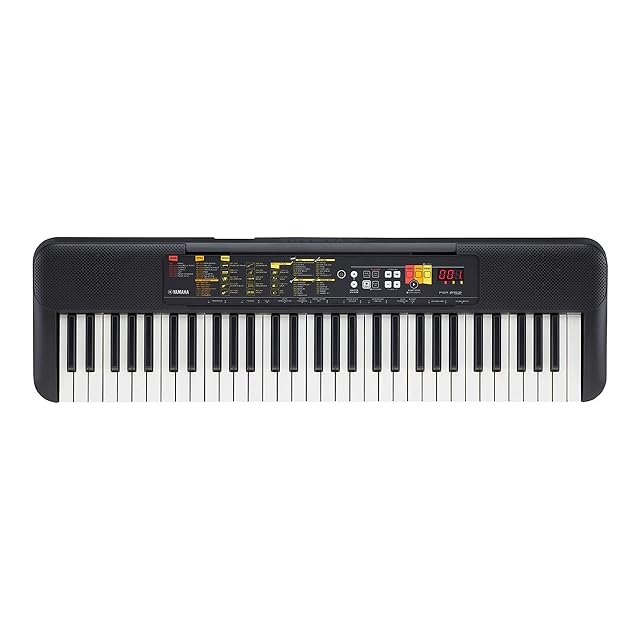
  1. Yamaha PSR-F52

    61 keys · 144 sounds · 158 styles

    The simplest instrument in this group: 61 full-size keys, 144 sounds and 158 accompaniment styles, at a price where the alternative is usually a toy with 32 small keys.

    Best for: A first keyboard for a child, or a second one to leave at a grandparent’s house.
    7.2/10

  2. Egerget P8

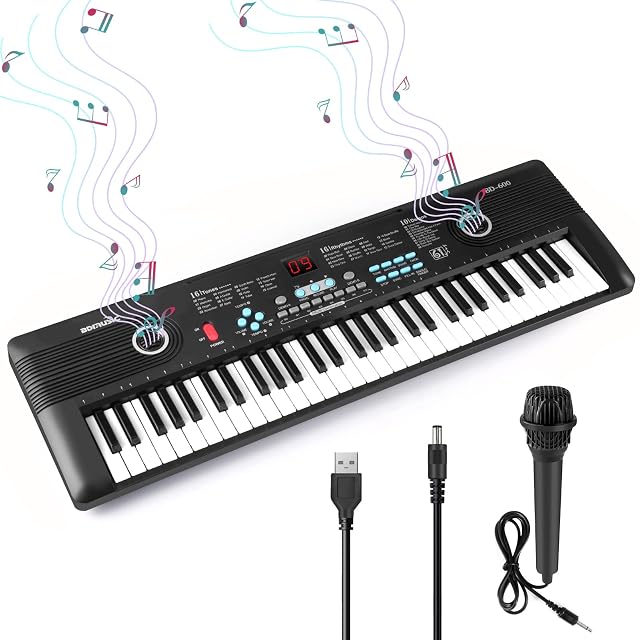
    61 keys · microphone output and a built-in microphone · 100 tones · 4 AA batteries

    The least expensive keyboard on this shelf by a wide margin, and the only one that records a voice — a microphone output and a built-in microphone — with 100 tones, eight percussion panels and battery operation.

    Best for: A child learning at a desk, where a microphone and a set of batteries matter more than a published key size.

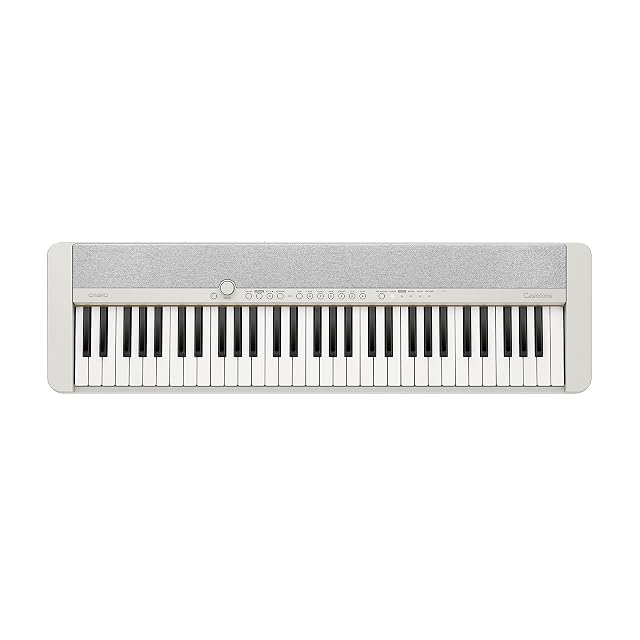
  3. Casio Casiotone CT-S1

    61 touch-sensitive keys · 61 sounds · no auto-accompaniment

    A keyboard built like a piano rather than like an arranger: 61 touch-sensitive keys, 61 sounds, and deliberately no accompaniment styles. Music rest and power adapter are included; the pedal is not.

    Best for: Someone who wants piano sounds and 61 keys without an arranger’s menus.

    7.8/10

    ≈ $560

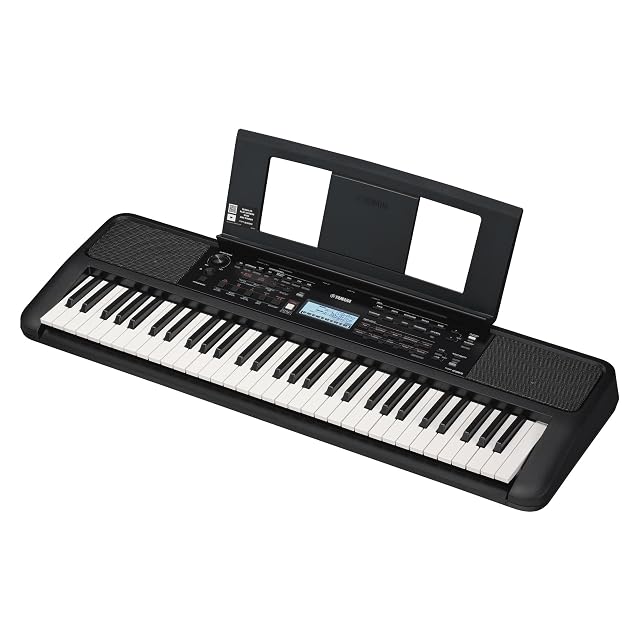
  4. Yamaha PSR-E383

    61 touch-sensitive keys · 650 sounds · 260 styles · 48-note polyphony

    The arranger answer to the Casio: 650 sounds, 260 accompaniment styles, 48-note polyphony and a structured lesson system with 125 built-in songs.

    Best for: A beginner who wants to play songs with accompaniment from the first week.

    7.8/10

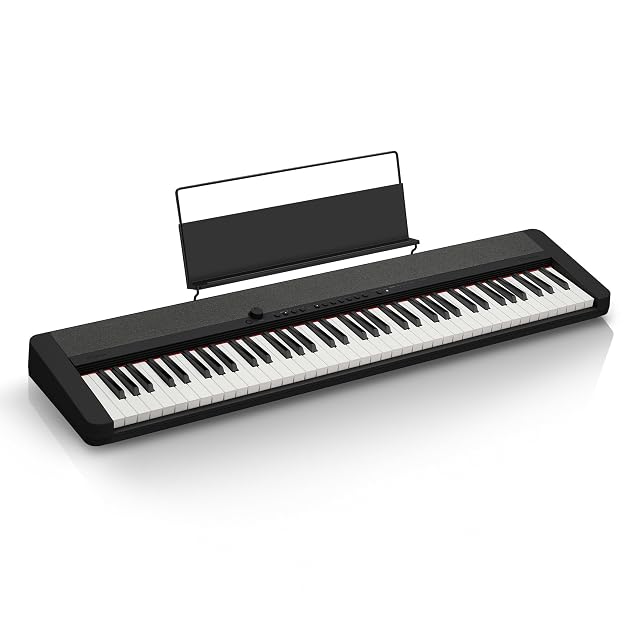
  5. Casio Casiotone CT-S1-76

    76 touch-sensitive keys · 61 sounds · 2 × 6.5 W

    The 76-key version of the same idea, with a bigger speaker system: 2 × 6.5 W instead of 2 × 2.5 W. Still no accompaniment styles, still 61 sounds, and 80 cm (31.5 in) longer in the room.

    Best for: A player who has run out of keys on a 61 but does not want an 88-key weighted piano.

    8.4/10

    ≈ $510

Need by need, within keyboards & synths

Playing two-handed without holding back

The span of the keyboard decides what can be played without transposing. It is the limit you meet first as you progress.

Egerget P8

Exploring the sounds

On an arranger keyboard, the sound catalog is what you are buying: it is what opens up styles and arrangements.

Yamaha PSR-E383

A keyboard that travels

A short format slips into a bag and sits on a table. To play anywhere but home, that is what decides.

Egerget P8

Who each family suits, across keyboards & synths

Musical discovery
An arranger with automatic accompaniments makes playing rewarding from the first hours. That is what sustains motivation.
Composition
A synthesiser with real front-panel controls lets you sculpt sound rather than pick from a list. A different approach altogether.
Stage
Weight, sturdiness and how fast you can change sound outrank the number of voices available.

What you gain and what you give up, on keyboards & synths

Arranger against synthesiser
The arranger accompanies and offers ready-made styles; the synthesiser builds sounds and accompanies nothing. Two distinct instruments.
Sound catalog against depth
Hundreds of voices impress in the shop and end up sounding alike. Thirty genuinely worked sounds serve you better.
Touch-sensitive keys against price
A keyboard that responds to how hard you strike costs more and changes everything about playing. Without it, every note comes out at the same volume.

Frequent questions on keyboards & synths

What is the difference between a keyboard and a digital piano?

The digital piano aims at piano touch and piano sound; the keyboard offers hundreds of voices with a lighter action.

Do I need touch-sensitive keys?

It is the criterion that changes playing the most: without it, playing loud or soft does not alter the volume. Many entry-level models go without.

What are automatic accompaniments for?

Playing a melody over a full rhythmic and harmonic backing. Very motivating to start with, and no substitute for learning both hands.

Can a keyboard be used as a MIDI controller?

Most have a USB or MIDI output and drive virtual instruments. A dedicated master keyboard does offer more controls.

Are the built-in speakers enough?

For practicing at home, yes. To play in a band or record, a line output to a PA becomes necessary.

Should it run on batteries?

The battery option makes the keyboard genuinely portable. It is paid for in limited running time and extra weight.

What stand height should I choose?

The one that puts the forearms horizontal, elbows slightly open. A keyboard set too high tires the shoulders within half an hour.

Does an entry-level keyboard last?

Non-velocity keys block progress from the second year of learning, and that is the limit that comes up most. The stated key action says how long the instrument follows the student.

What stays with you, on keyboards & synths

Touch sensitivity changes playing far more than the number of voices: without it, loud and soft make no difference. The arranger accompanies, the synthesiser builds — two instruments, not two tiers of the same one.

Summed up: keyboards & synths

    The full table of keyboards & synths

    A column is opened only if four devices in five publish the figure. Below that, it would set blanks against blanks.

    ModelPriceKeysSounds
    Casiotone CT-S1-76$51076, touch-sensitive61 from the AiX sound source
    Casiotone CT-S1$56061, touch-sensitive61 from the AiX sound source, including 10 Advanced and 12 Classic Casio tones
    Egerget P8—61. Egerget does not say whether they are full size, and says nothing about touch sensitivity. One keyboard on this shelf publishes 61 full-size keys and its page notes the distinction100 tones, 100 demonstration tracks, 10 rhythms and 8 percussion panels
    Yamaha PSR-E383—61, touch-sensitive650
    Yamaha PSR-F52—61, full size144

    Our guides on keyboards & synths

    Sources, and how the order is set

    Specifications: manufacturer sheets for musical instruments and gear and the matching Amazon product pages. Prices and availability: Keepa. Every figure in this table names its source.

    Most recent revision in this category: October 7, 2026.

    The method applied to keyboards & synths

    Prices quoted in these summaries are dated readings. The live price is shown next to each product.