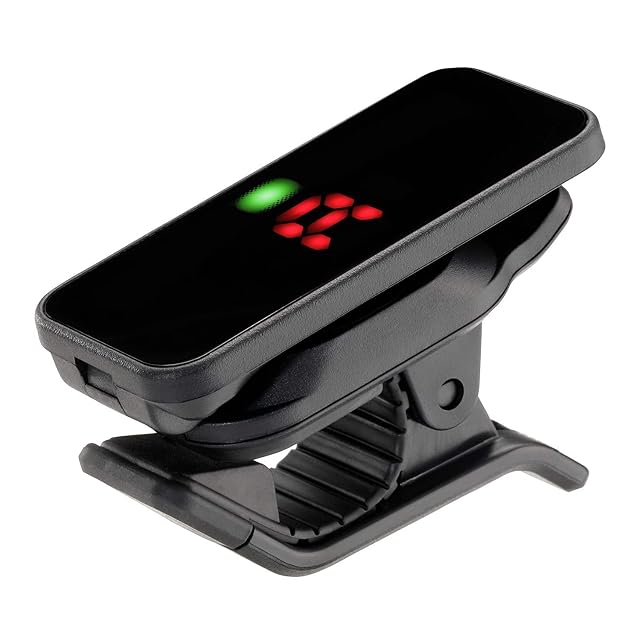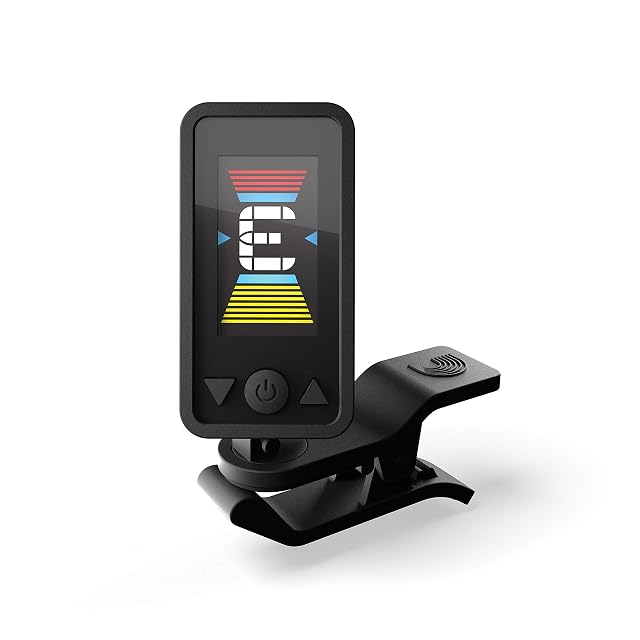
A compact clip-on tuner with a display that rotates to face the player. At eighteen dollars on the American store, it is among the cheapest things in this catalog that improves how an instrument sounds.
D'Addario Eclipse Clip Tuner
A compact clip-on tuner with a display that rotates to face the player. At eighteen dollars on the American store, it is among the cheapest things in this catalog that improves how an instrument sounds.
Type
Clip-on tuner
Display
Rotating, for reading from the playing position
Use
Guitar and bass
Amazon reference
B01IBI88R4 (identical on 6 markets)
EAN
0019954191580
Eighteen dollars on the American store, with almost no spread across the six measured
The rotating display means it is readable whether you are sitting or standing
No stated accuracy figure in the listing, so none is reported here
Best for: A first tuner, a spare tuner, or the one that lives in the case.
There is very little to say about an eighteen-dollar tuner except that every instrument should have one, and most do not.
It clips to the headstock, reads the string through the wood, and shows the note and how far off it is. The display rotates, which sounds like a marketing line until you try to read a fixed display on a bass headstock while sitting down.
D’Addario does not publish an accuracy figure for this model, so this page does not quote one. For tuning an instrument to itself and to a track, the precision on offer at this price has not been the limiting factor for years.
The reason to buy it is not performance. It is that a tuner in the case is used and a tuner on a desk at home is not.
The questions players ask
Is a cheap tuner accurate enough?
For tuning a guitar to itself and to a recording, comfortably. Where accuracy figures start to matter is intonation work — setting the bridge saddles — and that is a job where a more precise tuner or a strobe is worth having.
Why own two?
Because the one in the case is the one you have when the one on the desk is missing. At eighteen dollars, the redundancy costs less than one missed practice session.
Korg’s compact clip-on tuner. It clamps to the headstock and reads string vibration through the wood, which makes it immune to the noise of a room full of other people tuning.
Type
Clip-on, vibration sensing
Mount
Headstock clamp
Brand
Korg — a tuning reference brand
Amazon reference
B07DZRSV54 (identical on 5 markets)
EAN
4959112179103
Works in a noisy room, which no microphone-based tuner does
Korg has been making tuners longer than most of this catalog’s brands have existed
A clip-on cannot tune a wind instrument or a voice — there is nothing to clip it to
Best for: Guitar and bass, especially anywhere other people are also tuning.
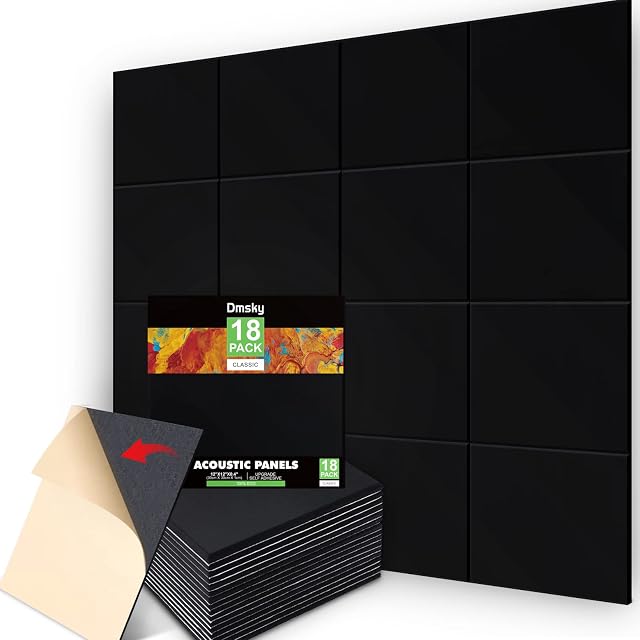
Eighteen polyester-fiber panels rather than foam tiles, with edges chamfered at 45 degrees so they butt together without a gap, and adhesive already on the back.
Quantity and size
18 panels at 12 × 12 × 0.4 in — 1 cm thick, the thinnest on this shelf
Material
High-density polyester fiber, not foam. DMSKY states it has better ductility and wear resistance and does not deform easily
Edges
A 45° chamfer, which DMSKY states leaves no gap between panels — the only edge treatment published on this shelf
Mounting
Adhesive already applied; the backing is peeled off
Absorption
DMSKY states the effect is better than ordinary material and publishes no NRC figure. No panel on this shelf publishes one
Thickness
0.4 in. One panel on this shelf publishes 5 cm (2 in), and its page notes that thickness is what reaches lower frequencies
Fire
DMSKY puts nothing in writing on this. One panel on this shelf publishes a fire claim
Color
Black
Coverage
18 square feet in total
Manufacturer reference
None published
Amazon reference
B08PVTC9G4
EAN
0798797224944
Polyester fiber rather than foam, which DMSKY states resists wear and deformation
The only panel on this shelf with a published edge treatment — a 45° chamfer so panels butt without a gap
At 0.4 in it is the thinnest panel on this shelf, and thin material does nothing to bass
Best for: Killing flutter echo on a small wall where the panels have to meet each other cleanly.
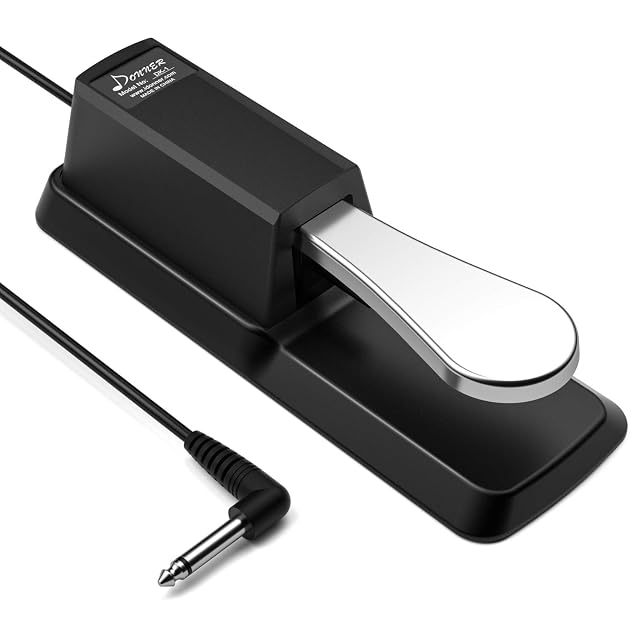
A damper pedal for digital pianos, keyboards and MIDI controllers, with a polarity switch on the body. That switch is the difference between a working pedal and a keyboard that appears to be broken.
Type
Universal sustain / damper pedal
Connector
6.35 mm (0.25 in) jack
Polarity
Switchable
Use
Digital pianos, keyboards, MIDI controllers
Amazon reference
B01M9DYQL0 (identical on 6 markets)
EAN
0600346316812
The polarity switch makes it work with any brand, not just one
A 6.35 mm (0.25 in) plug, which is what nearly every keyboard pedal socket uses
A light pedal can slide on a smooth floor while playing
Best for: Any keyboard or controller that did not come with a pedal — which is most of them.
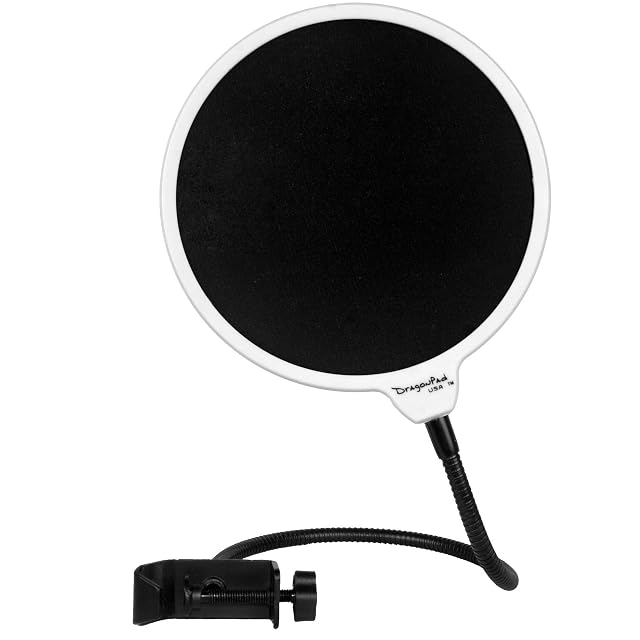
The only filter here that publishes how it works: two layers of nylon mesh with an air gap between them, six inches across, on a metal gooseneck with a tension screw.
Layers
Two layers of nylon mesh with an air gap between them, which Dragonpad states reduces popping and lisping without dulling the sound — one of two filters here to publish a layer count
Diameter
6 in — the only filter diameter published on this shelf
Gooseneck
Metal, which Dragonpad states is strong enough to hold position and still easy to adjust
Mount
A universal bracket with a tension screw, stated to fit virtually any microphone or stand
Stated purpose
Plosives and lisping, and keeping saliva off the capsule — Dragonpad notes that saliva contains corrosive salts
Clamp capacity
Dragonpad puts nothing in writing on this. One filter on this shelf publishes shafts up to 18 mm (0.71 in)
Material
Nylon mesh. One filter here is metal, one is foam and one offers all three
Weight
14 g (0.5 oz) in the product record
Amazon reference
B00XQFOSZE
EAN
0634972184415
Publishes the mechanism: two layers of mesh with an air gap, which is how a pop filter actually works
The only published filter diameter on this shelf — six inches
No clamp capacity published, so the stand question is still open
Best for: A close vocal where the filter should be big enough to stay in front of a moving head.