Skip to content

Behringer OD300 Overdrive/Distortion

Two gain characters in one enclosure: overdrive for a pushed amplifier sound and distortion for something heavier. Same 9 V center-negative rule, same absence of a supply in the box.

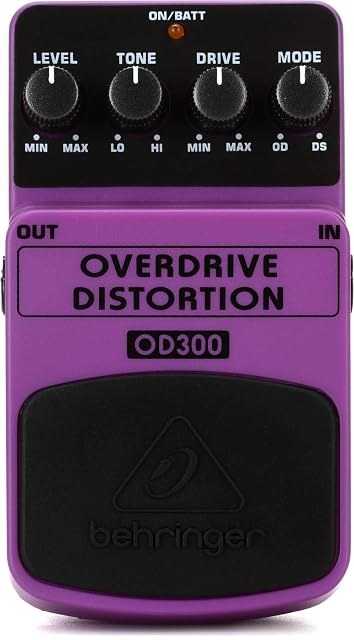
Behringer OD300 two-mode overdrive and distortion pedal in purple

Behringer OD300 Overdrive/Distortion

Two gain characters in one enclosure: overdrive for a pushed amplifier sound and distortion for something heavier. Same 9 V center-negative rule, same absence of a supply in the box.

Type
Overdrive and distortion, two modes
Power
9 V DC, center negative — supply not included
Amazon reference
B002EWM1EA (identical on 6 markets)
EAN
0736211844170
  • Two distinct gain characters for the price of one pedal
  • Distortion mode covers heavier styles the TO800 deliberately does not
  • No supply included, like almost every pedal at this price

Best for: A player covering several styles who does not want two pedals yet.

≈ $34
Check price on Amazon
Specifications

Type
Overdrive and distortion, two modes
Power
9 V DC, center negative — supply not included
Amazon reference
B002EWM1EA (identical on 6 markets)
EAN
0736211844170

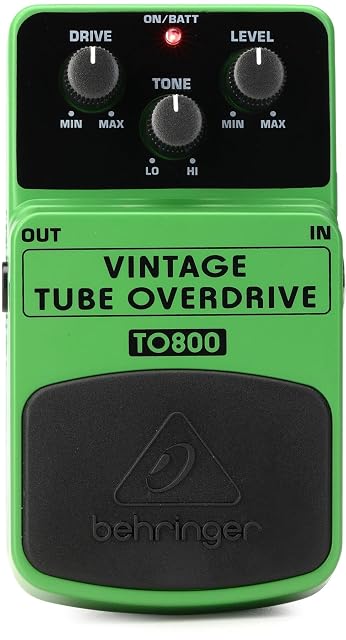
Where the TO800 does one thing, the OD300 does two: an overdrive mode that pushes an amplifier, and a distortion mode that produces the clipping itself.

That covers a wider range of styles from one enclosure, which at this price is the whole argument. The trade is control: two modes in a small box means fewer knobs devoted to each than a dedicated pedal would give.

The power rules are identical and worth repeating because they are the most expensive mistake in this family. Nine volts DC, center negative, and no supply in the box. If a single adapter is going to run this pedal and another, add their current draws together and choose a supply comfortably above the total — a supply running at its limit hums, and the hum is usually blamed on the pedals.

The questions players ask

Overdrive or distortion — what is the difference?

Overdrive pushes an amplifier into breaking up and keeps the dynamics of your playing; distortion generates the clipping itself and compresses more, which is what heavier styles use. This pedal offers both, switched.

Do I need a separate power supply for two pedals?

You need one that supplies enough current for both. Add the stated current draw of each pedal and compare with the supply’s rating, with headroom to spare — a supply run at its limit is the usual cause of hum and dropouts on a pedalboard.

Instruments it is stated to fit

All effects pedals