Skip to content

Behringer UMC22 vs Focusrite Scarlett Solo (4th Gen)

Is a first interface worth three times the price of the cheapest honest one?

Both record one microphone and one instrument. One costs about a third of the other, and the gap is not where beginners expect.

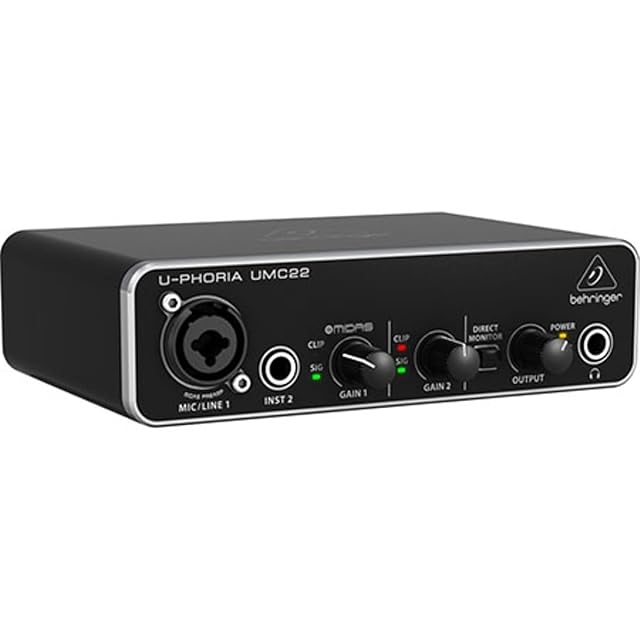
Behringer UMC22 compact USB audio interface with two inputs

Behringer UMC22

7.2/10

Wins 1 of 7

Check price

≈ $53

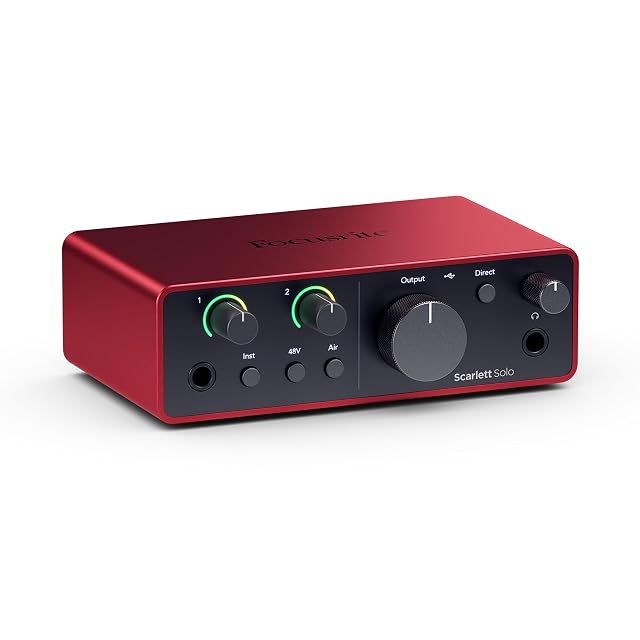
Focusrite Scarlett Solo 4th generation USB-C audio interface in red

Focusrite Scarlett Solo (4th Gen)

7.8/10

Wins 2 of 7

Check price

≈ $130

Specification against specification

Compared on UMC22 Scarlett Solo (4th Gen)
Microphone preamps One, Midas-designed One
Maximum sample rate 48 kHz Not stated in listing
Converter dynamic range Not published 120 dB
Direct monitoring Yes, with mix control Yes
Bundled software Not stated Pro Tools Intro+, Ableton Live Lite, Cubase LE, Hitmaker
Connection USB, bus powered USB-C
Listed on amazon.com Yes Yes

A tick marks the better answer on that line only. Counting ticks does not decide the page — the two verdicts below do, because these products answer different questions.

Which of the two, for which player

Buy the UMC22

Take the UMC22 if the budget is the binding constraint or if you already own recording software. It is a complete chain for one source, and nothing about it is a trap.

Buy the Scarlett Solo (4th Gen)

Take the Scarlett Solo for the software bundle and the maintained driver. If you have no program to record into, the bundle alone is worth more than the price difference.

The questions players ask

Will the cheaper interface sound worse?

Behringer does not publish a dynamic range figure, so a like-for-like comparison cannot be made from the listings. In a normal room, with a normal microphone, the room and the microphone are the limiting factors long before either interface is.

Does the software really matter?

If you own none, yes: the Focusrite bundle includes three recording programs and an effects and instrument collection. If you already work in a DAW, it is worth nothing to you.

The detail, on each

  • Behringer UMC22

    2×2 · Midas preamp · 48 kHz · USB powered

    The cheapest honest way into recording: one XLR/TRS combo input with a Midas-designed preamp, a separate instrument input, direct monitoring and USB power. Forty-eight kilohertz, and no pretense beyond it.

    Best for: A first interface for one voice or one instrument at a time.

    7.2/10

    ≈ $53

  • Focusrite Scarlett Solo (4th Gen)

    2 in / 2 out · 120 dB dynamic range · Air mode

    One microphone preamp and one instrument input, with the same 120 dB converters Focusrite puts in its larger interfaces, an Air mode for presence, and a software bundle that is a large part of the value.

    Best for: A songwriter recording one part at a time who wants room to grow.

    7.8/10

    ≈ $130