The cheapest honest way into recording: one XLR/TRS combo input with a Midas-designed preamp, a separate instrument input, direct monitoring and USB power. Forty-eight kilohertz, and no pretense beyond it.
What it amounts to An honest entry to this category: everything needed to record one source properly, and nothing more. One interface here costs less than half as much, and it names no preamp designer at all.
The UMC22 is the interface that gets recommended when someone asks for the cheapest thing that is not a mistake, and the recommendation holds up.
It gives you one XLR/TRS combo input with a Midas-designed preamp, a separate instrument input for a guitar or bass, a headphone output and a mix control for direct monitoring. That last control is the one beginners underestimate: it lets you hear yourself straight from the input rather than after a round trip through the computer, which is what makes singing to a backing track possible.
Behringer states 48 kHz, and this page does not stretch that into a claim about anything else. It is the resolution most commercial music is delivered at.
The limit is the count. One microphone preamp means one microphone. If the plan involves recording two voices, or a singer and a guitar with two microphones, the 2i2 further up this page is the smallest step that solves it.
In its favor, and its limits
Strengths
Records a microphone and a guitar without any other purchase beyond cables
Direct monitoring with a mix control, which is what removes latency from a headphone feed
Bus powered, so there is no adapter to lose
The least expensive interface here with a named preamp design — Midas — which nothing else on this shelf publishes
Compromises
48 kHz is the ceiling here, where the Focusrite units go further
One microphone preamp, so two singers or a stereo pair are out of reach
Specifications
Channels
2 in / 2 out
Preamp
Midas-designed microphone preamp
Resolution
48 kHz (Behringer states)
Inputs
XLR/TRS combo plus a separate instrument input
Monitoring
Direct monitoring with mix control, headphone output
Power
USB bus powered
Amazon reference
B00FFIGZF6 (identical on 6 markets)
EAN
0696859053863
The two closest instruments on price
Same section, nearest price — what the same money else sounds like.
No. There is one XLR combo input and one instrument input, so it records one microphone and one instrument simultaneously — not two microphones. Simultaneous inputs, not socket count, is the number to compare.
Is 48 kHz enough?
It is the resolution most released music has been recorded and delivered at. Higher rates have their uses; for a first home setup, the driver and the preamp matter more than the number.
Our score
7.2/ 10
An honest entry to this category: everything needed to record one source properly, and nothing more. One interface here costs less than half as much, and it names no preamp designer at all.
Accessories confirmed for this instrument
Shown because the accessory names this instrument itself.
A reference exists on these Amazon stores: France, Germany, Italy, Spain, United Kingdom, United States. Listed is not the same as in stock — availability changes daily.
Details checked on August 18, 2026.
Who should pick this one, among music instruments and gear
A first interface for one voice or one instrument at a time.
Our music instruments and gear guides that pick it
Amazon reports what buyers took in the month before this page was last checked: at least 300.
The figure is a floor, rounded by Amazon, and read through Keepa — it says what buyers picked, not what a maker claims.
Sources
Specifications: the manufacturer sheet for musical instruments and gear and the matching Amazon product page. Prices and availability: Keepa. Every figure on this page names its source.
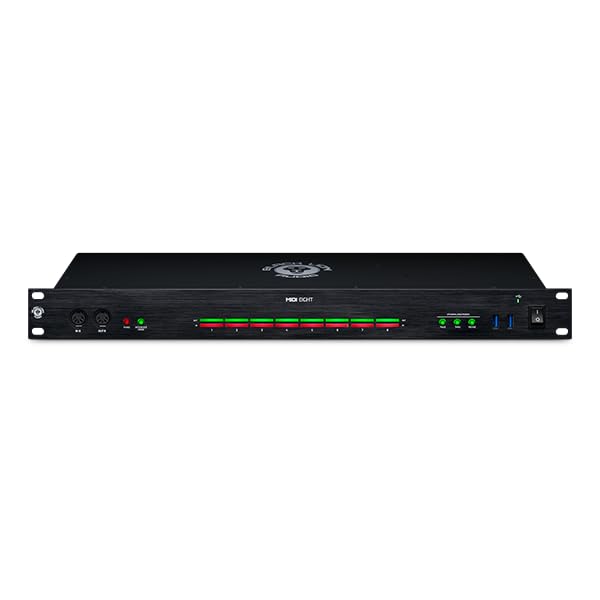
No audio at all · 8 in / 8 out MIDI · three standalone routing modes
The one listing on this shelf that passes no audio: an 8-in, 8-out MIDI interface with three standalone routing modes, per-port activity indicators and front-mounted sockets.
Best for: A studio with more than two MIDI instruments, where the problem is routing rather than recording.
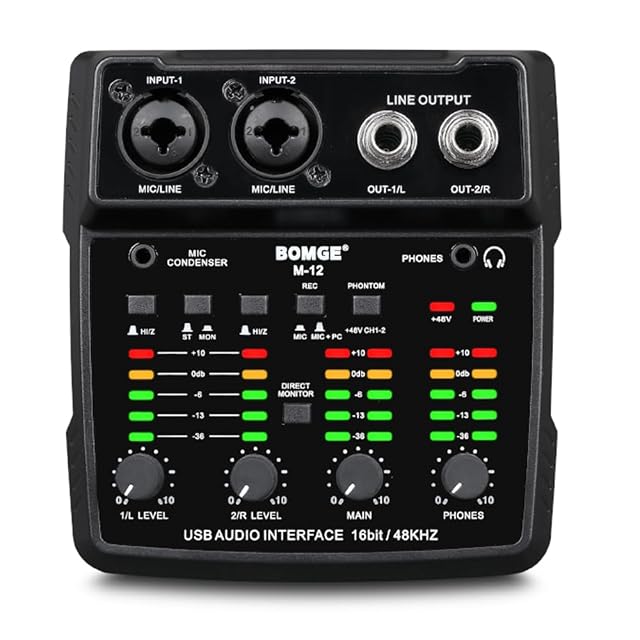
2 channels · 48 V phantom power · gain meter −36 to 10 dB · 3.5 mm (0.14 in) mic input
The least expensive interface on this shelf by a wide margin, with two XLR inputs, 48 V phantom power, a published gain-meter range of −36 to 10 dB, and an extra 3.5 mm (0.14 in) microphone jack.
Best for: A first interface for someone who already has recording software and wants two XLR inputs for the least money.
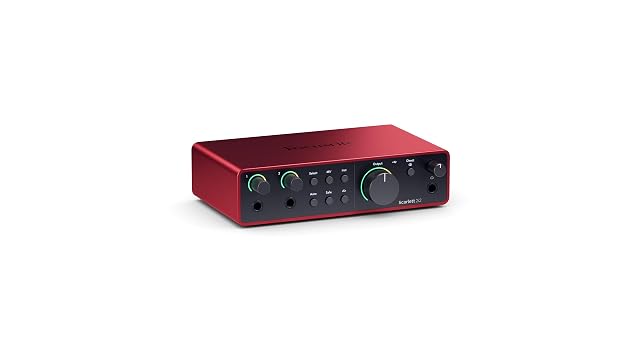
Two microphone preamps rather than one, plus Auto Gain to set levels and Clip Safe to stop a take being destroyed by a loud moment. The interface most home studios settle on and stop replacing.
Best for: Anyone who will ever record two things at the same time.