One microphone preamp and one instrument input, with the same 120 dB converters Focusrite puts in its larger interfaces, an Air mode for presence, and a software bundle that is a large part of the value.
What it amounts to The safest single-input interface here: good converters, a real software bundle and a driver that is maintained.
The Scarlett Solo has been the default first interface for years, and the fourth generation keeps the reasons intact.
Focusrite quotes the same 120 dB dynamic range converters as on its higher interfaces, which means the limit on your recordings will be the room and the microphone rather than the box. The connection is USB-C. The Air mode adds presence and saturation on the way in — useful, and worth understanding as a commitment, because it is printed into the recording rather than added later.
The software matters more than it appears to. Pro Tools Intro+, Ableton Live Lite, Cubase LE and the Hitmaker Expansion arrive with the unit. For someone starting out, that is the difference between an interface and a working studio, and it is a large part of why this unit costs what it does.
The only real limitation is arithmetic: one microphone preamp records one microphone. If two sources have to be captured in the same take, the 2i2 is the smallest fix.
In its favor, and its limits
Strengths
The same converter specification Focusrite quotes on its more expensive interfaces
The bundled software is a working studio on its own, not a demo
USB-C, and a driver Focusrite maintains for both platforms
Sold under one reference across all six Amazon stores
Compromises
Still one microphone preamp: two microphones at once needs the 2i2
Air mode is a color, and it is applied on the way in
Specifications
Channels
2 in / 2 out
Converters
120 dB dynamic range (Focusrite states)
Connection
USB-C
Air mode
Presence and saturation setting for vocals and guitars
Software
Pro Tools Intro+, Ableton Live Lite, Cubase LE, Hitmaker Expansion
Setup
Easy Start tool
Amazon reference
B0C5JSHP7M (identical on 6 markets)
EAN
0815301001478
The two closest instruments on price
Same section, nearest price — what the same money else sounds like.
Count what you record at the same moment. One voice, or one guitar, or one after the other: Solo. A voice and a guitar together, two singers, or a stereo pair: 2i2. Nothing else about the two units differs enough to matter at this level.
What is Air mode?
Focusrite describes it as bringing vocals and guitars forward with presence and saturation. It is a deliberate color rather than a correction, and it is recorded into the file — so it is a decision, not a later adjustment.
Our score
7.8/ 10
The safest single-input interface here: good converters, a real software bundle and a driver that is maintained.
Accessories confirmed for this instrument
Shown because the accessory names this instrument itself.
A reference exists on these Amazon stores: France, Germany, Italy, Spain, United Kingdom, United States. Listed is not the same as in stock — availability changes daily.
Details checked on August 18, 2026.
Who should pick this one, among music instruments and gear
A songwriter recording one part at a time who wants room to grow.
What buyers actually choose
Amazon reports what buyers took in the month before this page was last checked: at least 2,000.
The figure is a floor, rounded by Amazon, and read through Keepa — it says what buyers picked, not what a maker claims.
Sources
Specifications: the manufacturer sheet for musical instruments and gear and the matching Amazon product page. Prices and availability: Keepa. Every figure on this page names its source.
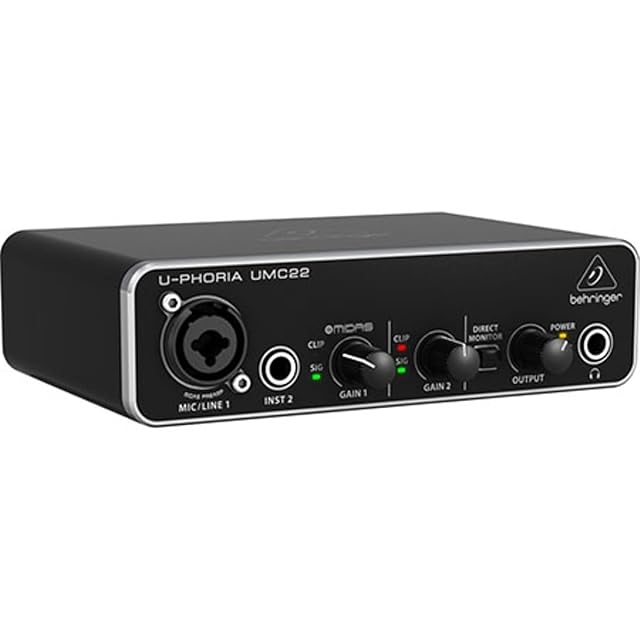
The cheapest honest way into recording: one XLR/TRS combo input with a Midas-designed preamp, a separate instrument input, direct monitoring and USB power. Forty-eight kilohertz, and no pretense beyond it.
Best for: A first interface for one voice or one instrument at a time.
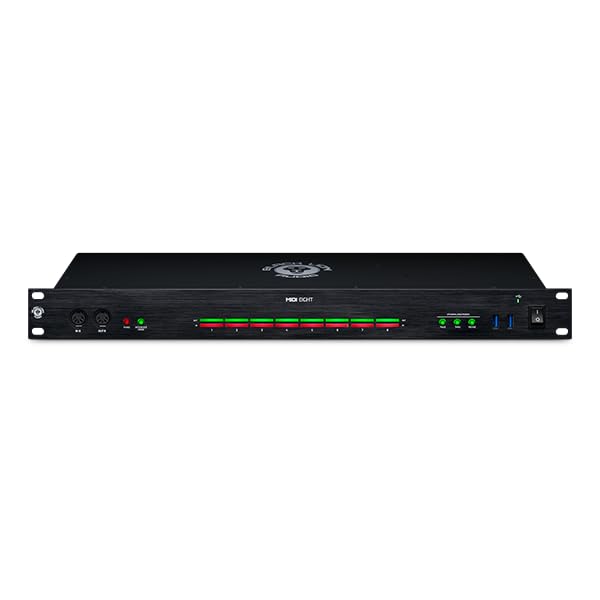
No audio at all · 8 in / 8 out MIDI · three standalone routing modes
The one listing on this shelf that passes no audio: an 8-in, 8-out MIDI interface with three standalone routing modes, per-port activity indicators and front-mounted sockets.
Best for: A studio with more than two MIDI instruments, where the problem is routing rather than recording.
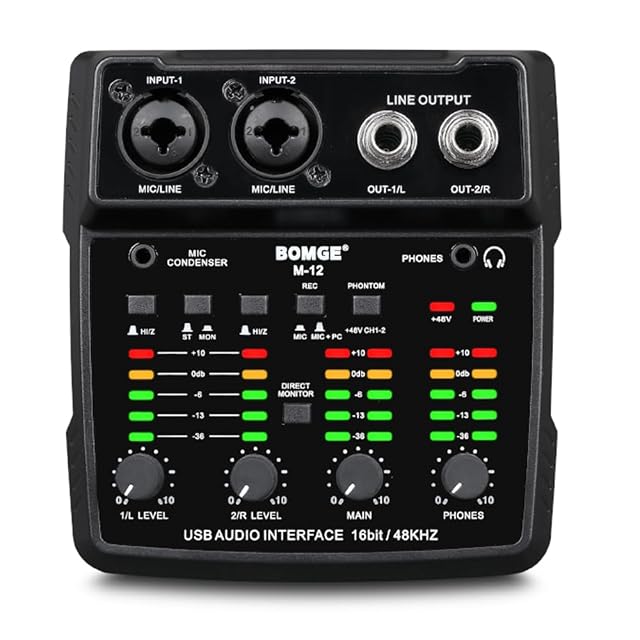
2 channels · 48 V phantom power · gain meter −36 to 10 dB · 3.5 mm (0.14 in) mic input
The least expensive interface on this shelf by a wide margin, with two XLR inputs, 48 V phantom power, a published gain-meter range of −36 to 10 dB, and an extra 3.5 mm (0.14 in) microphone jack.
Best for: A first interface for someone who already has recording software and wants two XLR inputs for the least money.