Skip to content

The best first digital piano

Every piano here has 88 weighted keys, which is the line that separates a piano from a keyboard. What separates these three is what is in the box and whether the instrument can be moved.

What has to be bought alongside

The specification sheets are close enough that the box contents decide this category. A piano without a pedal is a piano you cannot play properly, and a piano without an adapter is furniture until a parcel arrives.

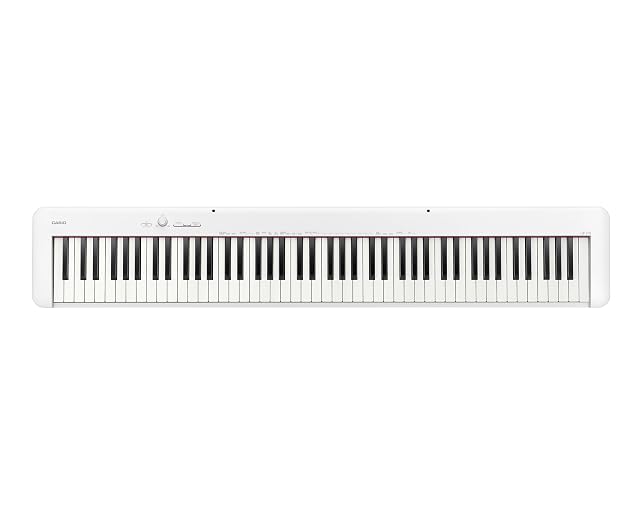
The Casio CDP-S110 is first because it includes the SP-3 pedal, the music rest and the power adapter, and because at 99 mm (3.90 in) deep and 10.5 kg (23.1 lb) it fits on a desk and can be carried by one person.

Then the room

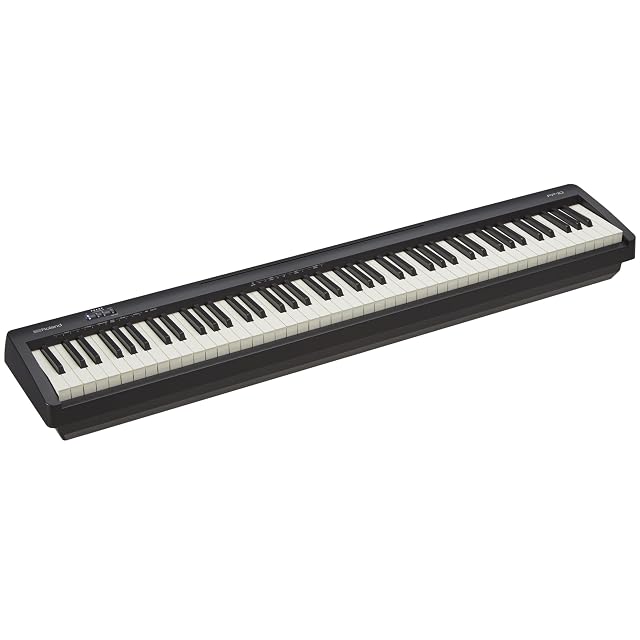
The Roland FP-10 is here for one specification the others do not state: Roland describes a low-noise key mechanism. Headphones silence the speakers, not the keys, and in a flat with thin floors the mechanical noise of the action is what the neighbor hears.

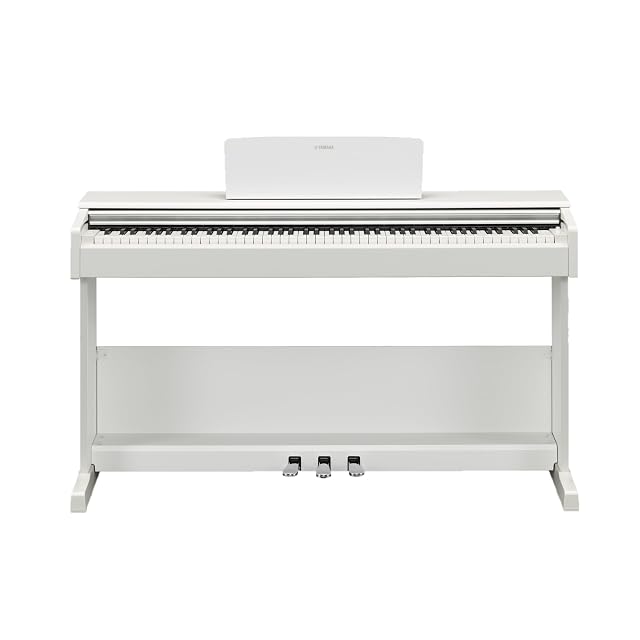
The Yamaha ARIUS YDP-105 is the answer when the piano has a permanent home. The stand is the instrument, three pedals are built in, and nothing moves while you play — which no X-frame stand fully achieves.

What we would not do

We would not buy 88 unweighted keys and call it a piano. That is a different instrument with its own merits, and it is covered in the keyboard guide.

Which instrument fits how you play?

You are learning classical piano
Weighted keys are not optional: they build the technique an unweighted keyboard cannot.
You want portability
A stage or portable model without a cabinet, accepting a stand and pedal bought separately.
It will live in a room permanently
A console model with a fixed stand and three pedals is more pleasant and less cluttered.
You mainly want sounds and production
A MIDI controller or an arranger keyboard suits better, and costs far less.

Picking by how you play

Learning to play

Weighted keys and a sustain pedal are the requirements. Everything else on the specification list is secondary.

Practicing quietly

Headphones, which is the main practical advantage over an acoustic piano and the reason many households choose one.

Playing at home for pleasure

Speaker quality and the cabinet matter here, because the instrument is heard in the room.

Recording and computer use

USB and MIDI output, which most instruments have and few beginners use at first.

The things you will notice while playing

Weighted, hammer-action keys
The single defining feature. Semi-weighted and unweighted keys teach a different touch, and transferring to an acoustic piano later is harder.
The number of keys
A full set matters for classical repertoire; fewer is workable for beginners and for portability. It is worth knowing which pieces you intend to play.
Polyphony
How many notes can sound at once, including sustained ones. Too little shows as notes cutting off under the pedal, which is confusing to a learner.
The pedal supplied
A small plastic footswitch behaves nothing like a piano pedal. A proper sustain pedal is a cheap and immediate improvement.
Headphone output and speakers
Both matter: headphones for practice hours, speakers for playing in the room. A weak speaker makes an instrument less pleasant to sit at.

Which figure for which playing

Your aimWhat it requiresWhat you can skip
Learning classical pianoWeighted hammer actionHundreds of sounds
PortabilityA slab instrumentA cabinet and three pedals
A permanent instrumentA console modelPortability
Production and soundsA MIDI controllerWeighted keys

The mistakes players make

Buying an unweighted keyboard to learn piano
The touch is fundamental to piano technique. An unweighted instrument teaches habits that have to be unlearned on a real piano.
Judging by the number of sounds
Beginners use one or two. A long sound list is a marketing figure and it says nothing about the key action, which is what matters.
Keeping the bundled footswitch
A cheap switch pedal is on or off, where a piano pedal is continuous. It is the smallest and most worthwhile upgrade.
Ignoring where it will live
A slab on a wobbly stand is unpleasant to play. Deciding the room and the stand before buying avoids the common regret.

By the musician you are

The classical learner
Weighted keys, a full set if the repertoire needs it, and a proper pedal. That is the whole requirement.
The household instrument
A console model: it stays out, it looks like furniture, and that is what makes it played.
The producer
A MIDI controller and a computer. Weighted keys are a preference here, not a requirement.

Care, keys and how long it stays good

A digital piano needs very little, and what it needs is a stable environment and clean keys. Dust and spilled drink under the keys are the commonest cause of a stuck or silent note, and neither is a repair a beginner should attempt.

  • Keep drinks away from the keyboard; liquid under the keys is the classic failure.
  • Dust the keys with a soft dry cloth rather than a wet one.
  • Keep it out of direct sun and away from radiators.
  • Check the pedal cable and jack: intermittent sustain is usually the cable, not the instrument.

Safety

A heavy instrument on a stand, with headphones used for long sessions.

  • Use a stand rated for the instrument’s weight and check it is fully locked.
  • Set safe headphone levels for long practice sessions.
  • Route the power and pedal cables where they cannot be tripped over.
  • Two people to move a console instrument: they are heavier than they look.

The choices, and the reasoning

  1. Casio CDP-S110

    88 weighted keys · 10 sounds · pedal and stand included

    A slim 88-key board with Casio’s Scaled Hammer Action II and, unusually at this price, the SP-3 pedal, music rest and power adapter already in the box. Ten sounds rather than hundreds — the money went into the keys.

    Best for: A first weighted piano where the pedal and adapter should not be a second order.

    7.9/10

    ≈ $820

  2. Roland FP-10

    88 keys · SuperNATURAL · headphone output

    Roland’s entry into the FP series: 88 keys with an ivory-feel surface, the SuperNATURAL engine, and a keyboard mechanism Roland describes as quiet in itself — the detail that decides whether a flat-dweller can practice at night.

    Best for: Someone who will practice mostly in headphones and wants the action to be the strong part.

    7.9/10

    ≈ $500

  3. Yamaha ARIUS YDP-105

    88 GHS keys · three pedals · console cabinet

    A console piano rather than a portable one: 88 Graded Hammer Standard keys, three pedals and a cabinet that stays where you put it. Yamaha also fits a volume limiter, which sets a ceiling on output.

    Best for: A permanent practice piano in a room where it can stay assembled.

    8.3/10

The questions players ask

How much does a proper weighted piano cost?

From about $250 for a slim portable with a hammer action, and from about $700 for a console instrument with three pedals. Below $250 the action is what gets cut, and the action is the instrument.

Do I need 88 keys?

For piano repertoire, eventually yes. Seventy-six covers most of it and 61 runs out; but the deciding factor at this level is the action, not the count — 88 unweighted keys teach less than 61 weighted ones would.

Do I really need weighted keys?

For learning piano, yes. The touch is part of the technique, and an unweighted instrument teaches habits that have to be unlearned later.

What is polyphony and does it matter?

It is how many notes can sound at once, including those held by the pedal. Too little shows as notes cutting off unexpectedly, which confuses a learner.

Is the included pedal good enough?

Usually not: a small switch pedal is on or off, where a piano pedal is continuous. A proper sustain pedal is the cheapest worthwhile upgrade.

Can a digital piano replace an acoustic?

For learning, practicing quietly and living in a flat, it does the job and has real advantages. The feel and the sound in a room remain different.

Does it need tuning?

No, which is one of the format’s practical advantages. It needs a stable environment and clean keys instead.

Each instrument, and the player it answers

Casio CDP-S110 · $820

For players who: A first weighted piano where the pedal and adapter should not be a second order.

Its finest point: Hammer action across all 88 keys, which is the line that separates a piano from a keyboard

Its weakest point: Ten sounds is a deliberate choice, and it will feel thin if you expected an arranger

Read the full review →

Roland FP-10 · $500

For players who: Someone who will practice mostly in headphones and wants the action to be the strong part.

Its finest point: The SuperNATURAL engine is the same family Roland uses further up the FP range

Its weakest point: The listing does not state polyphony or speaker power, so neither figure appears here

Read the full review →

Yamaha ARIUS YDP-105

For players who: A permanent practice piano in a room where it can stay assembled.

Its finest point: Three real pedals in a fixed cabinet — the closest thing here to an acoustic instrument’s layout

Its weakest point: It is furniture: it has to be assembled and it does not travel

Read the full review →

What to get with it

Stands, pedals and cables from the same aisle, at the price we read. Confirm they suit the instrument you choose before ordering: it turns on the fitting and the part number, which the product page gives.

  • AODSK AS-WKBS · Keyboard stands & pedals — Solid wood · fixed 25.2 in high · 45.67 in long · depth 8.66–12 in · 76–88 keys
  • AODSK AS-ZK · Keyboard stands & pedals — Z-frame · height 21.2–32.4 in · width 21.8–35.2 in · 61–88 keys · no tools
  • CME C2MIDI Pro · Cables & adapters — USB-C MIDI · 32-bit processor · filter, map, route · works with no computer
  • Cyberguys! 190 0027 · Cables & adapters — 3.5 mm (0.14 in) TRS to 6.35 mm (0.25 in) TRS · 3.3 ft · oxygen-free copper · braided
  • CAHAYA Triple-Brace Music Stand · Music stands & lights — Metal · triple brace · 78–170 cm (30.7 to 66.9 in) · folds · $88
  • K KASONIC 2-in-1 Music Stand · Music stands & lights — Folding · sheet clamp · carry bag included · $20

If you want one line

Comparisons worth hearing out

Instrument against instrument, where that page is already written.

What stands behind this ranking

What is listed is taken from the catalog of this site. Specifications come from the manufacturer and from the Amazon listing; prices are what Keepa reported on the date shown, and both move. The order follows declared specifications, stated strengths against stated limits, and price. Nothing here has been played or recorded with by us, and no page pretends otherwise.

Last checked on

Prices quoted in these summaries are dated readings. The live price is shown next to each product.

The tool we use ourselves

Chosen your instrument? Now buy it at the right price.

Digital pianos and electronic drum kits swing by a hundred dollars or more across the year, and the biggest "discounts" often land at prices the same model sold for six weeks earlier. UniverTrack tracks the real price history across retailers, spots fake reductions, and alerts you when it is genuinely the moment to buy.

Real price historyBuy-now alertsAI buying assistant
Try free for 14 days →
No commitment · Cancel in one click · 5 languages