The arranger that survives the first year · review
Egerget P8 review
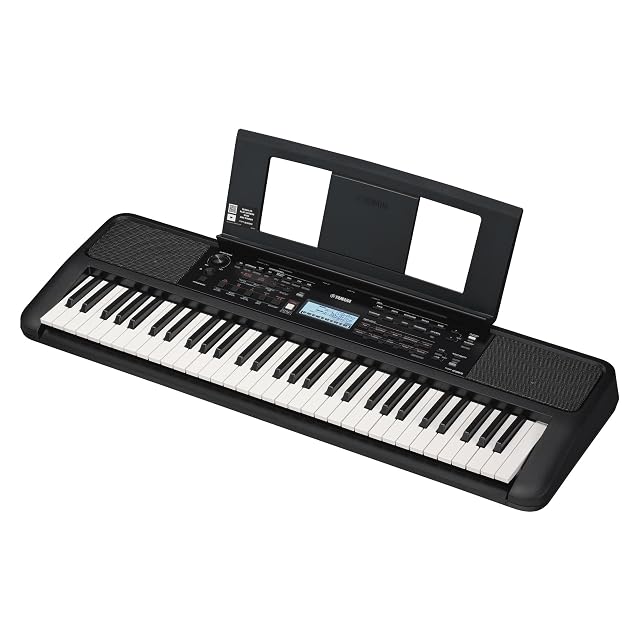
The least expensive keyboard on this shelf by a wide margin, and the only one that records a voice — a microphone output and a built-in microphone — with 100 tones, eight percussion panels and battery operation.
What it amounts to The cheapest keyboard here, the only one that records a voice, and the only one that publishes what its case is made of. It never says how wide the keys are, whether they respond to touch, or how many notes can sound at once — and all three decide what it is worth.
Sixty-one keys. A microphone output and a built-in microphone, with recording and playback. One hundred tones, 100 demonstration tracks, 10 rhythms and eight percussion panels. An adapter or four AA batteries, not included. A case in eco-friendly ABS with rounded edges.
The microphone is why this listing is interesting and why it was filed in the wrong place. No other keyboard on this shelf has one — not an input, not a built-in capsule — and this has both, with recording. For a child, singing along while playing is most of the point; a relevé built on titles saw the word microphone and filed the instrument with the studio condensers.
The percussion panels are the other thing nothing else here publishes: eight pads for drum sounds, which turns a demonstration track into something to play along with.
Four AA batteries, and Egerget states they are not included. That is honest and it is the detail that decides whether the instrument gets used on a floor or stays by a socket. One piano on this shelf’s neighboring family publishes 13 hours of battery life; this publishes the cell count and no duration.
The case material is unusual to publish at all: ABS, molded with curved surfaces and rounded edges, stated for safe handling. On an instrument bought for a child that is a sentence worth having.
Then the four figures that are not here, and together they are the finding.
No key size. Sixty-one keys is a count. A 61-note keyboard can have piano-width keys or narrow ones, and only the first teaches a spacing that transfers. One keyboard on this shelf publishes 61 full-size keys and its page makes that exact point.
No touch sensitivity. Whether the sound gets louder when a key is struck harder is the difference between an instrument and a toy. A page on this site for another keyboard declines to claim it precisely because the listing does not state it, and the same restraint applies here.
No polyphony. How many notes can sound at once. One keyboard on this shelf publishes 48 notes, and its page observes that most keyboards at that price stay silent about it — this one does too.
No weight and no speaker power. One keyboard here publishes 4.5 kg and 93 cm, and its page calls that a keyboard you can actually carry.
One last comparison the shelf makes for itself: a keyboard here publishes 61 sounds and its page praises the short list as a curated sound list rather than hundreds of variations nobody uses. This publishes 100 tones and 10 rhythms. Both positions are on the shelf, and the reader can pick.
Availability
Read on the day this page was built: $35 at the American Amazon shop.
Read from Keepa on the day this page was last revised; stock and price both move without notice.
Prices quoted in this text were read on 2026-10-07. The live price is at the top of the page.
In its favor, and its limits
Strengths
The only keyboard on this shelf with a microphone input and a built-in microphone — it records a voice as well as the keys
Sixty-one keys and battery operation at the lowest price on this shelf
The case material is published — ABS with rounded edges, stated for safe handling
Compromises
The key size is never stated, and on a 61-key instrument that is the first question a buyer has
No touch sensitivity, no polyphony, no weight and no speaker power published
100 tones and 10 rhythms is the long sound list one keyboard here deliberately rejects
Specifications
Keys
61. Egerget does not say whether they are full size, and says nothing about touch sensitivity. One keyboard on this shelf publishes 61 full-size keys and its page notes the distinction
Microphone
A microphone output and a built-in microphone, with real-time performance capture — the only keyboard on this shelf that records a voice
An adapter or four AA batteries — the batteries are not included, and Egerget says so
Case
Eco-friendly ABS with precision-molded curved surfaces and rounded edges, which Egerget states is for safe handling — the only case material published on this shelf
Recording
Built-in recording and playback, through the integrated microphone
Speakers
Dual built-in. No power figure is published
Polyphony
Egerget puts nothing in writing on this. One keyboard on this shelf publishes 48 notes, and its page notes that most at that price stay silent
Weight
Egerget puts nothing in writing on this, and the product record holds no figure. One keyboard here publishes 4.5 kg (9.9 lb)
Manufacturer reference
P8
Amazon reference
B0HGXDF3MG
EAN
0739719324397
The questions players ask
Are the keys full size?
The listing does not say, and this page will not assume it. Sixty-one keys is a key count, not a key size — a 61-note keyboard can have piano-width keys or narrow ones, and the difference decides whether anything learned on it transfers to a piano. One keyboard on this shelf publishes 61 full-size keys and its page makes exactly this point: full-size keys at a price where 32 mini keys are the norm. A page on this site for another keyboard goes further and declines to claim touch sensitivity because its listing does not state it. The same caution applies here, to a more basic question.
What is the microphone for?
Singing along and recording it. There is a microphone output and a built-in microphone, and Egerget states real-time performance capture — so a voice and the keys go down together, played back from the instrument. No other keyboard on this shelf does this, and it is why a relevé built on titles filed this listing under microphones in the first place. For a child, singing while playing is most of the appeal; for anyone recording properly, the microphone shelf on this site is where to look instead.
Accessories confirmed for this instrument
Shown because the accessory names this instrument itself.
Who should pick this one, among music instruments and gear
A child learning at a desk, where a microphone and a set of batteries matter more than a published key size.
Sources
Specifications: the manufacturer sheet for musical instruments and gear and the matching Amazon product page. Prices and availability: Keepa. Every figure on this page names its source.
The 76-key version of the same idea, with a bigger speaker system: 2 × 6.5 W instead of 2 × 2.5 W. Still no accompaniment styles, still 61 sounds, and 80 cm (31.5 in) longer in the room.
Best for: A player who has run out of keys on a 61 but does not want an 88-key weighted piano.
61 touch-sensitive keys · 61 sounds · no auto-accompaniment
A keyboard built like a piano rather than like an arranger: 61 touch-sensitive keys, 61 sounds, and deliberately no accompaniment styles. Music rest and power adapter are included; the pedal is not.
Best for: Someone who wants piano sounds and 61 keys without an arranger’s menus.