What it amounts to The arranger to buy at this price: it publishes its polyphony, and it is built to keep a beginner playing whole songs.
Where the Casio CT-S1 strips the arranger away, the PSR-E383 is the arranger done properly: 650 sounds, 260 accompaniment styles, and the tools that keep a beginner playing rather than practicing scales alone.
The specification worth noticing is polyphony. Yamaha states 48 notes, and very few keyboards in this bracket state it at all. It is the number that decides whether held chords and a busy accompaniment start cutting notes off.
The learning side is unusually complete: three-step lessons, 125 built-in songs, a free downloadable songbook, and Keys To Success, which sequences a song into manageable phrases. Auto Chord Play and Smart Chord let a single finger produce a full chord, so songs sound finished long before the left hand is.
The keys are touch-sensitive rather than weighted — this is a keyboard, not a digital piano, and Yamaha does not claim otherwise.
In its favor, and its limits
Strengths
Polyphony is stated — 48 notes — where most keyboards at this price stay silent about it
Smart Chord means a single finger produces a usable chord, which keeps beginners playing songs
125 built-in songs and a structured lesson path, not just a demo list
650 sounds and 260 styles: this is the machine to buy if you want the band behind you
Compromises
48-note polyphony is enough for this repertoire and will run out under heavy sustain
No UK offer at the time of writing
Specifications
Keys
61, touch-sensitive
Sounds
650
Styles
260 with auto-accompaniment
Polyphony
48 notes
Learning
3-step lessons, 125 songs, downloadable songbook, Keys To Success
Playing aids
Auto Chord Play and Smart Chord
Extra
Two online lessons at the Yamaha Music School
Amazon reference
B0CY2Q6DF5 (identical on 5 markets)
EAN
4957812696609
The questions players ask
What is polyphony and why does 48 matter?
It is how many notes can sound at once, including the ones still ringing under the sustain pedal and every note the accompaniment is playing. Forty-eight is comfortable for this instrument’s repertoire; it is the figure to compare when a listing bothers to publish it, and most do not.
Is Smart Chord cheating?
It lets one or two fingers trigger a full chord so that songs sound complete before the hands can play them. It is a learning aid, and it can be switched off as the left hand catches up.
Our score
7.8/ 10
The arranger to buy at this price: it publishes its polyphony, and it is built to keep a beginner playing whole songs.
Accessories confirmed for this instrument
Shown because the accessory names this instrument itself.
A reference exists on these Amazon stores: France, Germany, Italy, Spain, United Kingdom. Listed is not the same as in stock — availability changes daily.
Details checked on August 18, 2026.
Who should pick this one, among music instruments and gear
A beginner who wants to play songs with accompaniment from the first week.
Our music instruments and gear guides that pick it
Specifications: the manufacturer sheet for musical instruments and gear and the matching Amazon product page. Prices and availability: Keepa. Every figure on this page names its source.
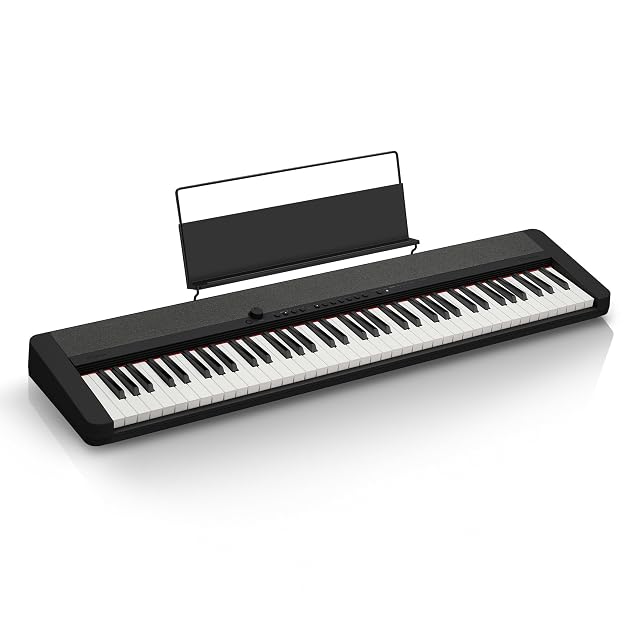
The 76-key version of the same idea, with a bigger speaker system: 2 × 6.5 W instead of 2 × 2.5 W. Still no accompaniment styles, still 61 sounds, and 80 cm (31.5 in) longer in the room.
Best for: A player who has run out of keys on a 61 but does not want an 88-key weighted piano.
61 touch-sensitive keys · 61 sounds · no auto-accompaniment
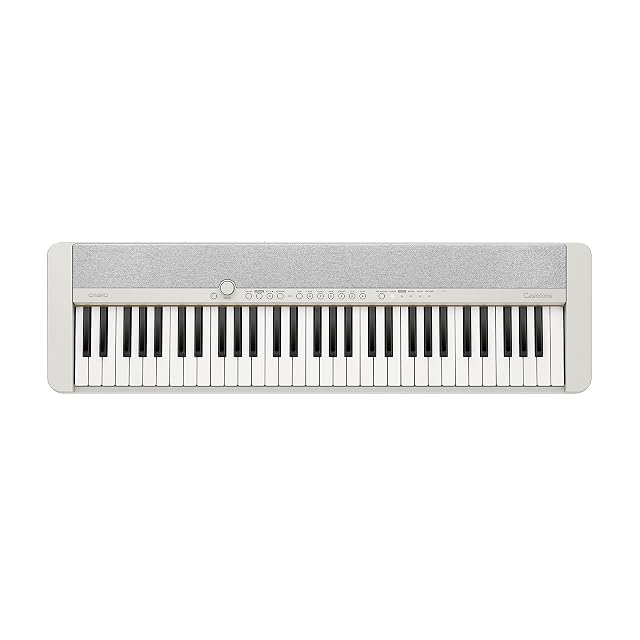
A keyboard built like a piano rather than like an arranger: 61 touch-sensitive keys, 61 sounds, and deliberately no accompaniment styles. Music rest and power adapter are included; the pedal is not.
Best for: Someone who wants piano sounds and 61 keys without an arranger’s menus.
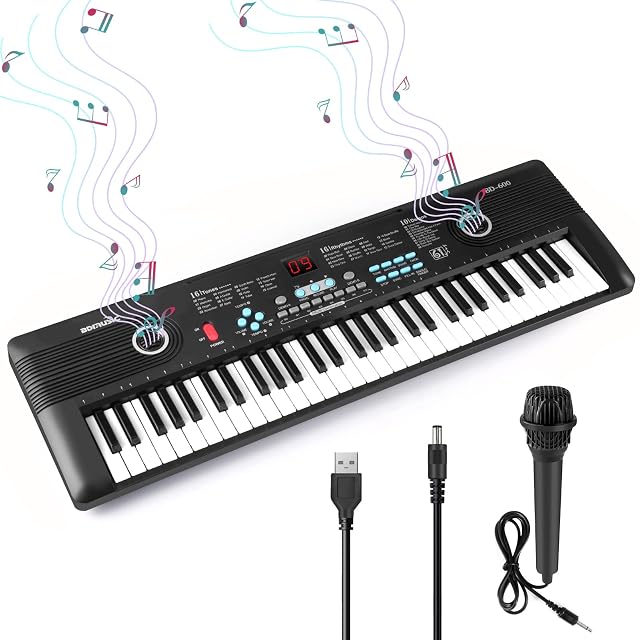
61 keys · microphone output and a built-in microphone · 100 tones · 4 AA batteries
The least expensive keyboard on this shelf by a wide margin, and the only one that records a voice — a microphone output and a built-in microphone — with 100 tones, eight percussion panels and battery operation.
Best for: A child learning at a desk, where a microphone and a set of batteries matter more than a published key size.