The entry model of Roland’s RH range, published for digital pianos, synths and electronic drums, with a conversion plug in the box — and a sixth bullet that is a troubleshooting note rather than a feature.
What it amounts to Sold for the instruments it will be plugged into, with the conversion plug those instruments need, from a range that stays in catalogs. It publishes no figure a reader can compare, and one of its six bullets is about pushing the jack in.
The entry model of Roland’s RH range: 40 mm (1.57 in) drivers, closed back, a conversion plug in the box, and a tuning Roland describes as natural and balanced across digital pianos, guitars, synths and digital drums.
What is useful here is who it is for. Most headphone listings sell a genre — DJ, studio, gaming. This one names the instruments it will be plugged into, and that matters because those instruments have a quarter-inch socket rather than a 3.5 mm (0.14 in) one. The conversion plug is in the box for that reason, and four of the ten listings on this shelf supply one.
Then the sixth bullet, which is not a feature:
check the connection is secure when plugging in the headphones and that the input of the sound source is not loose or “wobbly”. Please ensure that the jack connection is pushed in all the way.
A maker spending one bullet in six on that has decided the complaint is common enough to pre-empt. A quarter-inch socket on a digital piano is deep, and a plug half-seated sounds like a dead channel or a broken pair. It is reported here as published, because it is the most practically useful sentence on the listing.
What is absent is everything measurable. No impedance — the figure that decides whether the output can drive them. No sensitivity. No frequency response, on a pair whose selling point is a balanced one. Two pairs on this shelf publish those numbers and both are European listings; none of the six American ones publishes any.
Nothing is said about replaceable earpads either, and one pair on this shelf publishes that its pads come off and wash.
The product record gives 338 × 285 × 100 mm (13.3 × 11.2 × 3.94 in) and 190 g (6.7 oz), the lightest figure on this shelf.
Availability
Read on the day this page was built: $55 at the American Amazon shop.
Read from Keepa on the day this page was last revised; stock and price both move without notice.
Prices quoted in this text were read on 2026-10-07. The live price is at the top of the page.
In its favor, and its limits
Strengths
Named for the instruments it is meant for — digital pianos, synths, electronic drums — rather than for a genre
A conversion plug in the box, which a digital piano needs and a laptop does not
The entry model of a range whose parts and successors stay catalogued
Compromises
No impedance, no sensitivity and no frequency response, on a pair sold for monitoring
A whole bullet is spent telling the buyer to push the jack in properly
Nothing published about replaceable earpads or a detachable cable
Specifications
Design
Closed back, over-ear, described as a secure and comfortable lightweight design
Drivers
40 mm (1.57 in)
Tuning
Roland states a natural, balanced response across a range of instruments, and a dynamic-yet-balanced tone. No curve and no figures are published
Adapter
A conversion plug is included, for standard and mini headphone connectors — one of four listings here to supply one
Stated use
Digital pianos, guitars, synths and digital drums, and music streaming afterwards
Connection note
Roland devotes its sixth bullet to a troubleshooting instruction: check the connection is secure, and that the jack is pushed all the way in
Dimensions
338 × 285 × 100 mm (13.3 × 11.2 × 3.94 in), from the product record
Impedance
Roland puts nothing in writing on this. Two listings on this shelf publish one, and both are European
Sensitivity
Roland puts nothing in writing on this.
Frequency response
Roland puts nothing in writing on this.
Manufacturer reference
RH-5
Amazon reference
B0030LLPFK
EAN
4957054408367
The questions players ask
Why is the sixth bullet a troubleshooting note?
Because Roland decided the complaint was common enough to answer in advance: *check the connection is secure when plugging in the headphones and that the input of the sound source is not loose or wobbly. Please ensure that the jack connection is pushed in all the way.* A maker spending one of six bullets on that is telling you something — a quarter-inch socket on a digital piano is deep, and a plug half in sounds like a dead channel. It is reported here as published rather than tidied away.
What does “natural, balanced response” mean without a figure?
It means Roland has not tuned the bass up, which for checking what an instrument actually sounds like is the right decision. What it does not mean is anything measurable: no curve, no limits, no sensitivity. On this shelf one pair publishes 5 Hz to 40 kHz and a named reference curve, another publishes 2 Hz to 23.5 kHz and 112.5 dB SPL. Both are European listings, and none of the six American ones publishes a figure of any kind.
This one’s price among music instruments and gear
Details checked on October 7, 2026.
Who should pick this one, among music instruments and gear
A digital piano or an electronic drum kit at home, where the quarter-inch socket is the one that matters.
Sources
Specifications: the manufacturer sheet for musical instruments and gear and the matching Amazon product page. Prices and availability: Keepa. Every figure on this page names its source.
Closed back · 40 mm (1.57 in) PEEK drivers · DAW plug-in included
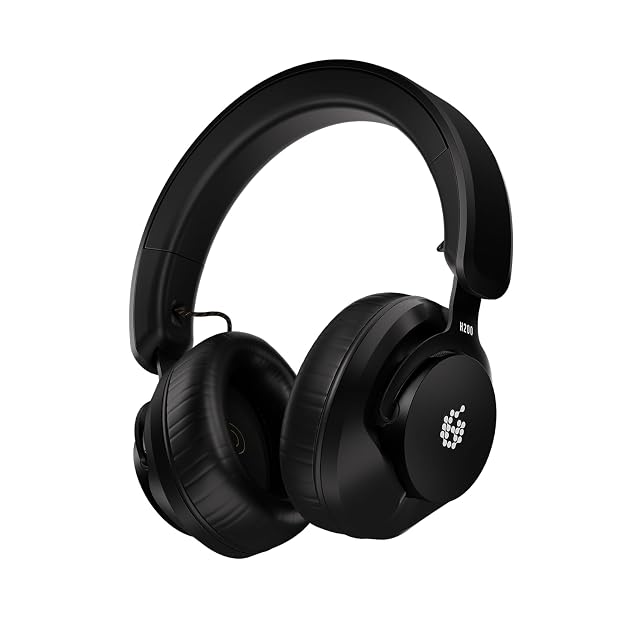
Berlin-designed closed backs with 40 mm (1.57 in) PEEK drivers, a stated 2 Hz – 23.5 kHz response and 112.5 dB SPL, plus a Headphone Utility plug-in with crossfeed for the DAW.
Best for: Mixing on headphones, where crossfeed makes a stereo image less exhausting.
Closed back · 50 mm (1.97 in) drivers · 32 ohms · foldable
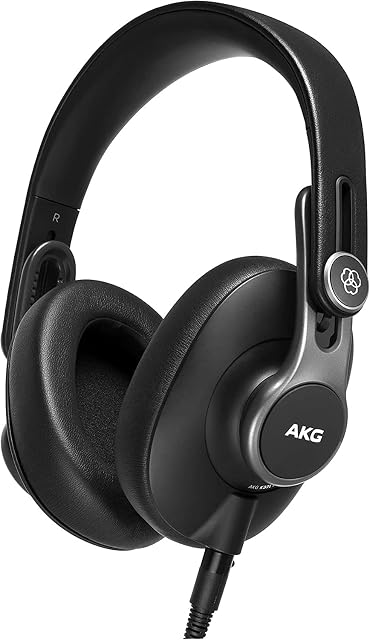
AKG’s closed-back reference: 50 mm (1.97 in) drivers, 32 ohms and a stated 114 dB SPL/V sensitivity, tuned towards the AKG Reference Response curve. Low impedance, so it also works from a laptop.
Best for: One pair for recording and for checking a mix, driven from an interface or a laptop.
Closed back · 40 mm (1.57 in) drivers · low impedance
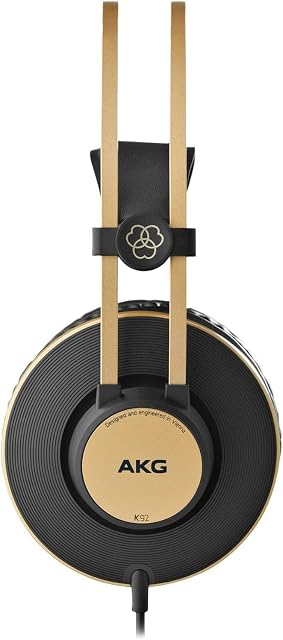
The cheapest way into closed-back monitoring here. AKG states 40 mm (1.57 in) drivers, a low impedance chosen so phones and interfaces can drive it, and replaceable earpads at a price where that is unusual.
Best for: A second pair, a practice pair, or a first pair on a strict budget.