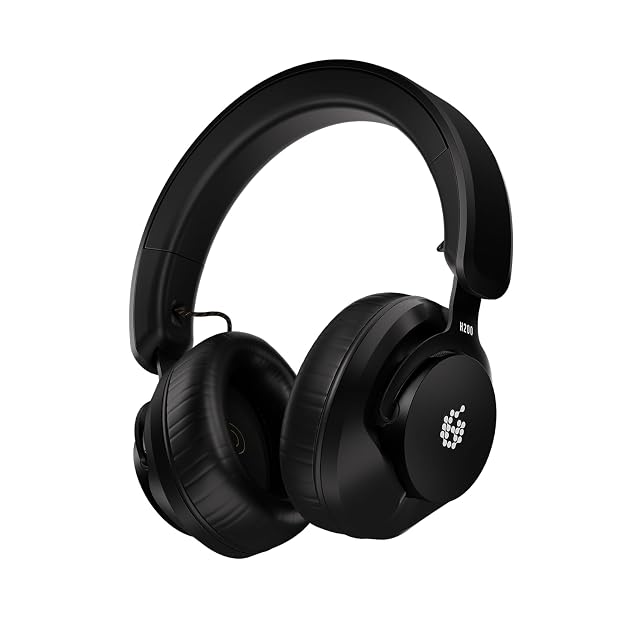
The only open-back pair on this shelf, and the only listing to say what an open design is for: it lets a student hear the teacher’s instructions while playing. Suede earpads, 40 mm (1.57 in) drivers, a breathable fit.
What it amounts to The one open-back pair on this shelf, and the only listing anywhere here to say what its design is for rather than what it sounds like. It leaks in both directions by design, and it publishes no figure a reader can compare.
Open-air. Nine of the ten pairs on this shelf are closed, and this is the one that is not — which changes what it is for rather than how good it is.
And Roland does something no other listing here does: it says what the design is for.
Open-air format lets students hear their teacher’s instructions
That is one sentence and it settles the whole question. A closed pair keeps the room out, which is what recording beside a microphone requires. An open pair lets the room in — and in a lesson, hearing the teacher without taking the headphones off is the point rather than a defect. Every other listing on this shelf sells a sound; this one sells a situation.
The rest follows from the format. A breathable, secure fit and suede earpads, because an open pair is worn for hours and heat is what ends a session. A wide dynamic range, which Roland attributes to the open design.
And the cost follows too. An open pair leaks both ways: anything playing is audible to a microphone a meter away, so this is the one pair here that should not be used for tracking. Roland does not claim isolation, which is the honest position.
What it does not publish is the measurable half, like every American listing in this family: no impedance, no sensitivity, no frequency response. The two pairs here with those figures are both European.
One contradiction to note. The third bullet claims a lightweight construction; the product record holds 454 g (16 oz) — one pound exactly, which is a shipping bucket rather than a weighed pair, and the same figure appears against unrelated products elsewhere in this catalog. Roland publishes no weight of its own.
Availability
Read on the day this page was built: $118 at the American Amazon shop.
Read from Keepa on the day this page was last revised; stock and price both move without notice.
Prices quoted in this text were read on 2026-10-07. The live price is at the top of the page.
In its favor, and its limits
Strengths
The only open-back pair on this shelf, and the only listing to publish what its design is for
Suede earpads and a breathable fit, which is the point of an open pair over hours
Named for a specific use — a piano lesson — rather than for a genre
Compromises
An open design leaks sound both ways, so it is the wrong pair for recording beside a microphone
No impedance, no sensitivity and no frequency response published
The record puts it at 454 g (16 oz), on a listing whose third bullet claims a lightweight construction
Specifications
Design
Open-air — the only open-back pair on this shelf. The other nine are closed
Why open
Roland publishes the reason: the open-air format lets students hear their teacher’s instructions while wearing them. No other listing here states what its design is for
Drivers
40 mm (1.57 in)
Tuning
Roland states the open-air design gives a natural and nuanced sound with a wide dynamic range. No curve and no figures are published
Earpads
Soft suede finish — the only suede on this shelf. Nothing is said about replacing them
Fit
Lightweight construction with a breathable, secure-fit design, for extended playing sessions
Stated use
Modern digital instruments, with the Roland piano range named, and audio playback
Isolation
An open design does not isolate. Roland does not claim it does, and this is the one pair here that should not be used for tracking beside a microphone
Impedance
Roland puts nothing in writing on this. Two listings on this shelf publish one, and both are European
Frequency response
Roland puts nothing in writing on this.
Manufacturer reference
RH-A7-BK
Amazon reference
B0084A6NGI
EAN
0761294501658
The questions players ask
Open or closed — which do I want?
Closed keeps sound in and the room out, which is what recording beside a microphone requires and what nine of the ten pairs on this shelf are. Open lets both through: the sound stage is wider and the ears stay cooler over three hours, and anything playing leaks into a live microphone. This is the only open pair here, and Roland publishes the one use where leaking *in* is the point — a student hearing a teacher without taking the headphones off.
Does it really weigh 454 g (16 oz)?
The product record says so, and the third bullet claims a lightweight construction. 454 g (16 oz) is one pound exactly, which is how a shipping figure announces itself — the same 454 g (16 oz) appears against unrelated products elsewhere in this catalog. Roland publishes no weight of its own, and no pair on this shelf is ranked by weight on this site. The five other American listings here carry record figures from 190 to 415 g (6.7 to 14.6 oz).
This one’s price among music instruments and gear
Details checked on October 7, 2026.
Who should pick this one, among music instruments and gear
A piano lesson, or hours of practice where hearing the room matters more than keeping it out.
Sources
Specifications: the manufacturer sheet for musical instruments and gear and the matching Amazon product page. Prices and availability: Keepa. Every figure on this page names its source.
Closed back · 40 mm (1.57 in) PEEK drivers · DAW plug-in included
Berlin-designed closed backs with 40 mm (1.57 in) PEEK drivers, a stated 2 Hz – 23.5 kHz response and 112.5 dB SPL, plus a Headphone Utility plug-in with crossfeed for the DAW.
Best for: Mixing on headphones, where crossfeed makes a stereo image less exhausting.
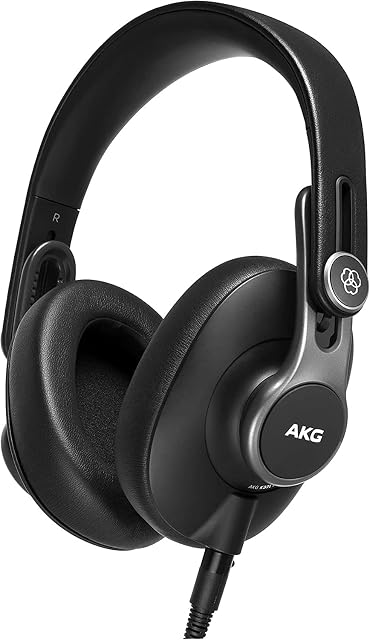
Closed back · 50 mm (1.97 in) drivers · 32 ohms · foldable
AKG’s closed-back reference: 50 mm (1.97 in) drivers, 32 ohms and a stated 114 dB SPL/V sensitivity, tuned towards the AKG Reference Response curve. Low impedance, so it also works from a laptop.
Best for: One pair for recording and for checking a mix, driven from an interface or a laptop.
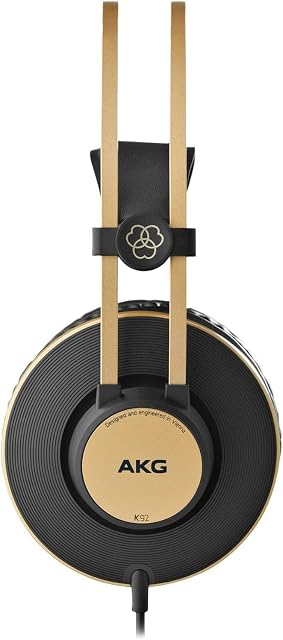
Closed back · 40 mm (1.57 in) drivers · low impedance
The cheapest way into closed-back monitoring here. AKG states 40 mm (1.57 in) drivers, a low impedance chosen so phones and interfaces can drive it, and replaceable earpads at a price where that is unusual.
Best for: A second pair, a practice pair, or a first pair on a strict budget.