What it amounts to The default recommendation, and it deserves the position: consistent, full-size, and honest about its woods.
Ask any guitar teacher for a first steel-string and the F310 will be in the answer. It has been in production long enough that its quality control is a known quantity, which matters more at this price than any single specification.
The recipe is the standard one, done properly: a spruce top for brightness and projection, meranti back and sides, a rosewood fingerboard, and chrome enclosed tuners that keep dust out of the gears.
The dreadnought body is the loudest common shape, which is what makes practicing without an amplifier rewarding. It is also the largest, and that is the one reason to consider something else — a smaller frame will find an hour of holding it tiring.
Steel strings hurt at first. That is not a defect of this guitar; it is what steel strings do to fingertips that have not built up yet, and it passes in a few weeks.
In its favor, and its limits
Strengths
Enclosed chrome tuners: sealed against dust, and steadier than open gears
A spruce top over a meranti body is the standard recipe at this price, executed by Yamaha
Yamaha’s entry acoustics have unusually consistent quality control between units
Full-size 4/4 dreadnought, so nothing about it has to be unlearned later
Compromises
Steel strings are harder on new fingertips than nylon — that is the trade for volume and brightness
Not offered on the US store at the time of writing
Specifications
Body shape
Dreadnought, 4/4
Top
Spruce
Back and sides
Meranti
Fingerboard
Rosewood
Strings
Steel
Tuners
Chrome, enclosed
Amazon reference
B000WITGQO (identical on 6 markets)
EAN
4957812306799
The questions players ask
F310 or C40 — steel or nylon?
Steel strings are brighter and louder and suit pop, folk and rock; nylon is softer on the fingers and suits classical and bossa. They are not interchangeable: nylon strings on a steel-string guitar sound dead, and steel strings on a classical can damage it.
Is a dreadnought too big for a smaller player?
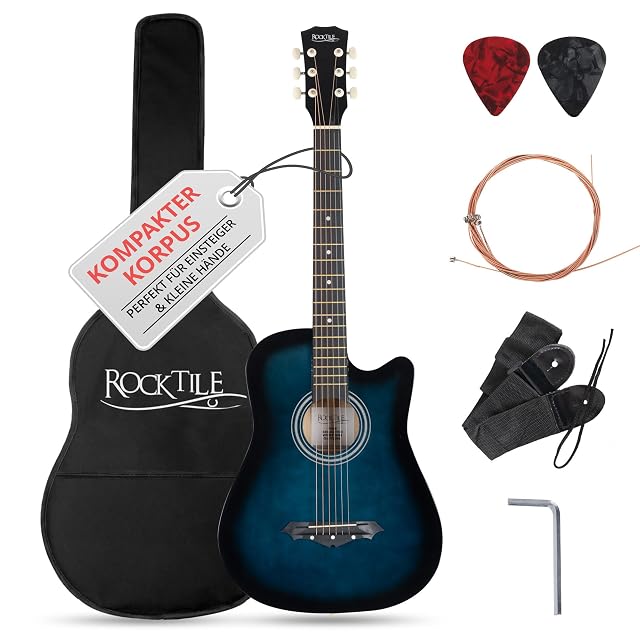
It is the largest common body shape. For a smaller frame, a concert or a small dreadnought — like the Rocktile in this family — is easier to hold for an hour.
Our score
7.8/ 10
The default recommendation, and it deserves the position: consistent, full-size, and honest about its woods.
Accessories confirmed for this instrument
Shown because the accessory names this instrument itself.
A reference exists on these Amazon stores: France, Germany, Italy, Spain, United Kingdom, United States. Listed is not the same as in stock — availability changes daily.
Details checked on August 18, 2026.
Who should pick this one, among music instruments and gear
A first steel-string for an adult or teenager who wants the classic strummed sound.
Our music instruments and gear guides that pick it
Specifications: the manufacturer sheet for musical instruments and gear and the matching Amazon product page. Prices and availability: Keepa. Every figure on this page names its source.
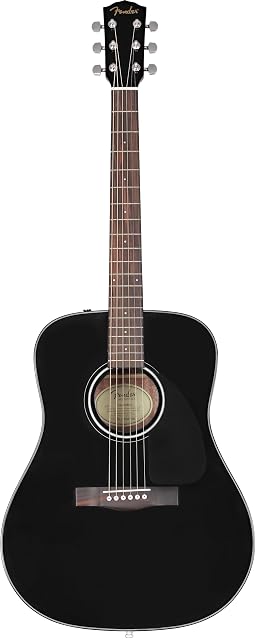
Dreadnought · mahogany body · walnut fingerboard · X-bracing
Fender’s long-running beginner dreadnought: mahogany body, walnut fingerboard, X-bracing and die-cast tuners, with a two-year Fender warranty behind it.
Best for: A first steel-string that will hold tuning while the hands are learning.
Small dreadnought · cutaway · linden body · bag and accessories
A deliberately smaller dreadnought — shorter, narrower and about 1.5 cm (0.6 in) shallower — with a cutaway, sold with a bag, strap, spare strings, two picks and a truss-rod key.
Best for: A younger player, a smaller frame, or a guitar that has to travel.
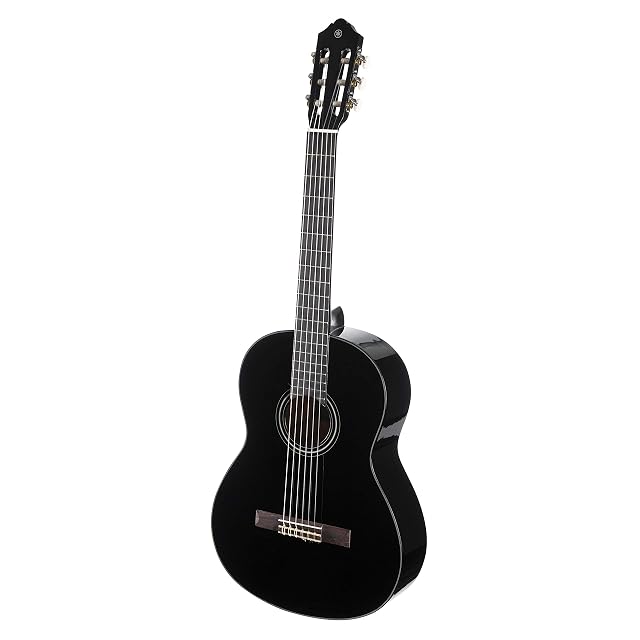
The nylon-string counterpart: a full-size classical with a wider fingerboard, spruce top and meranti back and sides — softer on the fingers and a different instrument entirely.
Best for: Classical and fingerstyle, or anyone whose fingertips are the obstacle.