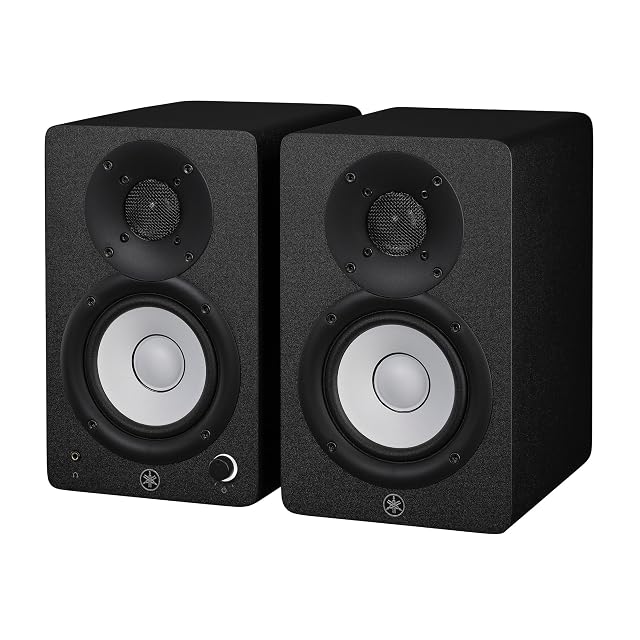
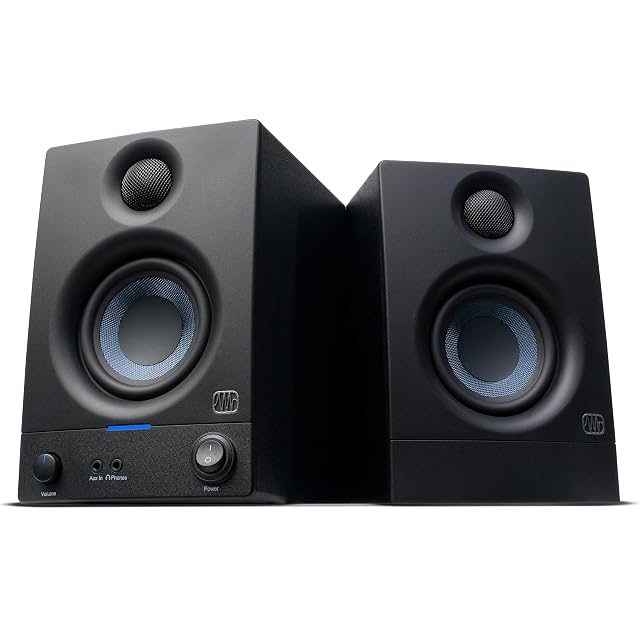
The triangle
Speakers and head form an equal-sided triangle, tweeters at ear height, both speakers the same distance from the side walls. That symmetry is what makes a stereo image trustworthy.
The wall behind them
A wall close behind a monitor reinforces low frequencies. If the desk cannot move, use the room control or low-frequency trim switch on the back — that is exactly what it is for.
Decouple from the desk
Foam pads or isolation feet under each cabinet. A speaker bolted acoustically to a desk turns the desk into part of the speaker, and the desk is not designed to be one.
Then treat the first reflections
The side walls level with your head, and the wall behind you. A few thick panels in the right places outperform a wall covered in thin tiles.
The questions players ask
What does a ROOM CONTROL switch do?
It attenuates low frequencies to compensate for the boost a wall or corner adds. In a small room with the desk against a wall — most home studios — it is the difference between accurate low end and a permanent bass hump.
Do the foam pads under the speakers matter?
Yes. Without them the desk surface acts as a sounding board and adds low end that is not in the recording. It is the cheapest improvement available to a desktop setup.
Last reviewed 2026-08-18