The previous generation of the Solo, publishing 24-bit/192 kHz and a three-year warranty — the only warranty period on this shelf — with the Air mode and the same software bundle as the current model.
What it amounts to The outgoing Solo, with 192 kHz, Air mode, the full software bundle and the only published warranty on this shelf. What the current generation adds is a 120 dB dynamic range figure this one does not publish.
24-bit/192 kHz.Air mode.Gain Halos. Two high-headroom instrument inputs. Two low-noise balanced outputs. The full software bundle — Pro Tools Intro+, Ableton Live Lite, Cubase LE, Hitmaker Expansion. And a three-year worldwide warranty.
This is the generation before the Solo already published on this shelf, and the comparison is short because most of it is identical. Both have the Air mode. Both ship the same four pieces of software, which on a first interface is a large part of what is being bought. Both have one microphone preamp and one instrument input.
What the 4th Gen publishes and this does not is a 120 dB dynamic range, with Focusrite stating it uses the same converters as its flagship interfaces. It also adds Auto Gain and Clip Safe, which the page for the 2i2 on this shelf describes as removing the most common beginner failure. This generation publishes 192 kHz and no dynamic range at all.
Whether that difference is audible depends far more on the room than on the converter, and this page does not pretend to settle it.
The three-year warranty is the detail worth stopping on. Ten interfaces on this shelf, and one publishes a warranty period — this one. It is normally a line in a document rather than a bullet in a listing, and it is what decides whether a fault in the third year is a repair or a replacement.
There is a small oddity in the bullets: the second one begins Get the perfect guitar and vocal take with — and stops. The sentence is unfinished on the listing, and it is reported as published.
Availability
Read on the day this page was built: $120 at the American Amazon shop.
Read from Keepa on the day this page was last revised; stock and price both move without notice.
Prices quoted in this text were read on 2026-10-07. The live price is at the top of the page.
In its favor, and its limits
Strengths
Publishes 24-bit/192 kHz, which only one other interface on this shelf does
The only interface here to publish a warranty period — three years, worldwide
The same software bundle as the current generation, which is a large part of the value
Compromises
Superseded: the 4th Gen Solo is on this shelf and publishes a 120 dB dynamic range this one does not
No dynamic range figure published for this generation
One microphone preamp, like the current Solo — two voices need the 2i2
Specifications
Resolution
24-bit / 192 kHz for recording and mixing — one of two interfaces on this shelf to publish 192 kHz
Air mode
A switchable setting Focusrite states adds clarity to acoustic instruments
Metering
Gain Halos, which Focusrite states are there to avoid clipping and distortion on the way in
Inputs
Microphone preamps, and two high-headroom instrument inputs for guitar or bass
Outputs
2 low-noise balanced outputs, plus a headphone output
Software
Pro Tools Intro+, Ableton Live Lite, Cubase LE and Hitmaker Expansion
Warranty
Three years worldwide against manufacturing faults — the only warranty period published on this shelf
Generation
The 3rd Gen. The 4th Gen Solo is published separately on this shelf, and so is the 4th Gen Studio bundle
Dynamic range
Focusrite puts nothing in writing on this for the 3rd Gen. It publishes 120 dB for the 4th Gen
Manufacturer reference
MOSC0024
Amazon reference
B07QR6Z1JB
EAN
0815301005179
The questions players ask
Is the 4th Gen worth the difference?
On published figures, the difference is the converters: the 4th Gen publishes a 120 dB dynamic range and states it uses the same converters as Focusrite’s flagship interfaces, and this generation publishes no dynamic range at all. Both publish Air mode and both ship the same software bundle — Pro Tools Intro+, Ableton Live Lite, Cubase LE, Hitmaker Expansion. The 4th Gen also adds Auto Gain and Clip Safe, which its own page on this shelf describes. Whether 120 dB is audible in an untreated room is a separate question, and this page does not answer it.
A three-year warranty — does anything else here publish one?
No. Ten interfaces on this shelf and one publishes a warranty period. It is the sort of term that decides what a purchase is worth in its third year, and it is normally buried in a document rather than printed in a bullet. Worth noting that it is the superseded generation publishing it.
This one’s price among music instruments and gear
Details checked on October 7, 2026.
Who should pick this one, among music instruments and gear
The same recording chain as the current Solo at a lower price, for someone who does not need the newest converters.
What buyers actually choose
Amazon reports what buyers took in the month before this page was last checked: at least 2,000.
The figure is a floor, rounded by Amazon, and read through Keepa — it says what buyers picked, not what a maker claims.
Sources
Specifications: the manufacturer sheet for musical instruments and gear and the matching Amazon product page. Prices and availability: Keepa. Every figure on this page names its source.
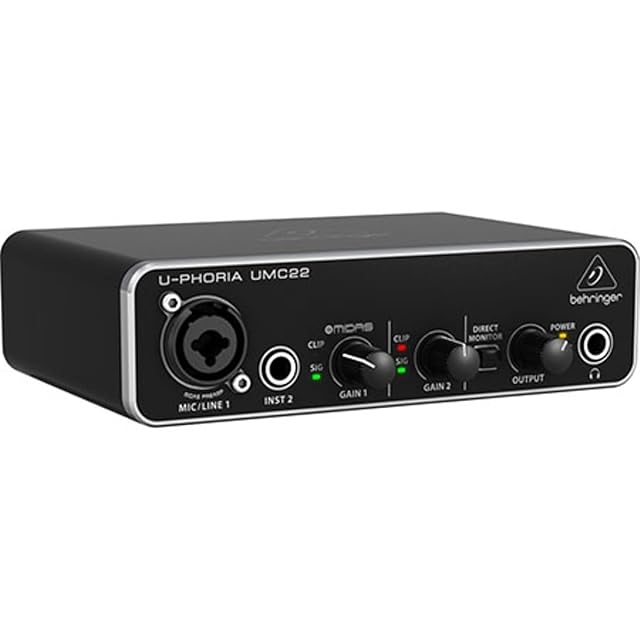
The cheapest honest way into recording: one XLR/TRS combo input with a Midas-designed preamp, a separate instrument input, direct monitoring and USB power. Forty-eight kilohertz, and no pretense beyond it.
Best for: A first interface for one voice or one instrument at a time.
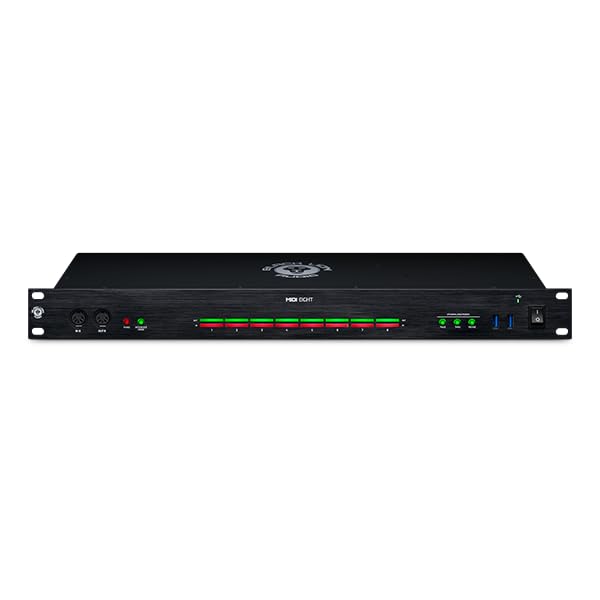
No audio at all · 8 in / 8 out MIDI · three standalone routing modes
The one listing on this shelf that passes no audio: an 8-in, 8-out MIDI interface with three standalone routing modes, per-port activity indicators and front-mounted sockets.
Best for: A studio with more than two MIDI instruments, where the problem is routing rather than recording.
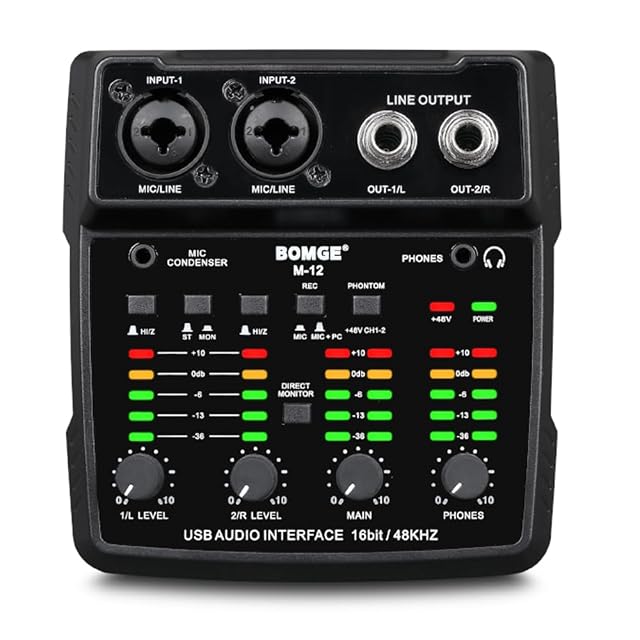
2 channels · 48 V phantom power · gain meter −36 to 10 dB · 3.5 mm (0.14 in) mic input
The least expensive interface on this shelf by a wide margin, with two XLR inputs, 48 V phantom power, a published gain-meter range of −36 to 10 dB, and an extra 3.5 mm (0.14 in) microphone jack.
Best for: A first interface for someone who already has recording software and wants two XLR inputs for the least money.