Not an interface but a package: the Solo 4th Gen already published here, plus the CM25 MkIII condenser microphone and the SH-450 headphones, with the same 120 dB converters and the same software.
What it amounts to The one-order answer to a first recording setup, built around an interface this site already publishes. What is in the box is named and not specified: the microphone and the headphones arrive with no figure attached to either.
This is a bundle, and saying so is the first job of this page. Inside it: the Scarlett Solo 4th Gen interface — which is published separately on this shelf — the CM25 MkIII microphone and the SH-450 headphones.
So the interface question is already answered elsewhere. 120 dB dynamic range, the same converters Focusrite states it uses in its flagship units, Air mode, one microphone preamp and one instrument input, and the four-piece software bundle. All of that is the Solo, at around $130 on its own.
The question this page exists to frame is the other $160: what the microphone and the headphones are.
And the answer is that the listing does not say. The CM25 MkIII is named and nothing else — no polar pattern, no diaphragm size, no sensitivity, no maximum SPL. The microphone shelf on this site shows what those figures look like when a maker publishes them, and how much they decide. The SH-450 headphones are named and nothing else — no driver size, no impedance, no frequency response. The headphone shelf here shows two pairs publishing all three.
That is not an accusation. Matched accessories from the interface maker are a real argument: the microphone will work with the preamp, the headphones will be driven by the output, and neither needs choosing on a first purchase. It is simply an argument about convenience rather than about specification, and a reader deserves to know which one they are being offered.
The product record gives 1,370 g (48.3 oz), which is three objects and a box.
Availability
Read on the day this page was built: $290 at the American Amazon shop.
Read from Keepa on the day this page was last revised; stock and price both move without notice.
Prices quoted in this text were read on 2026-10-07. The live price is at the top of the page.
In its favor, and its limits
Strengths
The three objects a first recording needs, in one order, from one maker
The same 120 dB converters and the same software as the interface bought alone
The microphone and the headphones are matched to the interface by the maker rather than guessed at
Compromises
The microphone and the headphones are published by name only — no pattern, no impedance, no driver size, no response
The interface inside it is already published on this shelf, and the price difference is what the two accessories cost
One microphone preamp, so the bundle records one source at a time
Specifications
What it is
A bundle, not a single product: the Scarlett Solo 4th Gen interface, the CM25 MkIII microphone and the SH-450 headphones. The interface alone is published separately on this shelf
Converters
120 dB dynamic range, with Focusrite stating the same converters as its flagship interfaces
Air mode
Lifts vocals and guitars forward, adding presence and harmonic drive
Microphone
CM25 MkIII. Focusrite publishes no pattern, no sensitivity and no diaphragm size for it in these bullets
Headphones
SH-450. Focusrite publishes no driver size, no impedance and no response for them in these bullets
Software
Pro Tools Intro+, Ableton Live Lite, Cubase LE and Hitmaker Expansion — the same bundle as the interface alone
Channels
As the Solo: one microphone preamp and one instrument input
Resolution
Focusrite publishes a dynamic range rather than a sample rate for the 4th Gen. The 3rd Gen on this shelf publishes 24-bit/192 kHz
Manufacturer reference
815301001546
Amazon reference
B0C5JPJJ2M
EAN
0815301001546
The questions players ask
Is this different from the Solo already on this shelf?
It contains it. The Scarlett Solo 4th Gen interface is published separately here at around $130; this bundle is that interface plus the CM25 MkIII microphone and the SH-450 headphones at $289.99. So the question is not which interface is better — they are the same one — but whether the microphone and the headphones are worth the difference. This page cannot tell you, because the listing publishes nothing measurable about either of them.
What is published about the microphone and the headphones?
Their names. That is the finding. The microphone shelf on this site shows what a condenser listing normally publishes — a pattern, a diaphragm size, a sensitivity, a maximum SPL — and the headphone shelf shows an impedance, a sensitivity and a driver size. For the CM25 MkIII and the SH-450 this bundle publishes none of it. They are matched to the interface by the maker, which is a real argument; they are not described.
This one’s price among music instruments and gear
Details checked on October 7, 2026.
Who should pick this one, among music instruments and gear
A first recording setup where one order beats three, and the microphone and headphones do not need to be chosen.
What buyers actually choose
Amazon reports what buyers took in the month before this page was last checked: at least 100.
The figure is a floor, rounded by Amazon, and read through Keepa — it says what buyers picked, not what a maker claims.
Sources
Specifications: the manufacturer sheet for musical instruments and gear and the matching Amazon product page. Prices and availability: Keepa. Every figure on this page names its source.
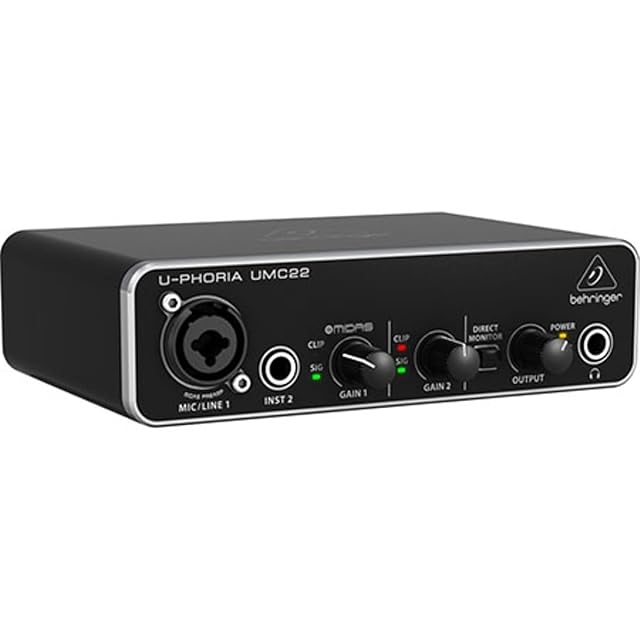
The cheapest honest way into recording: one XLR/TRS combo input with a Midas-designed preamp, a separate instrument input, direct monitoring and USB power. Forty-eight kilohertz, and no pretense beyond it.
Best for: A first interface for one voice or one instrument at a time.
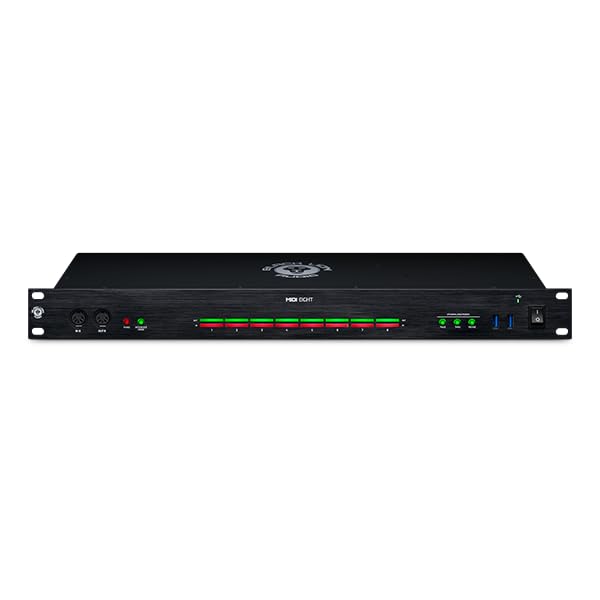
No audio at all · 8 in / 8 out MIDI · three standalone routing modes
The one listing on this shelf that passes no audio: an 8-in, 8-out MIDI interface with three standalone routing modes, per-port activity indicators and front-mounted sockets.
Best for: A studio with more than two MIDI instruments, where the problem is routing rather than recording.
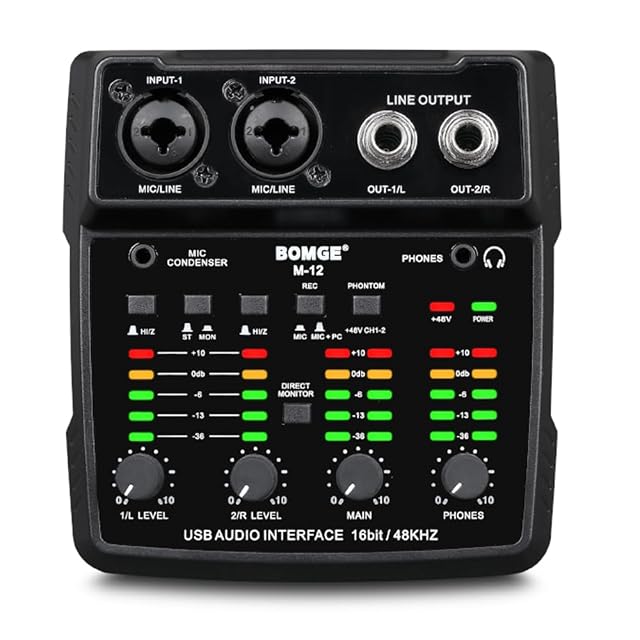
2 channels · 48 V phantom power · gain meter −36 to 10 dB · 3.5 mm (0.14 in) mic input
The least expensive interface on this shelf by a wide margin, with two XLR inputs, 48 V phantom power, a published gain-meter range of −36 to 10 dB, and an extra 3.5 mm (0.14 in) microphone jack.
Best for: A first interface for someone who already has recording software and wants two XLR inputs for the least money.