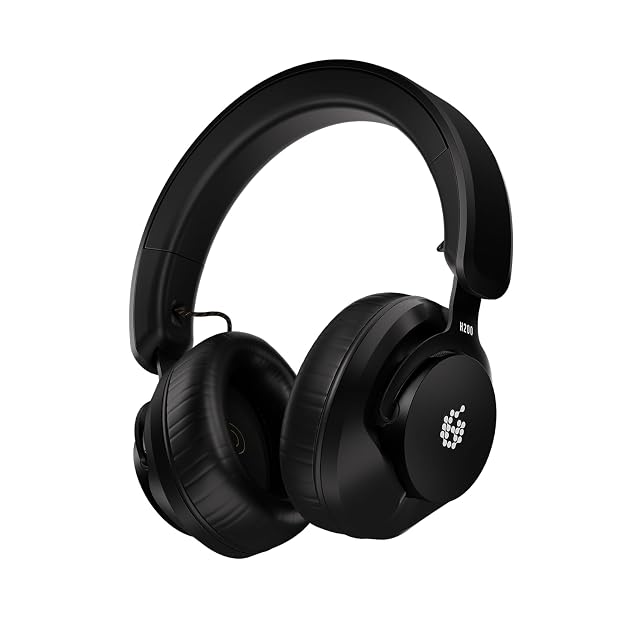
One of two pairs here with 50 mm (1.97 in) drivers, and one of two with a shared audio port: a second pair plugs into the first with no splitter, and the cups swivel 90 degrees for single-ear monitoring.
What it amounts to Fifty-millimeter drivers and a sharing port for $31.99, with a headband that sets itself and cups that swivel. Like every American listing on this shelf it publishes no impedance, no sensitivity and no frequency response, and it does not say how long its cable is or whether it comes off.
50 mm drivers with neodymium magnets, a shared audio port, 90-degree swivel cups and a self-adjusting stretchable headband. Wired only, which OneOdio states rather than leaves to be discovered.
The sharing port is the reason this page is not just another cheap closed-back. A second pair plugs into the first and both hear the same source — no splitter, no adapter, nothing extra to buy or to lose. In a lesson or a two-person session that is the whole problem solved, and two of the ten pairs on this shelf publish one, both from this maker.
The 50 mm (1.97 in) drivers are the other distinguishing figure, shared with one European pair here. A larger driver moves more air and usually reaches lower, which is what the first bullet is selling. What decides the result is the tuning, and this listing publishes nothing about it — where one pair on this shelf names a reference response curve and another publishes 2 Hz to 23.5 kHz.
The swivel is 90 degrees, enough to push one cup behind an ear. Two listings here publish it, and it is the feature that separates a monitoring pair from a listening pair.
Then the three absences this shelf’s American half shares. No impedance — the figure that says whether a laptop output can drive them, published by two pairs here and both European. No sensitivity. No frequency response.
And two more that are specific to this listing: no cable length, and nothing about whether the cable detaches. On a pair whose selling point is that a second one plugs into it, the cable is the part being used.
The product record gives 180 × 140 × 100 mm (7.09 × 5.51 × 3.94 in) and 415 g (14.6 oz).
Availability
Read on the day this page was built: $32 at the American Amazon shop.
Read from Keepa on the day this page was last revised; stock and price both move without notice.
Prices quoted in this text were read on 2026-10-07. The live price is at the top of the page.
In its favor, and its limits
Strengths
50 mm (1.97 in) drivers, which only one other pair on this shelf has
A shared audio port, so two people listen from one source with nothing bought in between
A self-adjusting headband and 90-degree swivel cups
Compromises
No impedance, no sensitivity and no frequency response published
Wired only, which the maker states plainly — there is no Bluetooth fallback
No cable length and nothing about whether the cable detaches
Specifications
Design
Closed back, over-ear, with a self-adjusting stretchable headband
Drivers
50 mm (1.97 in) with neodymium magnets — one of two listings here with 50 mm (1.97 in) drivers
Audio sharing
A shared audio port: a second pair connects to these without a splitter or a special cable — one of two listings here to publish one
Monitoring
Cups swivel 90 degrees for single-ear monitoring, for DJ or mixing use
Connection
Wired only. OneOdio states the Pro-10 works exclusively in wired mode
Dimensions
180 × 140 × 100 mm (7.09 × 5.51 × 3.94 in), from the product record
Impedance
OneOdio puts nothing in writing on this. Two listings on this shelf publish one, and both are European
Sensitivity
OneOdio puts nothing in writing on this.
Frequency response
OneOdio puts nothing in writing on this.
Cable
OneOdio publishes no length and does not say whether it detaches
Manufacturer reference
709466429447
Amazon reference
B01N6ZJH96
EAN
0709466429447
The questions players ask
What is a shared audio port for?
Plugging a second pair of headphones into the first. In a lesson, a studio or a bedroom with two people and one interface, the usual answer is a splitter — one more object and one more thing that crackles. Two listings on this shelf publish a sharing port, and both are from this maker; the other does it over Bluetooth as well.
Do 50 mm (1.97 in) drivers sound better than 40 mm (1.57 in)?
A larger driver moves more air and generally reaches lower, which is why this listing leads on bass. It is not an improvement by itself: the tuning decides what comes out, and one pair on this shelf publishes a reference response curve by name while another publishes 2 Hz to 23.5 kHz. Two of the ten pairs here have 50 mm (1.97 in) drivers and both publish nothing about frequency response — so the size is a fact and the result is a claim.
Accessories confirmed for this instrument
Shown because the accessory names this instrument itself.
Who should pick this one, among music instruments and gear
Two people working from one laptop, where the second pair should not need a splitter.
What buyers actually choose
Amazon reports what buyers took in the month before this page was last checked: at least 8,000.
The figure is a floor, rounded by Amazon, and read through Keepa — it says what buyers picked, not what a maker claims.
Sources
Specifications: the manufacturer sheet for musical instruments and gear and the matching Amazon product page. Prices and availability: Keepa. Every figure on this page names its source.
Closed back · 40 mm (1.57 in) PEEK drivers · DAW plug-in included
Berlin-designed closed backs with 40 mm (1.57 in) PEEK drivers, a stated 2 Hz – 23.5 kHz response and 112.5 dB SPL, plus a Headphone Utility plug-in with crossfeed for the DAW.
Best for: Mixing on headphones, where crossfeed makes a stereo image less exhausting.
Closed back · 50 mm (1.97 in) drivers · 32 ohms · foldable
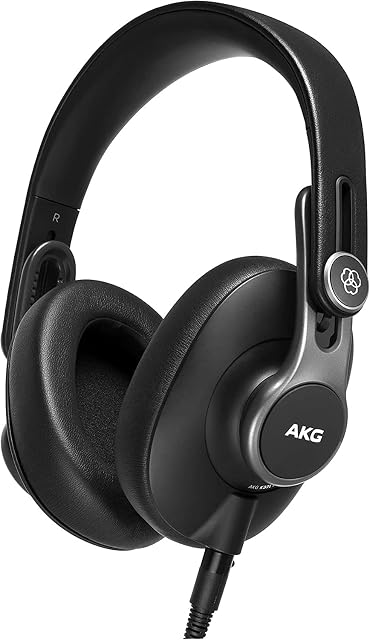
AKG’s closed-back reference: 50 mm (1.97 in) drivers, 32 ohms and a stated 114 dB SPL/V sensitivity, tuned towards the AKG Reference Response curve. Low impedance, so it also works from a laptop.
Best for: One pair for recording and for checking a mix, driven from an interface or a laptop.
Closed back · 40 mm (1.57 in) drivers · low impedance
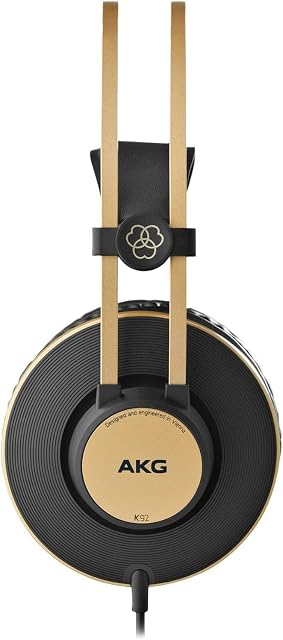
The cheapest way into closed-back monitoring here. AKG states 40 mm (1.57 in) drivers, a low impedance chosen so phones and interfaces can drive it, and replaceable earpads at a price where that is unusual.
Best for: A second pair, a practice pair, or a first pair on a strict budget.