The only interface here to publish how much gain its preamp has — 50 dB, adjustable, with switchable 48 V — in a bus-powered USB-C box with 24-bit/96 kHz converters and Studio One Prime included.
What it amounts to Publishes the two things nothing else here does: how much gain its preamp has, and what it runs on. One microphone input and 96 kHz are the limits, and the DAW is in the box.
One XLR combo input and one instrument input, so a voice and a guitar at once. XMAX-L preamp with 50 dB of adjustable gain and switchable +48 V. 24-bit/96 kHz. Bus powered over USB-C. A headphone output with a mix control. Studio One Prime and the Studio Magic bundle. And a system list that includes Chrome OS, iOS/iPadOS and Android.
Two of those are unique on this shelf and both are unusually practical.
Fifty decibels of gain. No other interface here publishes a gain figure — they publish a preamp name, a dynamic range, or nothing at all. It is the number that decides whether a quiet source can be recorded: a soft voice into a dynamic microphone needs a great deal of gain, and an interface that runs out produces a take too quiet to rescue. Fifty is comfortable for a condenser and tight for a very quiet dynamic, and a reader can now ask the question.
The system list. macOS 10.13, Windows 10 64-bit, Chrome OS, iOS/iPadOS, Android. Combined with bus power that makes this a tablet interface as much as a laptop one, with nothing in the chain to plug into a wall — and it is the only listing on this shelf that lets a reader know before buying.
The mix control on the headphone output is the third thing worth having: it blends what is going in with what is coming back, so a voice is heard at the moment it is sung rather than after a round trip through the computer.
What limits it is one microphone preamp — two voices or a stereo pair are out — and 96 kHz, where two interfaces on this shelf publish 192 kHz and this maker’s own larger box is one of them. That larger box also publishes MIDI In and Out and four LED meters, and this publishes neither.
Availability
Read on the day this page was built: $99 at the American Amazon shop.
Read from Keepa on the day this page was last revised; stock and price both move without notice.
Prices quoted in this text were read on 2026-10-07. The live price is at the top of the page.
In its favor, and its limits
Strengths
The only interface on this shelf to publish a preamp gain figure — 50 dB, adjustable
The only one to publish what it runs on, including Chrome OS, iPadOS and Android
Bus powered with a mix control on the headphone output, so nothing else is needed to monitor
Compromises
One microphone preamp, so two voices or a stereo pair are out of reach
96 kHz where two interfaces on this shelf publish 192 kHz
No MIDI and no metering, both of which this maker publishes on its larger interface here
Specifications
Channels
1 XLR mic/line combo input and 1 TS instrument input, so a microphone and a guitar at the same time; 2 balanced TRS outputs
Preamp
XMAX-L, a custom low-noise high-headroom design with 50 dB of adjustable gain and switchable +48 V phantom power — the only gain figure published on this shelf
Resolution
24-bit / 96 kHz for recording and playback
Power
Bus powered from the connected USB-C device — no separate supply
Monitoring
A 1/4 in TRS stereo headphone output with a mix control, for a blend of input and playback at zero latency
Software
Studio One Prime DAW and the Studio Magic bundle, with tutorials and samples
Systems
macOS 10.13 or later, Windows 10 or later (64-bit), Chrome OS, iOS/iPadOS and Android — the only compatibility list on this shelf
MIDI
PreSonus puts nothing in writing on this. Its own larger interface on this shelf publishes MIDI In and Out
Metering
PreSonus puts nothing in writing on this. Its own larger interface publishes four LED meters
Manufacturer reference
2777700106
Amazon reference
B09N557CYK
EAN
0673454010125
The questions players ask
Why does 50 dB of gain matter?
Because it is the number that decides whether a quiet microphone can be used at all. A dynamic microphone on a soft voice needs a great deal of gain, and an interface that runs out of it produces a recording that is too quiet to rescue. This is the only interface on this shelf to publish the figure — the rest publish a preamp name, a dynamic range or nothing. Fifty decibels is a usable amount for a condenser and tight for a very quiet dynamic.
It runs on a phone?
PreSonus publishes Chrome OS, iOS/iPadOS and Android alongside macOS and Windows, and the interface is bus powered — so there is no adapter in the chain. It is the only compatibility list on this shelf, and the only reason a reader can know this before buying rather than after. What that enables is recording on a tablet without a powered hub, which is a different product from the rest of the shelf.
Accessories confirmed for this instrument
Shown because the accessory names this instrument itself.
Who should pick this one, among music instruments and gear
Recording a voice and a guitar on a laptop, a tablet or a phone, where the gain figure matters more than the sample rate.
Sources
Specifications: the manufacturer sheet for musical instruments and gear and the matching Amazon product page. Prices and availability: Keepa. Every figure on this page names its source.
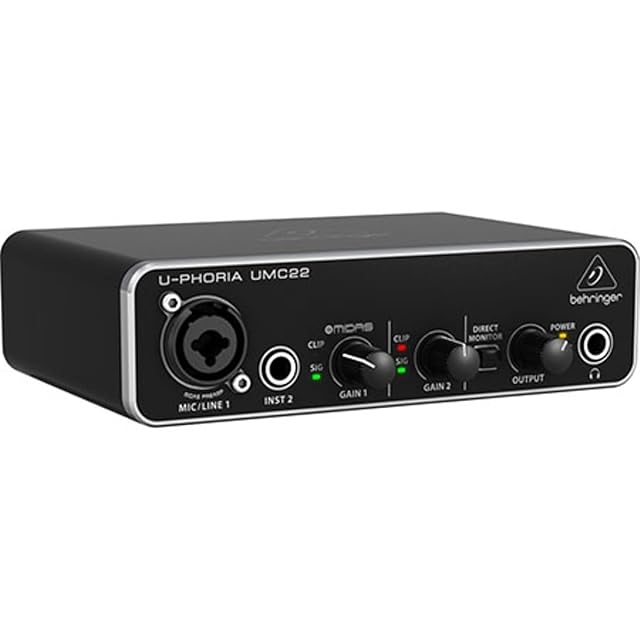
The cheapest honest way into recording: one XLR/TRS combo input with a Midas-designed preamp, a separate instrument input, direct monitoring and USB power. Forty-eight kilohertz, and no pretense beyond it.
Best for: A first interface for one voice or one instrument at a time.
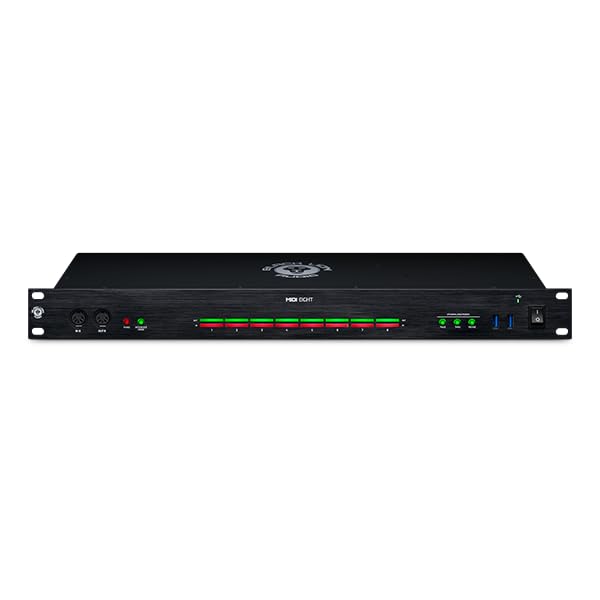
No audio at all · 8 in / 8 out MIDI · three standalone routing modes
The one listing on this shelf that passes no audio: an 8-in, 8-out MIDI interface with three standalone routing modes, per-port activity indicators and front-mounted sockets.
Best for: A studio with more than two MIDI instruments, where the problem is routing rather than recording.
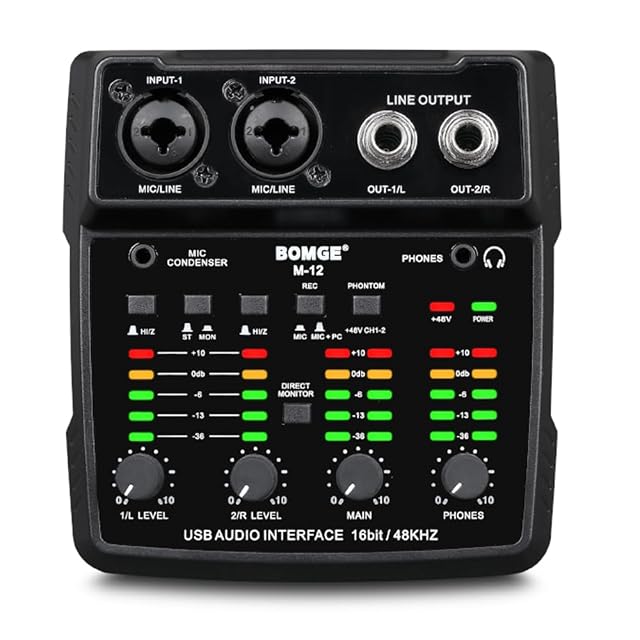
2 channels · 48 V phantom power · gain meter −36 to 10 dB · 3.5 mm (0.14 in) mic input
The least expensive interface on this shelf by a wide margin, with two XLR inputs, 48 V phantom power, a published gain-meter range of −36 to 10 dB, and an extra 3.5 mm (0.14 in) microphone jack.
Best for: A first interface for someone who already has recording software and wants two XLR inputs for the least money.