The most completely specified interface on this shelf: six sample rates listed to 192 kHz, two XMAX-L preamps, MIDI In and Out, four ladder LED meters, front-panel output levels and both USB-C cables in the box.
What it amounts to Ten bullets, and almost every one is a figure: six sample rates, two preamps, four meters, MIDI both ways, front-panel levels and two cables. It publishes no gain figure and no dynamic range, and it is the most completely specified box on this shelf.
Ten bullets, and they are a specification rather than a pitch. 24-bit at 44.1, 48, 88.2, 96, 176.4 and 192 kHz.Two mic/instrument/line inputs with XMAX-L preamps. Two balanced TRS outputs with front-panel level controls. A high-power headphone output and a mixer knob for low-latency direct monitoring. Four ladder-style LED meters — two input, two output. MIDI In and Out.Both USB-C cables in the box. Studio One 6 Artist.
The list of six sample rates is the thing nothing else here does. Every other interface on this shelf publishes a ceiling — 192, 96 or 48 kHz — or a dynamic range instead. A ceiling says what the maximum is; a list says that nothing in the middle is missing, which matters because 44.1 and 48 are both ordinary project rates and 88.2 is the double of one while 96 is the double of the other.
The metering is the second. One interface on this shelf publishes a metering range in decibels; this is the only one that publishes a count, and four with two on the outputs is unusual — output meters show what is going to the monitors, which is where a mix is actually judged.
Then the small practical things that add up. MIDI In and Out, which only one other listing here has at all. Front-panel level controls rather than knobs on the back. Both USB-C cables, so the computer at the other end is not a problem to solve on the evening it arrives.
What it does not publish is this maker’s own best figure. The smaller AudioBox GO on this shelf states 50 dB of adjustable gain; this states XMAX-L and no number. And no dynamic range, where two Focusrites here publish 120 dB.
The product record gives 454 g (16 oz) — one pound exactly, which is a shipping figure rather than a weighed box.
Availability
Catalogued and unsold: the American Amazon shop lists the reference with nobody behind it.
Read from Keepa on the day this page was last revised; stock and price both move without notice.
In its favor, and its limits
Strengths
The only interface here to publish its full list of sample rates rather than a ceiling — six of them, to 192 kHz
Two preamps, MIDI In and Out, and four LED meters, which no other listing on this shelf combines
Both USB-C cables in the box, so the computer at the other end does not matter
Compromises
No preamp gain figure, which this maker publishes on its own smaller interface here
No dynamic range figure, where two interfaces on this shelf publish 120 dB
The listing is ten bullets of specification and says nothing about what it sounds like, which is honest and gives a reader nothing to weigh against the Focusrites
Specifications
Resolution
24-bit at 44.1, 48, 88.2, 96, 176.4 and 192 kHz — the only interface on this shelf to publish the full list rather than a ceiling
Channels
2 in / 2 out simultaneous, with 2 mic/instrument/line inputs
Preamps
Two XMAX-L — one of two interfaces on this shelf with two microphone preamps
Outputs
2 balanced 1/4 in TRS main outputs for studio monitors, with front-panel level controls
Monitoring
A high-power headphone output, and a mixer knob for low-latency direct input monitoring
Metering
Four ladder-style LED meters — two input, two main output — the only counted metering on this shelf
MIDI
In and Out — one of two listings on this shelf with MIDI
Cables
USB-C to USB-C and USB-C to USB-A, both included — the only interface here to supply both
Software
Studio One 6 Artist Edition
Manufacturer reference
STUDIO 24C
Amazon reference
B07L9MWWDK
EAN
0613817013257
The questions players ask
Why does listing all six sample rates matter more than a ceiling?
Because the rates in between are the ones actually used. A project at 44.1 kHz and a project at 48 kHz need an interface that runs at both natively, and 88.2 is the double of 44.1 the way 96 is the double of 48 — which matters when a session has to be converted. Every other interface on this shelf publishes a maximum (192 kHz, 96 kHz, 48 kHz) or a dynamic range instead. This is the only one that publishes the list, and it is the only way to know nothing in the middle is missing.
What do four LED meters add over a gain halo?
Resolution. A halo turns a color; a ladder of LEDs shows how far from clipping a signal is, which is the difference between setting a level and knowing it is right. Having two on the outputs as well is rarer still — it shows what is leaving towards the monitors, which is where a mix is judged. One interface on this shelf publishes a metering range in decibels, and this is the only one that publishes a metering count.
This one’s price among music instruments and gear
Details checked on October 7, 2026.
Who should pick this one, among music instruments and gear
A home studio with two sources, a MIDI keyboard and a pair of monitors, where the figures should be on the page.
Sources
Specifications: the manufacturer sheet for musical instruments and gear and the matching Amazon product page. Prices and availability: Keepa. Every figure on this page names its source.
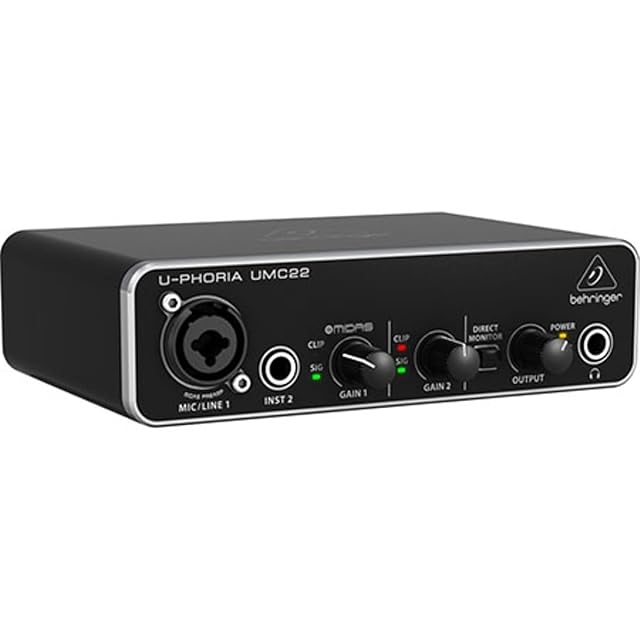
The cheapest honest way into recording: one XLR/TRS combo input with a Midas-designed preamp, a separate instrument input, direct monitoring and USB power. Forty-eight kilohertz, and no pretense beyond it.
Best for: A first interface for one voice or one instrument at a time.
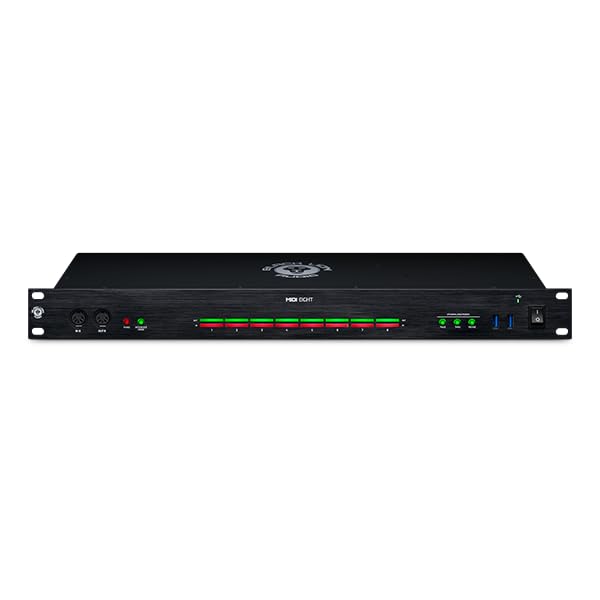
No audio at all · 8 in / 8 out MIDI · three standalone routing modes
The one listing on this shelf that passes no audio: an 8-in, 8-out MIDI interface with three standalone routing modes, per-port activity indicators and front-mounted sockets.
Best for: A studio with more than two MIDI instruments, where the problem is routing rather than recording.
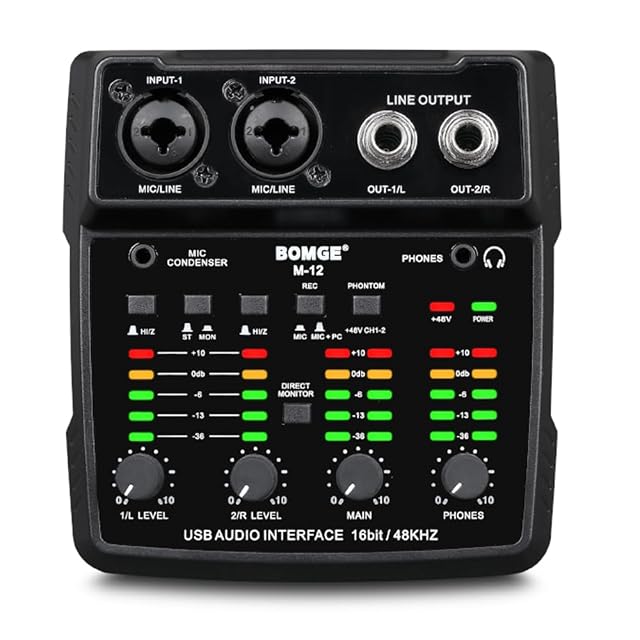
2 channels · 48 V phantom power · gain meter −36 to 10 dB · 3.5 mm (0.14 in) mic input
The least expensive interface on this shelf by a wide margin, with two XLR inputs, 48 V phantom power, a published gain-meter range of −36 to 10 dB, and an extra 3.5 mm (0.14 in) microphone jack.
Best for: A first interface for someone who already has recording software and wants two XLR inputs for the least money.