Skip to content

The best first acoustic guitar

The first decision is not the brand: it is steel strings or nylon, and full size or smaller. Get those right and any of these three works.

Consistency first

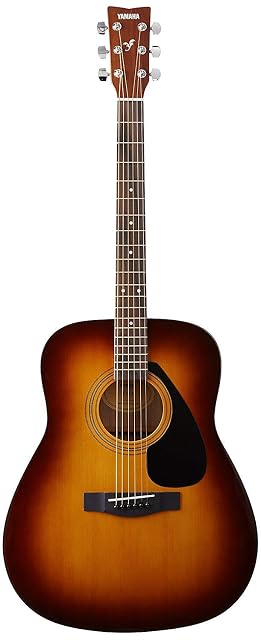
The Yamaha F310 is first for a reason that has nothing to do with its specification: it has been in production long enough that its build quality is a known quantity, which matters more at this price than any single feature. Spruce top, meranti back and sides, rosewood fingerboard, enclosed chrome tuners.

The tuners are the tell

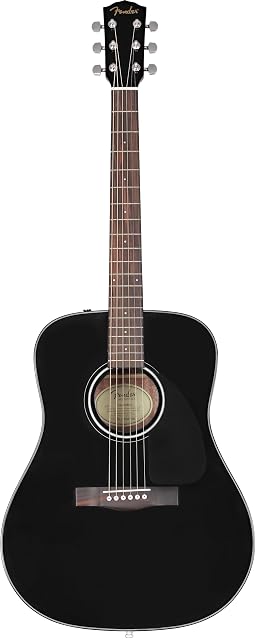
The Fender CD-60 names a C-shaped neck and fits die-cast tuners, which hold and turn precisely. A beginner tunes several times a session, and cheap open gears are the reason so many of them believe they cannot tune.

When the guitar has to fit

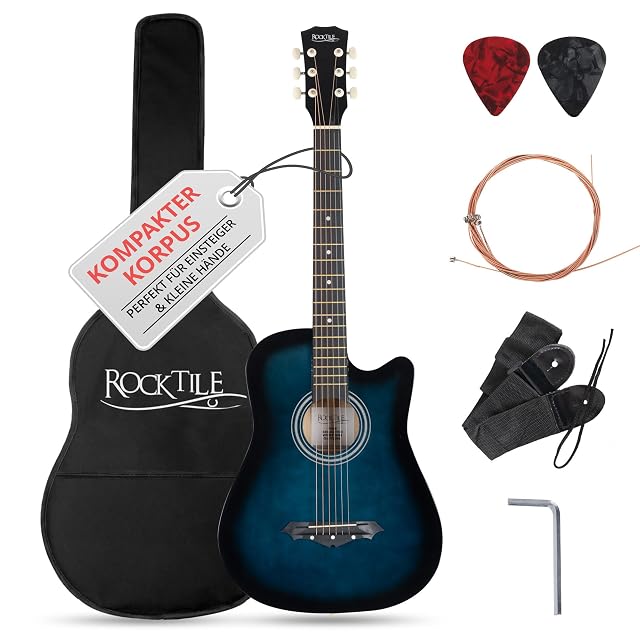
The Rocktile WSD-5C is a small dreadnought — shorter, narrower, and about 1.5 cm (0.6 in) shallower — with a cutaway and, unusually, the hex key for the truss rod in the box. For a younger or smaller player, fit beats projection every time.

What we would not do

We would not fit steel strings to a classical guitar, ever. The instrument is not built for the tension and the damage is not economically repairable.

Which instrument fits how you play?

You have never played
Playability matters more than tone: an instrument that hurts to fret is one you stop picking up.
You want to play softly at home
A smaller body is quieter, easier to hold and far more likely to be played daily.
You want volume for singing along
A larger body projects more, at the cost of comfort for a small player.
You already play and want to plug in
An electro-acoustic saves buying a pickup later, and the preamp is what you are really choosing.

Picking by how you play

Learning at home

The commonest case. Low action, comfortable neck and a body you can hold without effort decide whether practice happens.

Playing with others

Volume and projection begin to matter, and a larger body earns its place.

Travel and small spaces

A parlour or travel size, accepting less volume and a different tonal balance.

Amplified playing

An electro-acoustic, where the pickup system decides most of what an audience hears.

The things you will notice while playing

The setup, before the specification
String height and neck relief decide how a guitar plays. A modest guitar well set up is easier and more rewarding than a better one straight out of a box.
Solid top or laminate
A solid top generally responds and opens up with playing; laminate is more robust and less sensitive to humidity. Both are defensible for a first guitar.
Body size and shape
It decides comfort, volume and tone in that order for a beginner. Holding one is worth more than any description.
Neck profile and nut width
Hand size matters here more than anywhere else. A neck that suits your hand removes an obstacle that no amount of practice fixes.
Tuner quality
A guitar that will not stay in tune is discouraging to learn on, and tuners are the usual cause.

Which figure for which playing

Your situationThe guitarThe trade
Learning at homeSmaller body, low actionLess volume
Playing with othersLarger bodyLess comfortable to hold
Small handsNarrow nut, slim neckA more limited choice
Want to plug inElectro-acousticPaying for a preamp

The mistakes players make

Buying without a setup
Most beginner guitars leave the factory with high action. A setup costs little and it is the difference between an instrument that plays and one that discourages.
Choosing on the top wood alone
Solid tops matter over years of playing. For a first year, setup and comfort decide progress far more than the timber does.
Starting with heavy strings
Lighter gauges are kinder to untrained fingers and make the first weeks possible. Gauge can go up later.
Leaving it in a case in a cold room
Acoustic guitars respond to humidity and temperature. Extremes cause movement that shows up as buzzes and a changed action.

By the musician you are

The absolute beginner
A comfortable body, a good setup and light strings. That combination is what keeps a beginner playing.
The returning player
Neck profile and tone become choices you can make on feel, because you know what you dislike.
The small player
A reduced size is not a compromise: it is the instrument that will actually be picked up.

Care, keys and how long it stays good

An acoustic guitar is maintained through its strings and its environment. Strings lose tone and grip long before they break, and a guitar left in a room that swings between damp and dry will move in ways that show up as buzzing and a changed action.

  • Change strings when they sound dull, not when they break.
  • Wipe the strings and fingerboard after playing; skin oils shorten string life.
  • Keep the guitar away from radiators and from sustained damp.
  • Loosen the strings only for long storage or transport by air, not as routine.

Safety

The risks here are to the instrument and to your hands rather than anything dramatic.

  • Cut string ends after restringing: they are sharp and at eye level when tuning.
  • Wear eye protection or look away while tightening a string that may snap.
  • Support the neck when the guitar lies down; a guitar left on a chair gets sat on.
  • Warm up and stop if you feel pain in wrist or fingers rather than pushing through.

The choices, and the reasoning

  1. Yamaha F310

    Dreadnought · spruce top · rosewood fingerboard · steel strings

    The steel-string that turns up on every beginner list: spruce top, rosewood fingerboard, meranti back and sides, and chrome enclosed tuners.

    Best for: A first steel-string for an adult or teenager who wants the classic strummed sound.
    7.8/10

  2. Fender CD-60 Dreadnought

    Dreadnought · mahogany body · walnut fingerboard · X-bracing

    Fender’s long-running beginner dreadnought: mahogany body, walnut fingerboard, X-bracing and die-cast tuners, with a two-year Fender warranty behind it.

    Best for: A first steel-string that will hold tuning while the hands are learning.

    8.4/10

The questions players ask

Steel or nylon?

Steel is brighter and louder and suits pop, folk and rock. Nylon is softer on the fingers and suits classical and fingerstyle. They are not interchangeable — the instruments are built for different tensions.

Is the top solid or laminated?

None of these three listings states it, and this site does not assume. A maker using a solid top usually writes "solid spruce top" in full; where the words are missing, treat that as the answer.

Does the first guitar need to be expensive?

No, but it needs to be playable. A modest guitar with a proper setup is a far better start than a dearer one with high action.

Solid top or laminate?

Solid tops generally open up over years of playing; laminate is more robust and less sensitive to humidity. For a first instrument both are defensible.

What string gauge should I start with?

A lighter gauge is kinder to untrained fingers and makes the first weeks realistic. You can move to heavier strings once your hands adapt.

Why does my guitar buzz?

Usually action set too low, a neck that has moved with the seasons, or worn frets. A setup addresses the first two.

Should I loosen the strings when not playing?

Not for normal storage: the neck is designed for that tension. It is worth doing for very long storage or air travel.

Does the guitar need a case?

A case protects against knocks and slows humidity swings, which is the more important of the two over a year.

Each instrument, and the player it answers

Yamaha F310

For players who: A first steel-string for an adult or teenager who wants the classic strummed sound.
Its finest point: Enclosed chrome tuners: sealed against dust, and steadier than open gears

Its weakest point: Steel strings are harder on new fingertips than nylon — that is the trade for volume and brightness

Read the full review →

Fender CD-60 Dreadnought

For players who: A first steel-string that will hold tuning while the hands are learning.

Its finest point: Die-cast tuners hold tuning far better than the open gears usual at this price

Its weakest point: The listing does not state whether the top is solid, and we do not assume it

Read the full review →

Rocktile WSD-5C Slim Line

For players who: A younger player, a smaller frame, or a guitar that has to travel.

Its finest point: Genuinely smaller in all three dimensions, which is what a younger or smaller player needs

Its weakest point: A smaller body moves less air, so it is quieter than a full dreadnought

Read the full review →

What to get with it

Stands, pedals and cables from the same aisle, at the price we read. Confirm they suit the instrument you choose before ordering: it turns on the fitting and the part number, which the product page gives.

If you want one line

Comparisons worth hearing out

Instrument against instrument, where that page is already written.

What stands behind this ranking

What is listed is taken from the catalog of this site. Specifications come from the manufacturer and from the Amazon listing; prices are what Keepa reported on the date shown, and both move. The order follows declared specifications, stated strengths against stated limits, and price. Nothing here has been played or recorded with by us, and no page pretends otherwise.

Last checked on

Prices quoted in these summaries are dated readings. The live price is shown next to each product.

The tool we use ourselves

Chosen your instrument? Now buy it at the right price.

Digital pianos and electronic drum kits swing by a hundred dollars or more across the year, and the biggest "discounts" often land at prices the same model sold for six weeks earlier. UniverTrack tracks the real price history across retailers, spots fake reductions, and alerts you when it is genuinely the moment to buy.

Real price historyBuy-now alertsAI buying assistant
Try free for 14 days →
No commitment · Cancel in one click · 5 languages