Skip to content

The best first bass guitar

Low notes need power. A 10 W amp that is fine for a guitar gives you the click of the string and none of the note on a bass, which is why the amp decides this category.

The amplifier decides

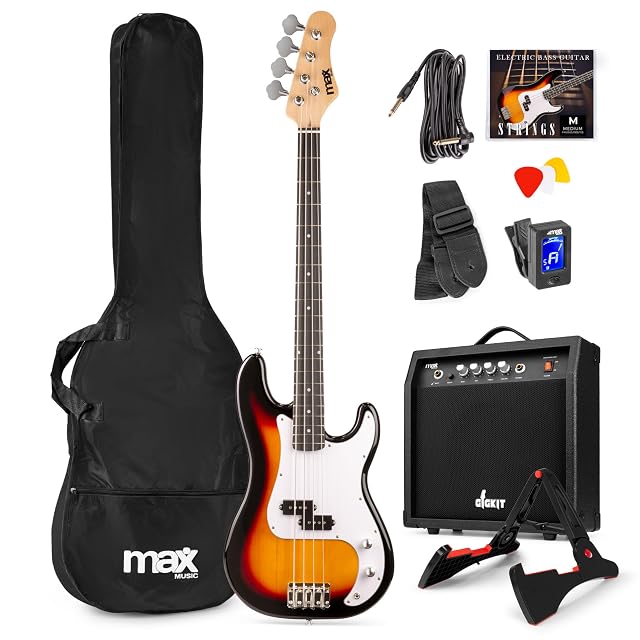
The MAX GigKit is first because its bundled amplifier is 40 W — four times what most bass packs include — with tone controls and a headphone output. A bass through an undersized amp is not a quiet bass; it is a bass you cannot hear the notes of.

When you already have an amp

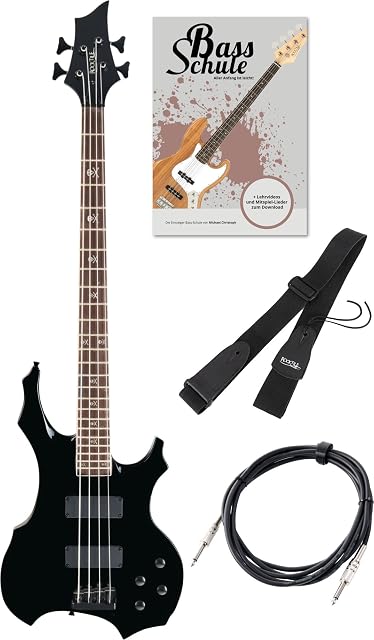
The Rocktile BattleBone is the specified instrument here: 24 frets, two humbuckers with two volume and two tone controls, an 86.4 cm (34 in) long scale, a 43 mm (1.69 in) nut and a stated 3.7 kg (8.2 lb). No amplifier is included, and that is the point — if the amp is sorted, this is the better instrument.

The simplest

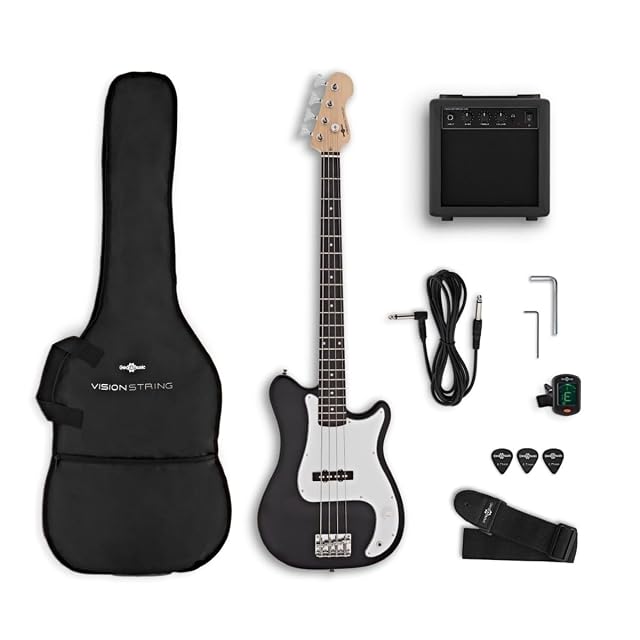
The VISIONSTRING pack removes decisions: one pickup, one volume control, a flat 20-fret fingerboard with visible markers, and a headstock tuner in the box. Its 10 W amp is honest for practice and no more.

What we would not do

We would not buy a bass pack without a headphone socket on the amplifier. Bass carries through a building better than anything else in this catalog.

Which instrument fits how you play?

You are new to bass
Scale length and weight decide comfort, and comfort decides whether you practice.
You have small hands or are young
A short scale is a genuine instrument, not a toy, and it removes a real obstacle.
You want a traditional sound
Pickup layout shapes it: different configurations have distinct voices that suit different music.
You will practice in a flat
Bass frequencies travel through walls. Headphone practice is not optional here, it is the format’s condition.

Picking by how you play

Learning at home

Comfort, weight and a headphone amp. A bass that hurts to hold after ten minutes will not be played.

Playing with a band

Where amplification becomes a real question and the practice amp stops being enough.

Recording

Bass records well direct through an interface, which makes it one of the easier instruments to record at home.

Playing with a pick or fingers

It changes the sound and the setup preferences, and it is worth deciding early which you want to learn.

The things you will notice while playing

Scale length
The distance between nut and bridge. It decides string tension and reach, and a shorter scale is easier for small hands without being a lesser instrument.
Weight and balance
A bass is heavier than a guitar and hangs on your shoulder. A body that dives at the headstock becomes tiring within minutes.
Pickup configuration
It shapes the voice more than the timber does. The common configurations sound distinctly different and suit different styles.
Setup and string height
As on any instrument, this is the difference between playable and discouraging, and it is the cheapest improvement.
A way to practice quietly
A headphone amp or an interface. Bass through a speaker in a flat is a neighbor problem before it is a musical one.

Which figure for which playing

Your situationWhat to chooseWhy
Small hands or young playerShort scaleReach and tension
Standing for long setsA balanced, lighter bodyShoulder fatigue
Practicing in a flatHeadphone amp or interfaceBass travels through walls
A specific stylePickup configurationIt shapes the voice

The mistakes players make

Treating a short scale as a compromise
It is a different instrument with its own voice, played by professionals. For a small player it removes an obstacle rather than creating one.
Practicing through a speaker in a flat
Low frequencies pass through walls and floors far better than mid and high. Headphones solve a problem that volume control does not.
Ignoring weight
A bass is worn, not held. Weight and balance decide how long a session lasts far more than tone does.
Using guitar strings' logic on gauge
Bass string gauge changes tension and feel considerably, and it interacts with the setup. Changing gauge usually means a setup afterwards.

By the musician you are

The beginner
A comfortable, balanced instrument, a setup, and headphones. Nothing else changes the first year as much.
The small player
A short scale, chosen deliberately and not apologetically.
The one who will play live
Weight and balance become the criteria, because a standing set is measured in hours.

Care, keys and how long it stays good

A bass demands a little more mechanical attention than a guitar because the string tension is higher. The truss rod and bridge take more load, and strings cost more, which is exactly why they get changed too rarely.

  • Wipe strings after playing: bass strings are expensive and skin oils dull them quickly.
  • Check neck relief seasonally; higher tension makes movement more noticeable.
  • Keep the bridge and saddles clean of corrosion.
  • Tighten the jack socket and strap buttons: a heavy instrument tests both.

Safety

A heavy instrument connected to mains equipment, with real hearing implications.

  • Use strap locks or a secure strap: a bass that falls off a shoulder is heavy enough to be damaged and to hurt.
  • Set safe headphone levels; low frequencies feel quieter than they are.
  • Use an earthed amplifier and never defeat the earth pin.
  • Support the neck when laying the instrument down.

The choices, and the reasoning

  1. MAX GigKit Bass

    Full-size bass · 21 frets · 40 W amp with headphone out

    A complete bass package built around a 40 W amplifier — four times the wattage bundled with most starter kits — plus a stand, strap, 3 m (10 ft) cable, spare strings and picks.

    Best for: A first bass where the amplifier should not have to be replaced immediately.
    7.8/10

  2. Rocktile Pro BB104-B BattleBone

    24 frets · two humbuckers · long scale 86.4 cm (34 in) · 3.7 kg (8.2 lb)

    The specified instrument in this family: 24 frets, two humbuckers with two volume and two tone controls, a long 86.4 cm (34 in) scale, a 43 mm (1.69 in) nut and a stated weight of 3.7 kg (8.2 lb).

    Best for: A second bass, or a first one for somebody who already has an amp.

    7.8/10

The questions players ask

Long scale or short scale?

Long scale — about 34 inches, 86.4 cm — is the standard the repertoire and most strings assume. Short scale suits smaller hands and has its own sound. Strings are not interchangeable between them.

Why is my new bass silent?

If it has active electronics it needs a 9 V battery to make any sound at all. That is the design, not a fault, and it catches out a great many first buyers.

Can I practice bass in a flat?

Through headphones, easily. Through a speaker, low frequencies pass through walls in a way that volume control does not solve.

Pick or fingers?

Both are legitimate and they sound different. It is worth deciding early which you want to learn, because it affects setup preferences.

How often should I change bass strings?

When they sound dull rather than on a schedule. Some players want that dullness; others change often. Wiping them after playing extends their life considerably.

Do I need a bass amp to start?

Not necessarily: a headphone amp or an audio interface covers home practice and recording. A bass amp becomes necessary when you play with others.

Is a bass harder than a guitar?

It is different rather than harder: fewer strings and simpler chords, but higher tension, more weight and a role that demands timing above all.

Each instrument, and the player it answers

MAX GigKit Bass

For players who: A first bass where the amplifier should not have to be replaced immediately.
Its finest point: Forty watts is the first bundled bass amp here that can actually reproduce low notes

Its weakest point: No IT offer at the time of writing

Read the full review →

Rocktile Pro BB104-B BattleBone

For players who: A second bass, or a first one for somebody who already has an amp.

Its finest point: Every dimension is published — scale, nut width, weight — which almost nothing else here does

Its weakest point: No amplifier in this set — it is an instrument, not a starter package

Read the full review →

VISIONSTRING Full-Size Bass Pack

For players who: A first bass for someone who wants the fewest possible controls in the way.

Its finest point: A headstock tuner in the box, which is the accessory a beginner uses every single day

Its weakest point: Ten watts is a practice amp for a bass, and it will run out of low end quickly

Read the full review →

What to get with it

Stands, pedals and cables from the same aisle, at the price we read. Confirm they suit the instrument you choose before ordering: it turns on the fitting and the part number, which the product page gives.

  • D’Addario EJ11-3D · Guitar strings — 80/20 bronze · light 12-53 · three sets · $6.66 a set, the lowest here
  • D’Addario EJ16-3D · Guitar strings — Phosphor bronze · light 12-53 · three sets · $8.30 a set
  • Jim Dunlop Variety Pack Medium/Heavy (12) · Picks & straps — 12 picks · medium and heavy · tortex, celluloid, ultex, nylon · $8
  • Jim Dunlop Variety Pack (12) · Picks & straps — 12 picks · Ultex, Tortex, Jazz III, Gator Grip, Max Grip
  • CME C2MIDI Pro · Cables & adapters — USB-C MIDI · 32-bit processor · filter, map, route · works with no computer
  • Cyberguys! 190 0027 · Cables & adapters — 3.5 mm (0.14 in) TRS to 6.35 mm (0.25 in) TRS · 3.3 ft · oxygen-free copper · braided

If you want one line

What stands behind this ranking

What is listed is taken from the catalog of this site. Specifications come from the manufacturer and from the Amazon listing; prices are what Keepa reported on the date shown, and both move. The order follows declared specifications, stated strengths against stated limits, and price. Nothing here has been played or recorded with by us, and no page pretends otherwise.

Last checked on

Prices quoted in these summaries are dated readings. The live price is shown next to each product.

The tool we use ourselves

Chosen your instrument? Now buy it at the right price.

Digital pianos and electronic drum kits swing by a hundred dollars or more across the year, and the biggest "discounts" often land at prices the same model sold for six weeks earlier. UniverTrack tracks the real price history across retailers, spots fake reductions, and alerts you when it is genuinely the moment to buy.

Real price historyBuy-now alertsAI buying assistant
Try free for 14 days →
No commitment · Cancel in one click · 5 languages