Skip to content

The best first recording microphone

A USB microphone is a finished chain: capsule, preamp and converter in one body. An XLR microphone is one component and needs an interface, a cable and usually phantom power. Decide that first.

Start finished

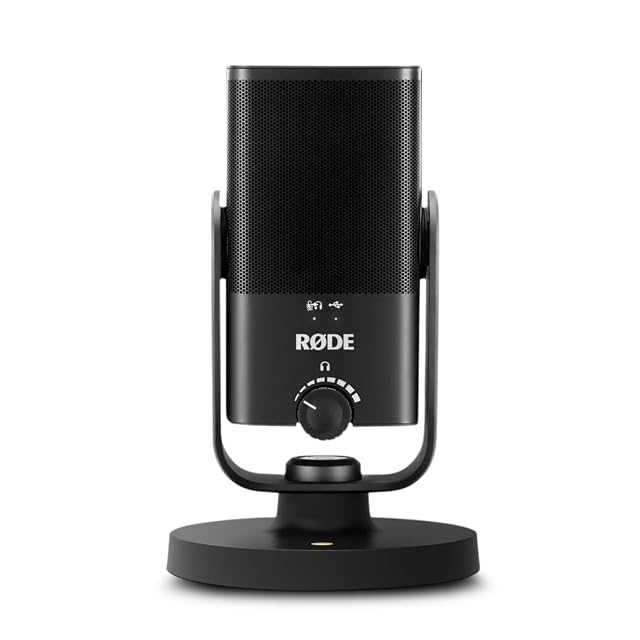
The RØDE NT-USB Mini is first because it is a complete chain over one cable, with a headphone socket on the microphone itself for latency-free monitoring — the feature that makes singing to a backing track possible. It is class compliant, so nothing is installed.

Start expandable

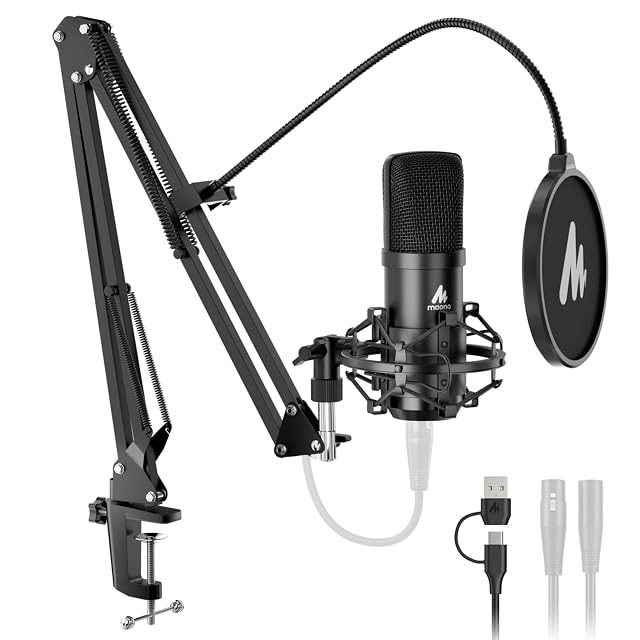
The MAONO A04 Gen2 carries both USB and XLR, so it works on a laptop today and becomes a component in an interface chain later. It also arrives with the boom arm, the pop filter and the windscreen.

The floor

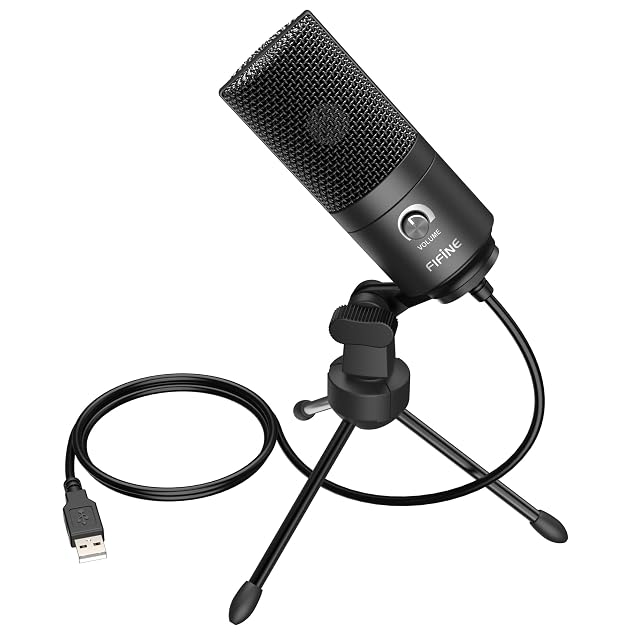
The FIFINE is a metal-bodied cardioid condenser with a tripod and its own volume knob, at a price where the alternative is a gaming headset. FIFINE states plainly that it does not work with Xbox or phones, which is more honesty than most listings offer.

What we would not do

We would not buy an XLR microphone without also budgeting for an interface, a cable and phantom power. That is three purchases, not one.

Which instrument fits how you play?

You are recording voice in an untreated room
A dynamic microphone hears less of the room, which is usually the bigger problem than the microphone.
You want detail on acoustic instruments
A condenser captures more, including everything else in the room.
You want the simplest possible setup
A USB microphone removes the interface entirely, at the cost of flexibility later.
You already have an interface
An XLR microphone is the more flexible purchase and it will outlive the interface.

Picking by how you play

Voice and speech

Where a dynamic microphone shines in an untreated room, because it rejects more of what is around it.

Acoustic instruments

A condenser captures the detail, and it also captures the room, the traffic and the fridge.

Loud sources

Guitar cabinets and drums, where dynamics are the conventional choice for good reasons.

Simple home recording

A USB microphone gets you recording immediately, which is worth a great deal when starting.

The things you will notice while playing

Dynamic or condenser
The decision that shapes everything else. Condensers capture more detail and more room; dynamics capture less of both.
Polar pattern
What the microphone hears around it. A cardioid pattern rejects the rear, which is what makes an untreated room usable.
USB or XLR
USB is simpler and self-contained; XLR needs an interface and grows with you. Neither is wrong, and the choice is about the next three years.
Whether it needs phantom power
Most condensers do. A microphone that needs it and an interface that cannot supply it is a common and avoidable mismatch.
What the room is like
The most important criterion and the one not printed on the box. A better microphone in a bad room usually sounds worse than a modest one.

Which figure for which playing

What you recordThe microphoneThe catch
Voice, untreated roomDynamicLess detail
Acoustic guitarCondenserIt hears the room too
Loud amps and drumsDynamicNothing much
Simplest setupUSBLess flexible later

The mistakes players make

Buying a better microphone instead of treating the room
A sensitive microphone in a reflective room records the reflections faithfully. Soft furnishings and a duvet change the result more than a microphone upgrade.
Ignoring phantom power
Most condensers need it and most dynamics do not. Buying a condenser without a source of phantom power is a common false start.
Recording too far away
Distance is what lets the room in. Working closer usually improves a home recording more than any equipment change.
Skipping a stand and a pop filter
Handling noise and plosives ruin more home recordings than microphone quality does, and both are cheap to fix.

By the musician you are

The voice recordist
A dynamic microphone, close, in a soft room. That combination is more forgiving than any budget condenser.
The musician
A condenser and some attention to the room, because detail is the point and the room comes with it.
The absolute beginner
A USB microphone: it removes every question except where to point it, and that is what gets recordings made.

Care, keys and how long it stays good

Microphones are simple objects that suffer from moisture, dust and shock. Condensers in particular dislike humidity, and a microphone left uncovered on a stand collects dust on the capsule where it degrades the sound gradually.

  • Cover or bag the microphone when it is not in use.
  • Use a pop filter: it protects the capsule from moisture as well as improving the recording.
  • Store condensers somewhere dry rather than in a cold room.
  • Handle by the body, not the grille, and avoid dropping or knocking it.

Safety

The risks are to the equipment and to your hearing rather than to you directly.

  • Turn phantom power off before plugging or unplugging a microphone.
  • Do not apply phantom power to equipment that is not designed for it.
  • Set monitoring levels carefully; feedback through speakers is sudden and loud.
  • Weight a boom stand: a microphone falling from height is both a hazard and an expense.

The choices, and the reasoning

  1. RØDE NT-USB Mini

    USB condenser · 24-bit/48 kHz · headphone out · magnetic base

    A complete recording chain in one small body: condenser capsule, 24-bit/48 kHz interface, zero-latency headphone output and a detachable magnetic desk stand. Class compliant, so nothing is installed.

    Best for: Podcasting, streaming and demos where the whole chain should be one object.

    7.8/10

    ≈ $105

  2. FIFINE 800669

    USB condenser · cardioid · tripod included · volume knob

    A metal-bodied USB condenser with a tripod stand and its own volume control, sold at a price where the alternative is usually a headset. Cardioid, and stated as PC, Mac, PS4 and PS5 compatible.

    Best for: A first microphone for calls, streaming and rough demos on a computer.

    7.2/10

    ≈ $55

The questions players ask

Why does my condenser microphone make no sound?

Almost always because phantom power is switched off. Most condensers need 48 V from the interface, on a button marked 48V or P48. Dynamic microphones need none.

Do I need a pop filter?

For speech at close range, yes — it is a ten-dollar fix for the burst of air on P and B sounds that makes home recordings sound like home recordings.

Dynamic or condenser for a first microphone?

For voice in an untreated room, a dynamic is usually more forgiving. For acoustic detail, a condenser captures more, including more of the room.

USB or XLR?

USB is simpler and self-contained; XLR with an interface is more flexible and grows with you. The choice is about the next few years, not about quality alone.

What is phantom power?

The power most condensers need, supplied by an interface or mixer. A condenser without a source of it will not work, and that is a common false start.

Why does my recording sound boxy?

Almost always the room rather than the microphone. Working closer and adding soft furnishings changes it more than a new microphone would.

Will a better microphone fix my recordings?

Usually not on its own. Distance, room and technique account for more of the result than the microphone at this level.

Do I need a shock mount?

It isolates the microphone from knocks traveling up the stand, which matters most with a sensitive condenser on a desk. On a dynamic in hand or on a floor stand it adds little.

Each instrument, and the player it answers

RØDE NT-USB Mini · $105

For players who: Podcasting, streaming and demos where the whole chain should be one object.

Its finest point: One purchase, one cable: no interface, no XLR lead, no phantom power question

Its weakest point: A USB microphone is a finished chain, not a component: it cannot be upgraded piece by piece

Read the full review →

MAONO A04 Gen2

For players who: Someone who will start on USB and knows an interface is coming.

Its finest point: Goes both ways — USB now, XLR later — so it survives the move from laptop to interface without being replaced

Its weakest point: The software features work in USB mode only — over XLR it is a plain microphone

Read the full review →

FIFINE 800669 · $55

For players who: A first microphone for calls, streaming and rough demos on a computer.

Its finest point: A metal body and a real stand at a price where plastic is the norm

Its weakest point: FIFINE states it will not work with Xbox or with phones

Read the full review →

What to get with it

Stands, pedals and cables from the same aisle, at the price we read. Confirm they suit the instrument you choose before ordering: it turns on the fitting and the part number, which the product page gives.

  • CAHAYA 2-in-1 Boom Stand · Mic stands & arms — Floor stand · boom · 64–158 cm (25.2 to 62.2 in) · $78
  • InnoGear TS186 · Mic stands & arms — 71–228 cm (28 to 89.8 in) · boom adjustable 41–76 cm (16.1 to 29.9 in) · 360° on two axes · two clips and a bag
  • aokeo Pop Filter with Foam Windscreen · Pop filters & shields — Pop filter with foam layer · $9
  • aokeo Pop Filter Mask Shield · Pop filters & shields — Gooseneck pop filter · clamp mount · $10
  • CME C2MIDI Pro · Cables & adapters — USB-C MIDI · 32-bit processor · filter, map, route · works with no computer
  • Cyberguys! 190 0027 · Cables & adapters — 3.5 mm (0.14 in) TRS to 6.35 mm (0.25 in) TRS · 3.3 ft · oxygen-free copper · braided

If you want one line

Comparisons worth hearing out

Instrument against instrument, where that page is already written.

What stands behind this ranking

What is listed is taken from the catalog of this site. Specifications come from the manufacturer and from the Amazon listing; prices are what Keepa reported on the date shown, and both move. The order follows declared specifications, stated strengths against stated limits, and price. Nothing here has been played or recorded with by us, and no page pretends otherwise.

Last checked on

Prices quoted in these summaries are dated readings. The live price is shown next to each product.

The tool we use ourselves

Chosen your instrument? Now buy it at the right price.

Digital pianos and electronic drum kits swing by a hundred dollars or more across the year, and the biggest "discounts" often land at prices the same model sold for six weeks earlier. UniverTrack tracks the real price history across retailers, spots fake reductions, and alerts you when it is genuinely the moment to buy.

Real price historyBuy-now alertsAI buying assistant
Try free for 14 days →
No commitment · Cancel in one click · 5 languages