A dynamic microphone with both XLR and USB outputs, a signal-to-noise ratio above 80 dB, a 130 dB maximum SPL, tap-to-mute and gain on the body, and a 3.5 mm (0.14 in) headphone socket with its own volume control.
What it amounts to The most complete body on this shelf: two outputs, a signal-to-noise figure nobody else publishes, a mute you can tap and a headphone socket with its own volume. The XLR cable, the arm and the stand are all missing, and the listing says so three times.
Two outputs, and both are real. XLR into an interface, USB-C into a computer — which makes this one of three microphones on this shelf that do not have to be replaced when the chain grows.
Then the figure: a signal-to-noise ratio higher than 80 dB. That is the only one published on this shelf, and it is the same property the $212 condenser here describes as extremely low self-noise without a number. Eighty decibels of headroom above the microphone’s own hiss is something a reader can hold against another product. An adjective is not.
The controls on the body are the second argument. Tap-to-mute, placed on the front and made a tap rather than a switch so that the act of muting does not itself land in the recording. Gain on the microphone, so a level set once survives a change of computer. And a 3.5 mm (0.14 in) headphone socket with its own volume control, which is what makes monitoring latency-free — the audio is heard before it has been round the computer.
The box is generous and the list of what is not in it is longer. A shock mount, a windscreen, a 2.5 m (8 ft) USB-C cable and a 5/8 to 3/8 inch thread adapter are supplied. The XLR cable, a boom arm and a microphone stand are not, and FIFINE prints all three absences in a warm-tips note at the end of its bullets. A shock mount with nothing to hang it from is the one that will be noticed on the day.
No polar pattern is published, which is the gap it shares with its cheaper stablemate on this shelf. The 510 g (18 oz) in the product record is the microphone and its shock mount together.
Availability
Read on the day this page was built: $68 at the American Amazon shop.
Read from Keepa on the day this page was last revised; stock and price both move without notice.
Prices quoted in this text were read on 2026-10-07. The live price is at the top of the page.
In its favor, and its limits
Strengths
The only microphone on this shelf to publish a signal-to-noise ratio
Tap-to-mute and gain on the body, so neither needs a software window open
A headphone socket with its own volume control, which is what makes monitoring latency-free
Compromises
The XLR cable, the boom arm and the stand are all absent, and FIFINE lists them as such
No polar pattern published, on a microphone sold for podcasting beside a keyboard
A shock mount is supplied and there is nothing to hang it from in the box
Specifications
Type
Dynamic, metal build
Connections
XLR and USB-C — one of three microphones on this shelf with both
Signal-to-noise ratio
Higher than 80 dB — the only signal-to-noise figure published on this shelf
Maximum SPL
130 dB
Controls
Tap-to-mute on the front panel, and gain control on the body rather than in software
Monitoring
A 3.5 mm (0.14 in) headphone jack with real-time monitoring and headphone volume control
Included
A shock mount, a windscreen, a 2.5 m (8 ft) USB-C to USB-A cable and a 5/8 in to 3/8 in thread adapter
Not included
The XLR cable, a boom arm and a microphone stand — FIFINE lists all three as absent
Phantom power
Not required in XLR mode — a dynamic capsule needs none
Pattern
FIFINE puts nothing in writing on this.
Manufacturer reference
ABCD2213K688
Amazon reference
B0B8SNVK5K
EAN
0850035565599
The questions players ask
What does “S/N higher than 80 dB” mean in practice?
How far the wanted signal sits above the microphone’s own electrical noise. It is the figure that corresponds to the *extremely low self-noise* that the most expensive microphone on this shelf claims and does not quantify — and this is the only listing here to publish one. Above 80 dB is a real number a reader can hold against another product; an adjective is not.
Why is a physical mute button worth anything?
Because a mute in software is three clicks and a window, and a cough is two seconds. FIFINE goes further and makes it a tap rather than a switch, specifically so the action itself does not make a noise into the recording. The gain knob is the same argument: a level set on the body survives changing computers, and a level set in a driver panel does not.
Accessories confirmed for this instrument
Shown because the accessory names this instrument itself.
Who should pick this one, among music instruments and gear
A podcast or a stream that starts on USB and moves to an interface later, where the mute button needs to be a button.
What buyers actually choose
Amazon reports what buyers took in the month before this page was last checked: at least 1,000.
The figure is a floor, rounded by Amazon, and read through Keepa — it says what buyers picked, not what a maker claims.
Sources
Specifications: the manufacturer sheet for musical instruments and gear and the matching Amazon product page. Prices and availability: Keepa. Every figure on this page names its source.
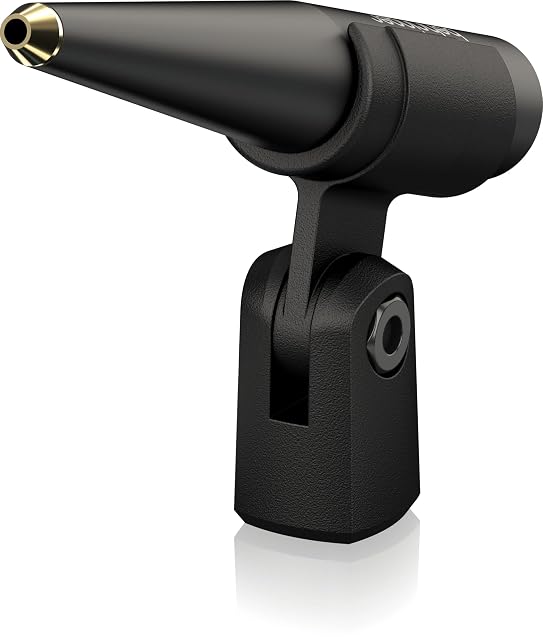
The thinnest listing on this shelf by a distance: a condenser microphone whose single bullet is its own title, with no pattern, no diaphragm, no sensitivity, no SPL and no power requirement published anywhere.
Best for: A buyer who already knows this microphone, because the listing answers nothing about it.
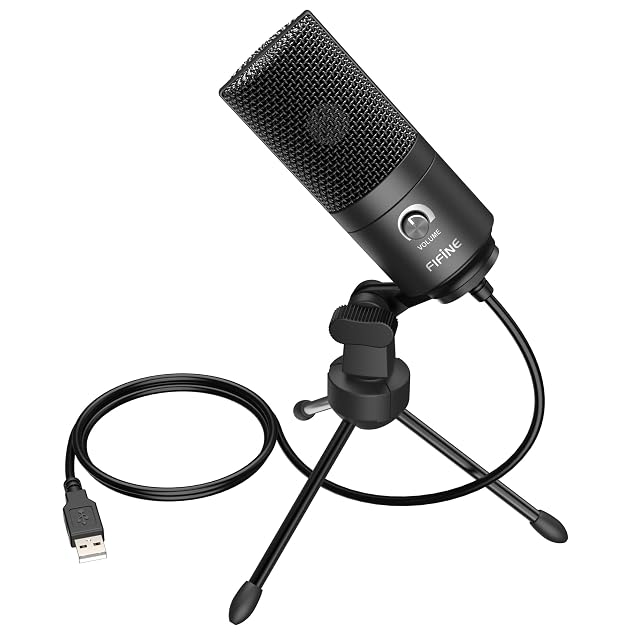
USB condenser · cardioid · tripod included · volume knob
A metal-bodied USB condenser with a tripod stand and its own volume control, sold at a price where the alternative is usually a headset. Cardioid, and stated as PC, Mac, PS4 and PS5 compatible.
Best for: A first microphone for calls, streaming and rough demos on a computer.
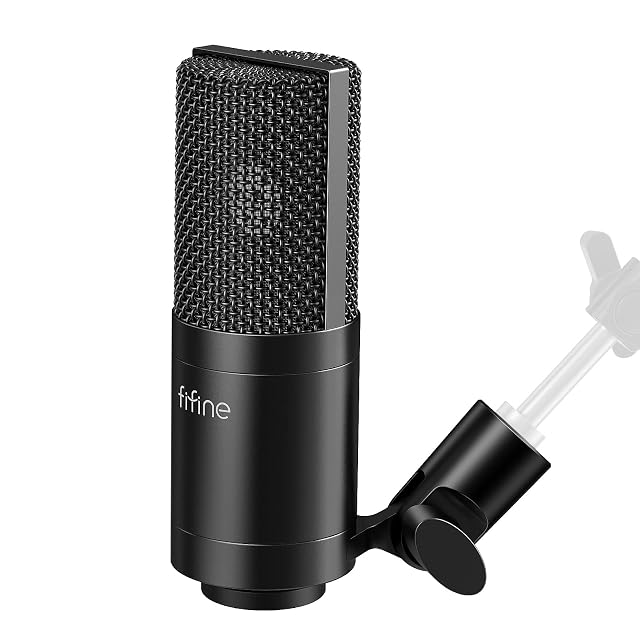
XLR condenser · 16 mm (0.63 in) diaphragm · −43 dB · 130 dB max SPL · tripod included
The least expensive XLR microphone here, and one of only two that publish a sensitivity figure: 16 mm (0.63 in) diaphragm, −43 dB, 130 dB maximum SPL, an all-metal body and a metal tripod in the box.
Best for: A first XLR microphone for someone who already owns an interface and a cable, and wants figures rather than adjectives.