The thinnest listing on this shelf by a distance: a condenser microphone whose single bullet is its own title, with no pattern, no diaphragm, no sensitivity, no SPL and no power requirement published anywhere.
What it amounts to One bullet, and it is the title. A condenser from a maker whose products stay in catalogs — and a listing that publishes no pattern, no diaphragm, no sensitivity, no SPL and no power requirement, at three times the price of the microphone here that publishes all but the first.
The listing carries one bullet. In full:
Behringer ECM PRO Professional Condenser Microphone for Studio and Live Sound
That is the product title, repeated. There is nothing else.
This site reports the figures a manufacturer puts in writing and says when there are none. Here there are none, and the absence is the finding — particularly at $115.62, which is three times the price of the microphone on this shelf that publishes a 16 mm (0.63 in) diaphragm, −43 dB of sensitivity and 130 dB of maximum SPL.
What cannot be answered from this page: the polar pattern, which decides whether the room is in the recording. The frequency response. The sensitivity, which decides how much gain the interface must find. The maximum SPL, which decides whether it survives a snare drum. The connection — XLR is implied by condenser and studio and is never stated. And the phantom power requirement, which is the line that matters most: a condenser plugged into an input with no 48 V supply makes no sound at all, and the fault looks like a dead microphone.
What is in the box is not stated either. No clip, no cable, no stand is mentioned, which on this shelf is unusual — three of the five XLR microphones here list their accessories and one supplies five meters of cable.
The one thing worth saying for it is not on the listing: Behringer keeps products in its catalog for a long time, which is what decides whether a clip or a capsule can still be ordered in three years. That is a fact about the maker, and this page separates it from the specification, of which there is none.
Availability
Read on the day this page was built: $116 at the American Amazon shop.
Read from Keepa on the day this page was last revised; stock and price both move without notice.
Prices quoted in this text were read on 2026-10-07. The live price is at the top of the page.
In its favor, and its limits
Strengths
It is a condenser from an established maker, and the title says so
The 100 g (3.5 oz) in the product record is the lightest figure on this shelf
Behringer catalogs its products for years, so a spare clip or capsule remains orderable
Compromises
The listing carries one bullet and it is the title copied — nothing on this shelf is thinner
No pattern, no diaphragm, no sensitivity, no SPL and no connection published
No phantom power requirement stated, on a condenser that cannot work without it
Specifications
Type
Condenser, for studio and live sound (from the title)
Pattern
Behringer puts nothing in writing on this.
Diaphragm
Behringer puts nothing in writing on this. One microphone on this shelf publishes 16 mm (0.63 in)
Sensitivity
Behringer puts nothing in writing on this. Two microphones on this shelf publish one
Maximum SPL
Behringer puts nothing in writing on this. Two microphones on this shelf publish 130 dB
Phantom power
Behringer puts nothing in writing on this. A condenser capsule requires it, and the listing never says so
Connections
Behringer puts nothing in writing on this.
Included
Behringer puts nothing in writing on this — no clip, no cable, no stand is mentioned
Listing text
One bullet, which reads in full: “Behringer ECM PRO Professional Condenser Microphone for Studio and Live Sound.” It is the product title, repeated
Manufacturer reference
0506-AAB
Amazon reference
B0DT3VWB57
EAN
4033653071888
The questions players ask
Is there really only one bullet?
Yes, and it is the product title repeated word for word: *Behringer ECM PRO Professional Condenser Microphone for Studio and Live Sound.* Every other microphone on this shelf carries between four and seven bullets, and the cheapest of them publishes a diaphragm size, a sensitivity and a maximum SPL. This page cannot tell you the polar pattern, the frequency response, the connection type or what is in the box, because the seller has not said.
Will it need phantom power?
A condenser capsule does, and this listing does not mention it. That is the one line a first-time buyer needs, because a condenser plugged into an input with no 48 V supply produces silence and the fault looks like a broken microphone. The interface or mixer at the other end is what supplies it. This site reports what a maker puts in writing, and on this listing that is one sentence.
Accessories confirmed for this instrument
Shown because the accessory names this instrument itself.
Who should pick this one, among music instruments and gear
A buyer who already knows this microphone, because the listing answers nothing about it.
Sources
Specifications: the manufacturer sheet for musical instruments and gear and the matching Amazon product page. Prices and availability: Keepa. Every figure on this page names its source.
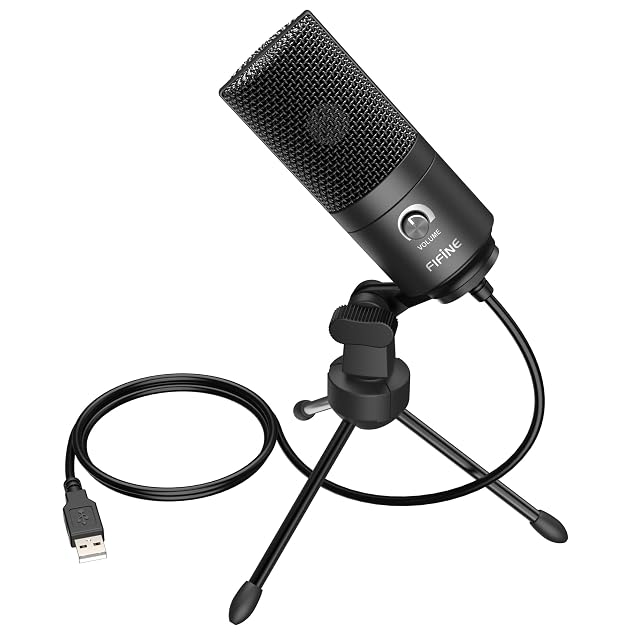
USB condenser · cardioid · tripod included · volume knob
A metal-bodied USB condenser with a tripod stand and its own volume control, sold at a price where the alternative is usually a headset. Cardioid, and stated as PC, Mac, PS4 and PS5 compatible.
Best for: A first microphone for calls, streaming and rough demos on a computer.
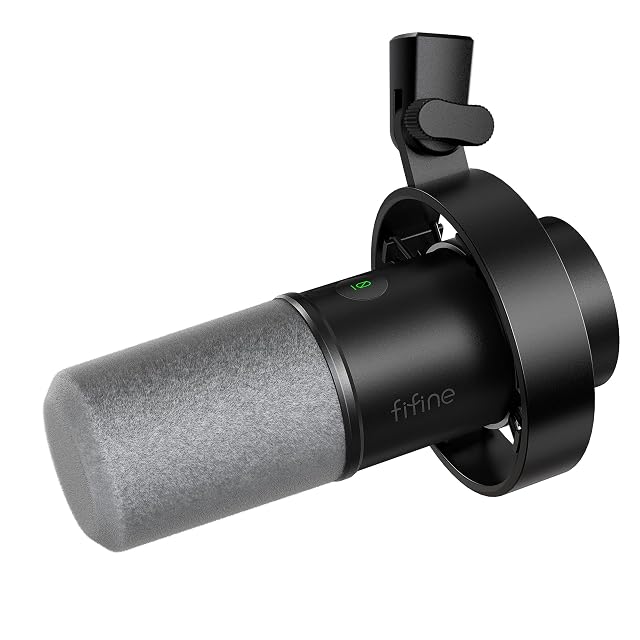
Dynamic · XLR and USB · S/N above 80 dB · 130 dB SPL · tap-to-mute · headphone monitoring
A dynamic microphone with both XLR and USB outputs, a signal-to-noise ratio above 80 dB, a 130 dB maximum SPL, tap-to-mute and gain on the body, and a 3.5 mm (0.14 in) headphone socket with its own volume control.
Best for: A podcast or a stream that starts on USB and moves to an interface later, where the mute button needs to be a button.
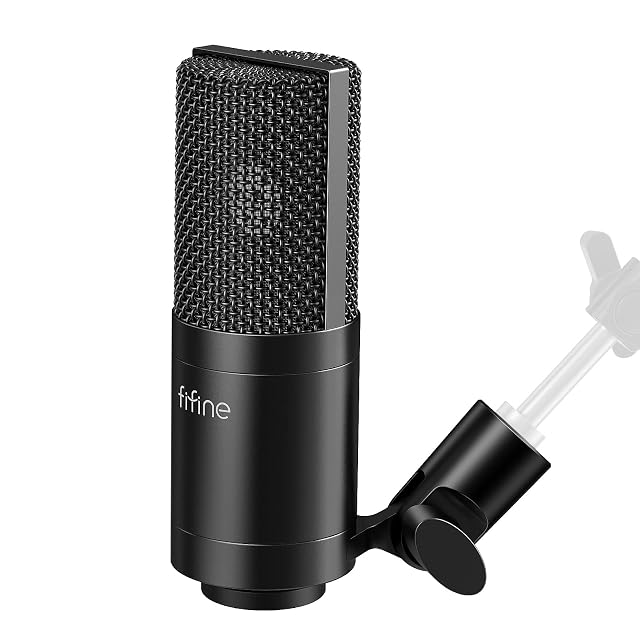
XLR condenser · 16 mm (0.63 in) diaphragm · −43 dB · 130 dB max SPL · tripod included
The least expensive XLR microphone here, and one of only two that publish a sensitivity figure: 16 mm (0.63 in) diaphragm, −43 dB, 130 dB maximum SPL, an all-metal body and a metal tripod in the box.
Best for: A first XLR microphone for someone who already owns an interface and a cable, and wants figures rather than adjectives.