The only microphone here that arrives with its XLR cable — five meters of it — and the only one to publish an impedance: a cardioid dynamic at −50 ± 2 dB and 260 Ω, in a full-metal body with a clip and a bag.
What it amounts to Arrives complete — cable, clip, bag — and publishes an impedance and a sensitivity with its tolerance, which nothing else here does. What it will not publish is a frequency response, on a microphone sold on its EQ curve.
The box contains the microphone, a mic clip, a storage bag, a hook-and-loop tie and a five-meter XLR cable. On a shelf where two listings state in their own bullets that the cable is not included, that is worth the paragraph.
The two figures are the other reason to read this page. −50 ± 2 dB of sensitivity, published with a tolerance, and 260 Ω of impedance. No other microphone on this shelf publishes an impedance, and only one other publishes a sensitivity. Together they say how much gain the preamp will have to find and how the microphone will behave down a long cable — which is the question the five-meter lead raises and answers.
Being dynamic is the other half of it. A dynamic capsule needs no phantom power, so it works into a mixer input, a cheap interface or a field recorder without a 48 V switch. It also hears less of an untreated room than a condenser does, which for a first microphone in a bedroom is usually the right trade.
What it does not publish is a frequency response. The first bullet sells a specially tuned EQ curve with warm, full-bodied lows and naturally bright highs — and a tuned curve is exactly the thing a graph would show. No microphone on this shelf publishes one.
The 920 g (32.5 oz) in the product record is the microphone, the five meters of cable and the bag together. It is a box weight rather than a microphone weight, and nothing here is ranked by it.
Availability
Read on the day this page was built: $48 at the American Amazon shop.
Read from Keepa on the day this page was last revised; stock and price both move without notice.
Prices quoted in this text were read on 2026-10-07. The live price is at the top of the page.
In its favor, and its limits
Strengths
The only microphone on this shelf whose XLR cable is in the box — five meters of it
Publishes an impedance and a sensitivity with a tolerance, which nothing else here does
A dynamic capsule needs no phantom power, so it works on any interface or mixer input
Compromises
No frequency response published, on a listing whose first claim is a specially tuned EQ curve
A dynamic capsule needs more gain than a condenser, and −50 dB is the lower sensitivity of the two published here
No maximum SPL, where two microphones here publish 130 dB
Specifications
Type
Dynamic, wired XLR
Pattern
Cardioid, stated to capture the voice while minimizing ambient noise
Sensitivity
−50 ± 2 dB — published with a tolerance, which nothing else on this shelf does
Impedance
260 Ω — the only impedance published on this shelf
Body
Full metal, covering both the head and the handle
Included
A 5 m (16 ft) / 16.4 ft XLR cable, a mic clip, a storage bag and a hook-and-loop cable tie
Wind protection
A built-in foam cover
Phantom power
Not required — a dynamic capsule needs none, which is what separates it from the four condensers on this shelf
Frequency response
Phenyx Pro puts nothing in writing on this. It describes a tuned EQ curve with warm lows and bright highs, and publishes no curve
Manufacturer reference
PM-25
Amazon reference
B0FFB747RT
EAN
0810164760449
The questions players ask
Dynamic or condenser — which should I start with?
A dynamic capsule needs no phantom power, survives being dropped and hears less of the room; a condenser is more sensitive and more detailed and needs power from the interface. On this shelf the two dynamics sit at $47.99 and $67.99, and the three condensers at $36.99, $115.62 and $212 — so the cheapest XLR microphone here is in fact a condenser. For an untreated room a dynamic is often the easier answer, and this one publishes the two figures — −50 ± 2 dB and 260 Ω — that say how much gain it will ask of the interface.
Why does 260 Ω matter?
Impedance is what the microphone looks like to the preamp. A low figure like 260 Ω drives a long cable without losing high frequencies, which is why the five-meter lead in the box is not a problem. It is the only impedance published on this shelf, and it is the sort of figure that distinguishes a specification from a description.
Accessories confirmed for this instrument
Shown because the accessory names this instrument itself.
Who should pick this one, among music instruments and gear
A voice or a stage where the cable, the clip and the bag should not be three further orders.
What buyers actually choose
Amazon reports what buyers took in the month before this page was last checked: at least 100.
The figure is a floor, rounded by Amazon, and read through Keepa — it says what buyers picked, not what a maker claims.
Sources
Specifications: the manufacturer sheet for musical instruments and gear and the matching Amazon product page. Prices and availability: Keepa. Every figure on this page names its source.
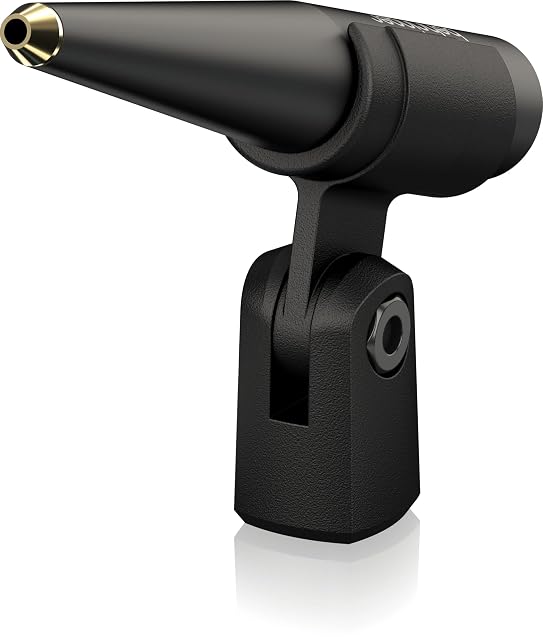
The thinnest listing on this shelf by a distance: a condenser microphone whose single bullet is its own title, with no pattern, no diaphragm, no sensitivity, no SPL and no power requirement published anywhere.
Best for: A buyer who already knows this microphone, because the listing answers nothing about it.
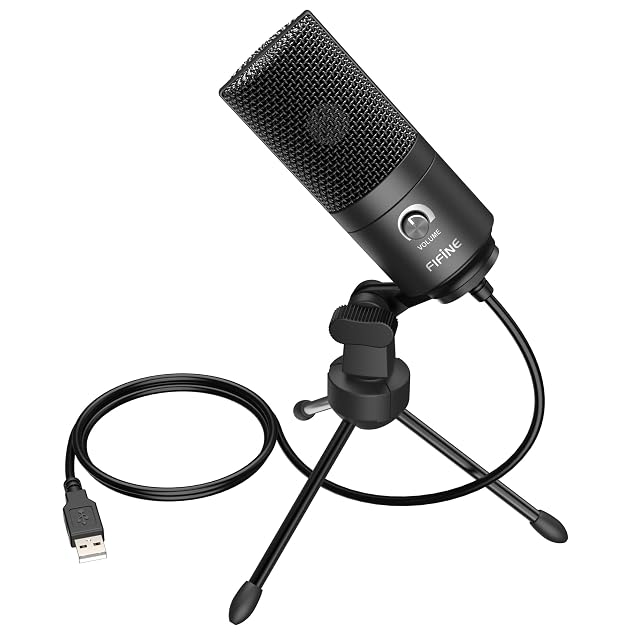
USB condenser · cardioid · tripod included · volume knob
A metal-bodied USB condenser with a tripod stand and its own volume control, sold at a price where the alternative is usually a headset. Cardioid, and stated as PC, Mac, PS4 and PS5 compatible.
Best for: A first microphone for calls, streaming and rough demos on a computer.
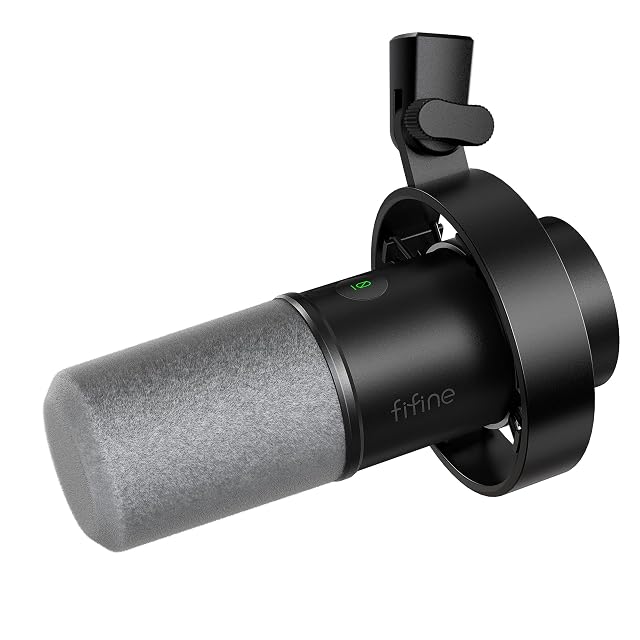
Dynamic · XLR and USB · S/N above 80 dB · 130 dB SPL · tap-to-mute · headphone monitoring
A dynamic microphone with both XLR and USB outputs, a signal-to-noise ratio above 80 dB, a 130 dB maximum SPL, tap-to-mute and gain on the body, and a 3.5 mm (0.14 in) headphone socket with its own volume control.
Best for: A podcast or a stream that starts on USB and moves to an interface later, where the mute button needs to be a button.