A keyboard amplifier with a mixer built in: four quarter-inch line channels, an XLR microphone input, a dedicated monitor channel for click and guide tracks, a 12-inch woofer and metal jacks throughout.
What it amounts to The amplifier on this shelf that is also a mixing desk: four channels, an XLR input, a click channel, a headphone and a sub output, and metal jacks. It publishes neither its size nor its weight, and the product record puts it at 19 kg (41.9 lb).
One hundred watts through a custom two-way system with a 12-inch woofer. Four 1/4-inch line input channels with a master EQ, a dedicated auxiliary input on 1/8-inch and RCA, and channel 4 set up as a monitor send for click and guide tracks. An XLR microphone input. A 1/4-inch line output, a headphones output and a sub output. Metal jacks.
This is not really an amplifier with extras; it is a small mixing desk with a speaker in it, and that is the right way to read the price.
Four channels is the headline. Two keyboards, a sound module and a backing track all arrive at one box, get balanced there, and leave through one line output to the front of house. The alternative on stage is a small mixer, another power supply and three more cables. No other amplifier on this shelf has more than two channels, and four of the seven have one.
Channel 4 as a monitor send is the detail that shows who this was designed for. A click track has to reach the player and nobody else; a channel meant for it sends the metronome to the headphones rather than through the speaker into the room. Any amplifier can take a click on a line input — this one publishes a channel for it, and nothing else here does.
The XLR microphone input completes the picture: a keyboard player who sings needs one socket, not a second system.
And metal jacks. It is a small sentence about a part that is plastic on almost everything, and sockets are what fail on equipment that is packed and unpacked every week. It is the only jack material published on this shelf.
What it does not publish is how big or how heavy it is. The product record gives 19,000 g (670.2 oz) — a round figure, and therefore a shipping one, but a 12-inch woofer in a 100 W cabinet is in that region. Its own shelf-mate at a fifth of the power publishes 286 × 246 × 236 mm (11.3 × 9.69 × 9.29 in) and 4.2 kg (9.3 lb); this publishes neither, and on a box that has to go in a car it is the figure a buyer needs.
At $679.99 it is the most expensive amplifier on this shelf, and the only one over five hundred dollars. The four guitar amplifiers published here run from 10 to 25 W and from a bedroom to a small room; this is a different purchase entirely.
Availability
Read on the day this page was built: $680 at the American Amazon shop.
Read from Keepa on the day this page was last revised; stock and price both move without notice.
Prices quoted in this text were read on 2026-10-07. The live price is at the top of the page.
In its favor, and its limits
Strengths
The only amplifier on this shelf with a mixer — four line channels, an aux input and a master EQ
The only one with an XLR microphone input and the only one with a dedicated click channel
A headphone output and a sub output as well as a line out, with metal jacks throughout
Compromises
The most expensive amplifier on this shelf, and the only one over five hundred dollars
No dimensions and no weight published, on a box the product record puts at 19 kg (41.9 lb)
A 12-inch woofer in a 100 W cabinet is a two-person lift rather than a desk object
Specifications
Power
100 W, with Roland stating a redesigned power amp and power supply for stability and bass reproduction
Speakers
A custom two-way system with a newly developed 12 in woofer and a tweeter — the largest woofer on this shelf
Mixer
Four 1/4 in line input channels, a dedicated auxiliary input on 1/8 in and RCA, and a master EQ — the only mixer on this shelf
Monitor channel
Channel 4 is dedicated to click and guide tracks — the only click input published on this shelf
Microphone input
XLR — the only microphone input on an amplifier here
Outputs
A 1/4 in line output, a headphones output and a sub output
Jacks
Metal, which Roland states is for durability — the only jack material published on this shelf
Dimensions
Roland puts nothing in writing on this. One amplifier on this shelf publishes 286 × 246 × 236 mm (11.3 × 9.69 × 9.29 in)
Weight
Roland puts nothing in writing on this. The product record holds 19,000 g (670.2 oz), a round figure
Manufacturer reference
KC-200
Amazon reference
B077Z2S9G2
EAN
0761294511701
The questions players ask
Why does a dedicated click channel matter?
Because a click track has to reach the player and nobody else. Channel 4 on this amplifier is set up as a monitor send, so a metronome or a guide track goes to the headphones without going through the speaker into the room. Any amplifier can take a click on a line input; what this publishes is a channel meant for it. No other amplifier on this shelf has one, and for a keyboard player in a band it is the difference between playing to a click and shouting over one.
Four channels on an amplifier — is that a mixer?
For a stage, effectively yes. Four quarter-inch line inputs with a master EQ, plus an aux on 1/8-inch and RCA, means two keyboards, a module and a backing track arrive at one box and leave through one line output to the front of house. The alternative is a small mixer, a power supply and three more cables. No other amplifier on this shelf has more than two channels, and four of the seven have one.
Accessories confirmed for this instrument
Shown because the accessory names this instrument itself.
Who should pick this one, among music instruments and gear
A keyboard player who performs: four sources, a microphone, a click in one ear and a line out to the desk.
Sources
Specifications: the manufacturer sheet for musical instruments and gear and the matching Amazon product page. Prices and availability: Keepa. Every figure on this page names its source.
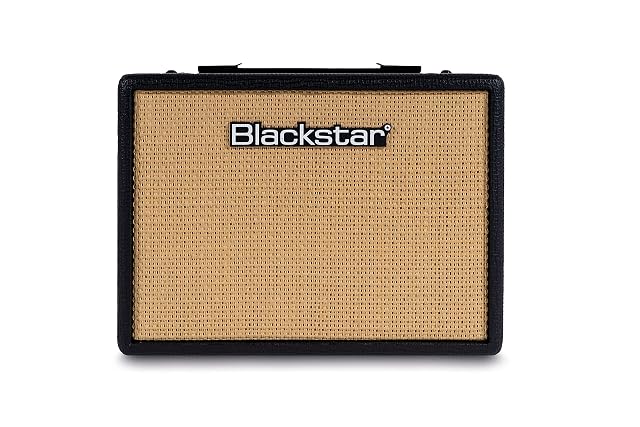
10 W · ISF tone control · tape delay · headphone and line in
The same 10 W class as the Fender, with two things it does not have: Blackstar’s ISF control, which sweeps between British and American voicings, and a built-in tape-style delay.
Best for: A first amp for someone who already knows they want effects.
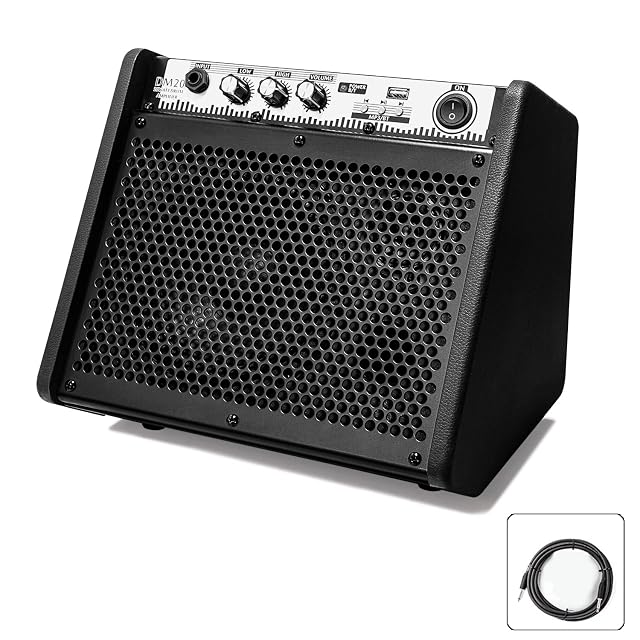
20 W · 6.5 in woofer and 2.5 in tweeter · LOW and HIGH tone controls · 286 × 246 × 236 mm (11.3 × 9.69 × 9.29 in)
A twenty-watt personal monitor for an electronic kit or a keyboard, with two published driver sizes, separate bass and treble controls, a slanted cabinet aimed at a seated player, and its own dimensions and weight in writing.
Best for: A seated player — an electronic kit or a keyboard — who needs to hear themselves in a bedroom and play along to a phone.