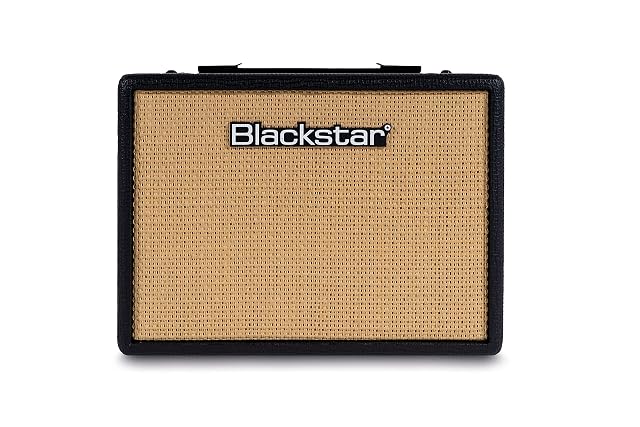
The same 10 W class as the Fender, with two things it does not have: Blackstar’s ISF control, which sweeps between British and American voicings, and a built-in tape-style delay.
What it amounts to More amplifier than the price suggests: two features the competition charges extra for.
At this price the competition is the Fender Frontman, and the Debut 10E answers it with two additions rather than with more watts.
The first is ISF, Blackstar’s patented tone control. Instead of adjusting treble and bass, it sweeps the amplifier’s whole character between a British voicing — tighter, more midrange, the sound of British rock — and an American one, which is cleaner and more scooped. One knob covering ground that usually requires a second amplifier.
The second is a tape-style delay built into the amplifier. Delay is the first effect nearly every beginner wants, and it is usually the first pedal bought. Having it in the amplifier from the start removes that purchase for a year or more.
The practical connections are the same as its rivals and equally important: a headphone output for silent practice and a line input for playing along with backing tracks in stereo.
In its favor, and its limits
Strengths
ISF is a genuinely different control: one knob that changes the character rather than the EQ
A delay built in, which is the effect beginners want first and buy a pedal for
Line input for backing tracks, in stereo
Same price bracket as amplifiers with neither feature
Compromises
Still 10 W: a practice amplifier, not a rehearsal one
A built-in delay is not adjustable the way a pedal is
Specifications
Power
10 W
Channels
Clean and overdrive
ISF
Patented control sweeping between British and American voicings
Effect
Built-in tape-style delay
Connections
Headphone output, MP3/line in
Amazon reference
B08CMQM6QH (identical on 6 markets)
EAN
0845644006236
The questions players ask
What is ISF?
Blackstar’s patented tone control, which moves the amplifier’s voicing between a British character — tighter, more midrange — and an American one, which is scooped and cleaner. It is one knob doing what a change of amplifier usually does.
Do I still need a delay pedal?
Not to start. The built-in tape-style delay covers the effect most beginners reach for first. A pedal gives control over time and feedback that a built-in effect does not.
Our score
7.2/ 10
More amplifier than the price suggests: two features the competition charges extra for.
Accessories confirmed for this instrument
Shown because the accessory names this instrument itself.
A reference exists on these Amazon stores: France, Germany, Italy, Spain, United Kingdom, United States. Listed is not the same as in stock — availability changes daily.
Details checked on August 18, 2026.
Who should pick this one, among music instruments and gear
A first amp for someone who already knows they want effects.
Our music instruments and gear guides that pick it
Specifications: the manufacturer sheet for musical instruments and gear and the matching Amazon product page. Prices and availability: Keepa. Every figure on this page names its source.
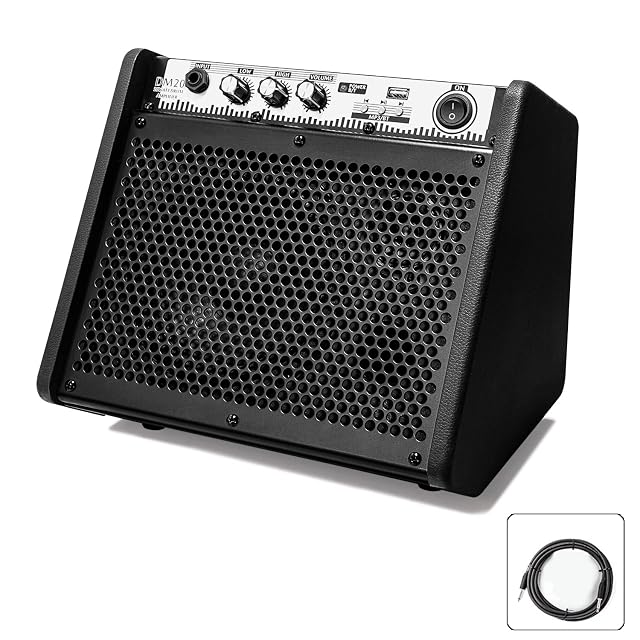
20 W · 6.5 in woofer and 2.5 in tweeter · LOW and HIGH tone controls · 286 × 246 × 236 mm (11.3 × 9.69 × 9.29 in)
A twenty-watt personal monitor for an electronic kit or a keyboard, with two published driver sizes, separate bass and treble controls, a slanted cabinet aimed at a seated player, and its own dimensions and weight in writing.
Best for: A seated player — an electronic kit or a keyboard — who needs to hear themselves in a bedroom and play along to a phone.
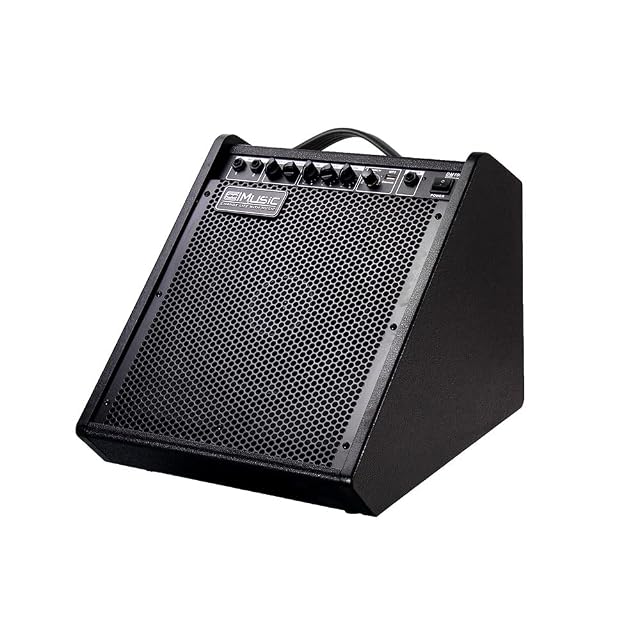
100 W · 10 in woofer and 3 in tweeter, coaxial · DI out · 3-band EQ · two channels
One hundred watts through a coaxial 10-inch woofer and 3-inch tweeter, with two instrument channels, a three-band EQ and the only DI output on this shelf — which is what takes an electronic kit from a bedroom to a stage.
Best for: An electronic kit that has to be heard in a rehearsal room and sent to a desk at the same time.