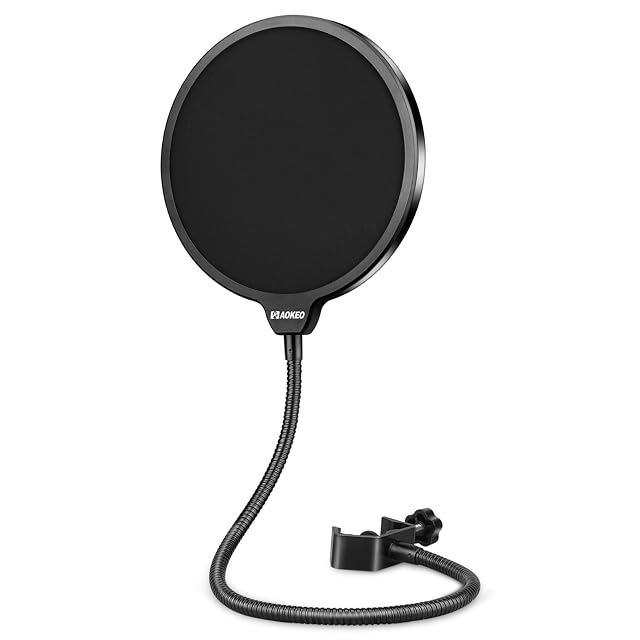
A pop filter on a gooseneck with a clamp, sized for common USB microphones. It stops the burst of air from a P or a B reaching the capsule; it does nothing about the room.
aokeo Pop Filter Mask Shield
A pop filter on a gooseneck with a clamp, sized for common USB microphones. It stops the burst of air from a P or a B reaching the capsule; it does nothing about the room.
Type
Pop filter on a gooseneck
Mount
Clamp
Stated compatibility
Blue Yeti, Snowball, HyperX QuadCast and other microphones
Amazon reference
B01N21H9WY (identical on 6 markets)
EAN
0859830006269
Fixes plosives, which are the single most audible amateur recording problem
A gooseneck holds position rather than drifting mid-session
It does nothing about room reflections — that is a different product
Best for: Any spoken-word or vocal recording where P and B sounds are thumping.
Blue Yeti, Snowball, HyperX QuadCast and other microphones
Amazon reference
B01N21H9WY (identical on 6 markets)
EAN
0859830006269
The plosive is the sound of a fist of air hitting a capsule, and it is what makes home recordings sound like home recordings. A pop filter fixes it for about ten dollars.
The mechanism is simple: a mesh a few centimeters in front of the microphone breaks up the burst of air from a P or a B without meaningfully affecting the speech. It also enforces a distance, which keeps a voice consistent rather than moving in and out.
What it does not do is anything about the room. If the recording sounds boxy or echoing, the cause is reflections from bare walls and the answer is a reflection shield or acoustic panels, not this.
The clamp needs a mount point: a stand column, a boom arm or a desk edge. Check what you have before ordering.
The questions players ask
Pop filter, windscreen or reflection shield?
A pop filter stops the air burst from close speech. A foam windscreen handles moving air outdoors and dulls the top end indoors. A reflection shield absorbs what would bounce off the wall behind the microphone. Three different problems, routinely confused in listings.
How far from the microphone?
Far enough that your lips do not touch it and close enough that speech passes through it — a few centimeters is the usual working distance. The filter also enforces a minimum distance, which helps consistency.
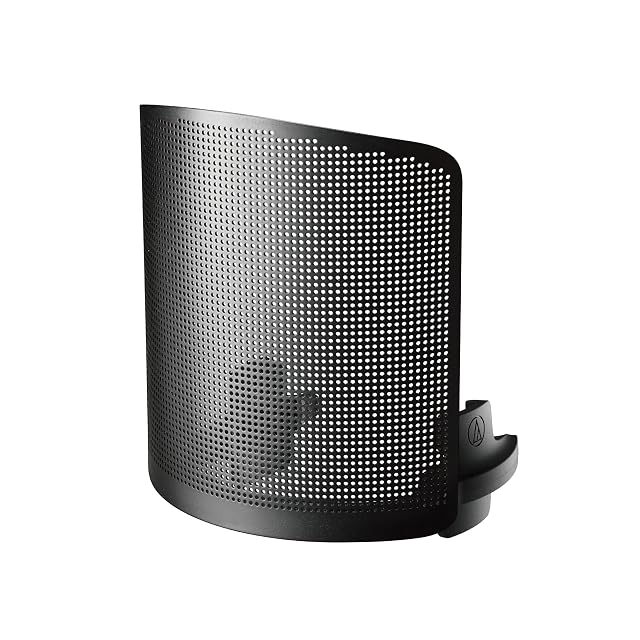
The maker’s own filter for its AT20 series, with six microphone models named for a stable fit — and four bullets that publish no layer count, no diameter and no mount.
Designed for
The AT20 series, which Audio-Technica states is what makes the installation stable
Stated compatibility
AT2020USB-X, AT2020USB+, AT2020, AT2020GM, AT2035, AT2050 — six models, all from one maker
Layers
Audio-Technica puts nothing in writing on this. Two filters on this shelf publish two and three
Diameter
Audio-Technica puts nothing in writing on this. One filter here publishes 6 in
Mount
Audio-Technica puts nothing in writing on this — no gooseneck, no clamp, no bracket is described
Material
Audio-Technica puts nothing in writing on this
Listing length
Four bullets, of which the first two are *effectively reduce popping noise* and a list of uses
Weight
31 g (1.1 oz) in the product record
Amazon reference
B0BM8YHW12
EAN
4961310159184
The maker’s own part for its own microphones, so the fit is not a guess
Six models named by designation rather than a vague compatibility claim
Four bullets and no specification: no layers, no diameter, no mount, no material
Best for: An AT2020 or AT2035 whose owner wants the manufacturer’s own part and not a universal clamp.
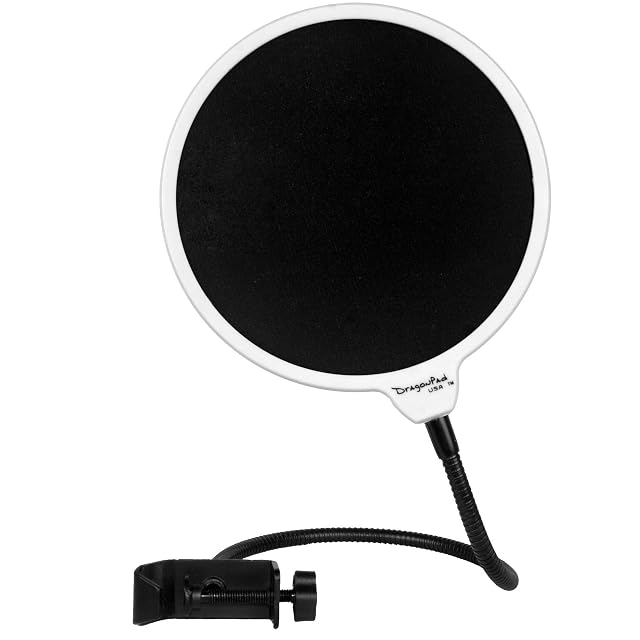
The only filter here that publishes how it works: two layers of nylon mesh with an air gap between them, six inches across, on a metal gooseneck with a tension screw.
Layers
Two layers of nylon mesh with an air gap between them, which Dragonpad states reduces popping and lisping without dulling the sound — one of two filters here to publish a layer count
Diameter
6 in — the only filter diameter published on this shelf
Gooseneck
Metal, which Dragonpad states is strong enough to hold position and still easy to adjust
Mount
A universal bracket with a tension screw, stated to fit virtually any microphone or stand
Stated purpose
Plosives and lisping, and keeping saliva off the capsule — Dragonpad notes that saliva contains corrosive salts
Clamp capacity
Dragonpad puts nothing in writing on this. One filter on this shelf publishes shafts up to 18 mm (0.71 in)
Material
Nylon mesh. One filter here is metal, one is foam and one offers all three
Weight
14 g (0.5 oz) in the product record
Amazon reference
B00XQFOSZE
EAN
0634972184415
Publishes the mechanism: two layers of mesh with an air gap, which is how a pop filter actually works
The only published filter diameter on this shelf — six inches
No clamp capacity published, so the stand question is still open
Best for: A close vocal where the filter should be big enough to stay in front of a moving head.
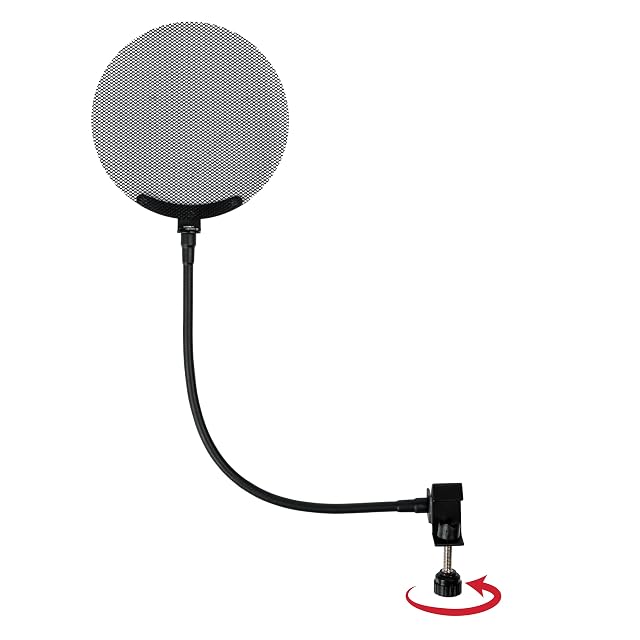
A metal grille rather than mesh, with slats angled to send air downward instead of scattering it — on a 12.4-inch gooseneck, and the only filter here to publish what its clamp will grip.
Filter
A durable metal grille whose angled slats divert air downward — a different mechanism from mesh, which scatters it
Gooseneck
12.4 in — the only gooseneck length published on this shelf
Clamp capacity
Mounts to most microphone stands or boom shafts up to 18 mm (0.71 in) in diameter — the only clamp figure on this shelf
Material
Metal. One filter here is nylon mesh, one is foam, one layers mesh, metal and foam, and one offers all three as separate filters
Stated purpose
Shielding recordings from popping while preserving vocal quality, for podcasts, broadcast, streaming and vocals
Layers
Gator puts nothing in writing on this. A metal grille is a single structure rather than a stack
Diameter
Gator puts nothing in writing on this. One filter here publishes 6 in
Cleaning
Gator puts nothing in writing on this, though metal is the one material here that can be wiped
Weight
113 g (4 oz) in the product record. One filter here is heavier still at 209 g (7.4 oz), and the three-filter package weighs 980 g (34.6 oz)
Amazon reference
B08VBMH1M3
EAN
0716408555799
The only filter here that publishes what its clamp will grip — shafts up to 18 mm (0.71 in)
The only published gooseneck length, at 12.4 inches
The most expensive filter on this shelf, at six times the cheapest
Best for: A desk arm whose shaft has been measured, where the filter needs wiping rather than replacing.
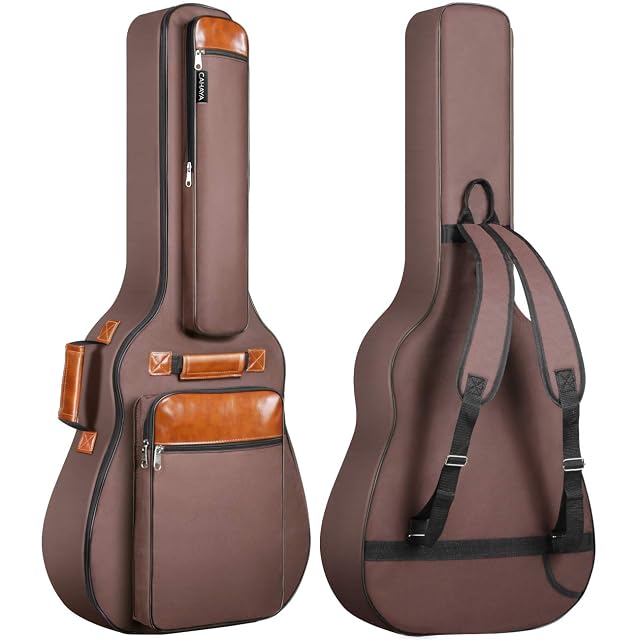
A heavier gig bag: 12 mm (0.47 in) of padding and a water-resistant outer, sized 40 to 42 inches. The version to choose if the guitar travels regularly rather than occasionally.
Padding
12 mm (0.47 in)
Shell
Water resistant
Fits
40 – 42 inch guitars
Manufacturer reference
CY0075-1
Amazon reference
B074DT3JJ9 (identical on 6 markets)
EAN
5060987640519
Half again as much padding as the 8 mm (0.31 in) bag, for a small difference in price
A water-resistant shell matters more than padding for a walk in the rain
No US offer at the time of writing
Best for: A guitar that leaves the house every week.
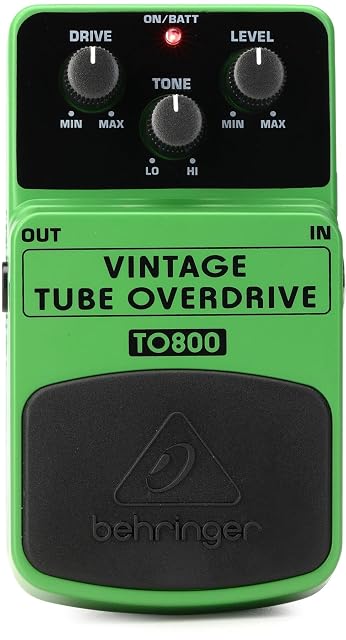
A vintage-voiced overdrive at a price where the pedal costs less than the cable to it. Like almost every pedal, it expects 9 V DC center-negative — the convention that destroys pedals when it is ignored.
Type
Overdrive
Voicing
Vintage tube-style (Behringer states)
Power
9 V DC, center negative — supply not included
Amazon reference
B000KIRT74 (identical on 6 markets)
EAN
0689076111812
Forty-three dollars for the effect most electric players want first
The classic overdrive voicing, which is the reference sound for blues and rock rhythm
No power supply included, and the wrong one can destroy it in seconds
Best for: A first pedal, in front of a clean amplifier.
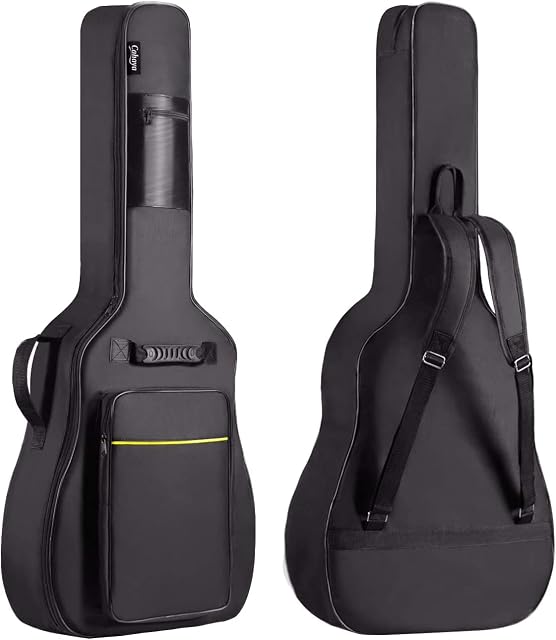
A padded bag for full-size acoustics between 39 and 41 inches, with 8 mm (0.31 in) of foam. Enough for dust, rain and a car boot; not enough for anything that gets thrown.
Padding
8 mm (0.31 in)
Fits
39 – 41 inch acoustic guitars
Type
Soft gig bag
Amazon reference
B07BMQMF9N (identical on 5 markets)
EAN
5060987640434
Eight millimeters is real padding, not the 3 mm (0.12 in) that passes for it on cheaper bags
The size range is stated in inches, so it can be checked against your guitar
A soft bag protects against knocks, not against being dropped or crushed
Best for: Carrying a full-size acoustic to a lesson or between rooms.