The larger USB RØDE: a premium condenser capsule with the ultra-low-noise Revolution preamp, zero-latency headphone monitoring and DSP that can be driven from RØDE Connect.
What it amounts to The USB microphone to buy when the room has already been dealt with and the voice is the remaining variable.
The NT-USB+ is what the NT-USB Mini grows into: the same single-cable idea, with a premium capsule and RØDE’s Revolution preamp behind it.
The preamp is the point. High gain with genuinely low noise is what a quiet speaker or a soft-sung vocal needs, and it is where cheap USB microphones give themselves away — the hiss arrives before the level does. Zero-latency headphone monitoring is carried over, as is the internal APHEX processing, now controllable from RØDE Connect rather than fixed.
Whether it is worth twice the Mini depends entirely on the room. In a bare space with parallel walls, the recording is limited by the reflections, not by the preamp, and a given sum spent on acoustic panels will do more than the same sum spent on a microphone change. In a treated corner with a soft voice, this is where the improvement becomes audible.
Like every USB microphone, it is a complete chain. That is its convenience and its ceiling.
In its favor, and its limits
Strengths
A high-gain, low-noise preamp is what quiet voices and quiet rooms actually need
DSP that can be configured from software rather than left at a factory setting
Same single-cable simplicity as the Mini, with more headroom
One reference across all six Amazon stores
Compromises
Roughly twice the price of the Mini for gains that are real but not dramatic in a bare room
Still a finished chain: no path to upgrading one component later
Specifications
Type
Premium USB condenser
Preamp
Ultra-low-noise high-gain Revolution preamp
Monitoring
3.5 mm (0.14 in) headphone output, zero latency
Processing
Internal DSP with APHEX, controlled from RØDE Connect
Software
RØDE Connect, free
Amazon reference
B00MMKQOEM (identical on 6 markets)
EAN
0698813009893
The two closest instruments on price
Same section, nearest price — what the same money else sounds like.
The difference is preamp headroom and processing control, and both matter most for quiet sources. In an untreated room, the same money spent on acoustic panels and a stand will usually do more for the recording than the microphone upgrade will.
What does RØDE Connect do?
It is RØDE’s free software for configuring the microphone’s internal processing and routing. The DSP is in the microphone; the software is how you reach it.
Our score
8.4/ 10
The USB microphone to buy when the room has already been dealt with and the voice is the remaining variable.
Accessories confirmed for this instrument
Shown because the accessory names this instrument itself.
A reference exists on these Amazon stores: France, Germany, Italy, Spain, United Kingdom, United States. Listed is not the same as in stock — availability changes daily.
Details checked on August 18, 2026.
Who should pick this one, among music instruments and gear
A voice that will be recorded regularly, in a room that has had some treatment.
What buyers actually choose
Amazon reports what buyers took in the month before this page was last checked: at least 500.
The figure is a floor, rounded by Amazon, and read through Keepa — it says what buyers picked, not what a maker claims.
Sources
Specifications: the manufacturer sheet for musical instruments and gear and the matching Amazon product page. Prices and availability: Keepa. Every figure on this page names its source.
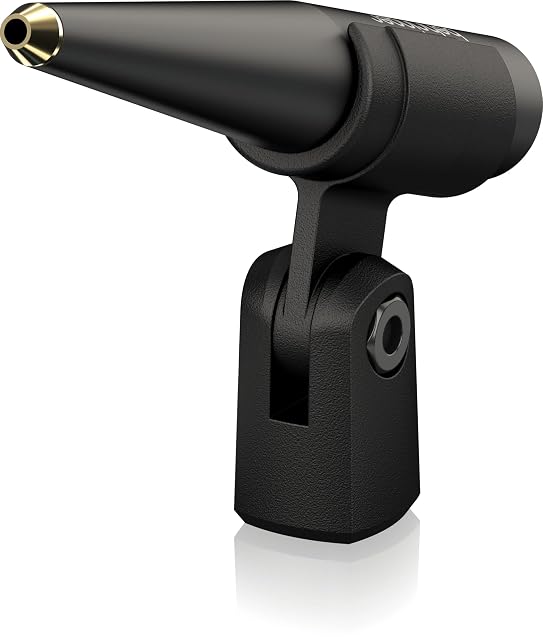
The thinnest listing on this shelf by a distance: a condenser microphone whose single bullet is its own title, with no pattern, no diaphragm, no sensitivity, no SPL and no power requirement published anywhere.
Best for: A buyer who already knows this microphone, because the listing answers nothing about it.
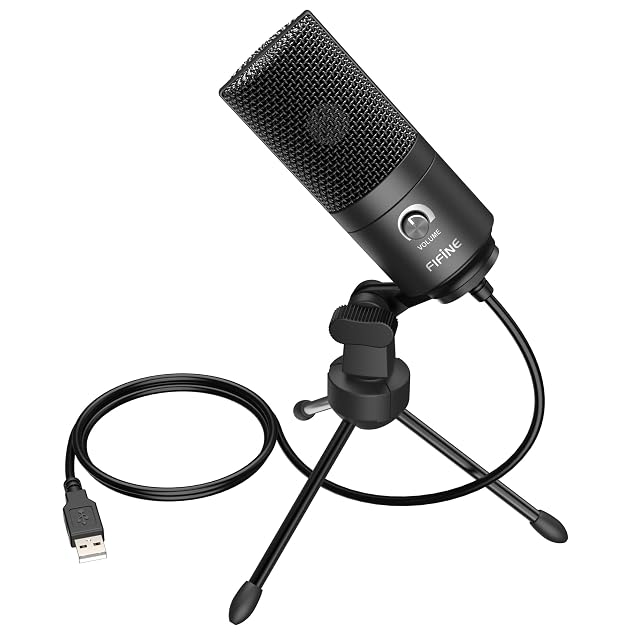
USB condenser · cardioid · tripod included · volume knob
A metal-bodied USB condenser with a tripod stand and its own volume control, sold at a price where the alternative is usually a headset. Cardioid, and stated as PC, Mac, PS4 and PS5 compatible.
Best for: A first microphone for calls, streaming and rough demos on a computer.
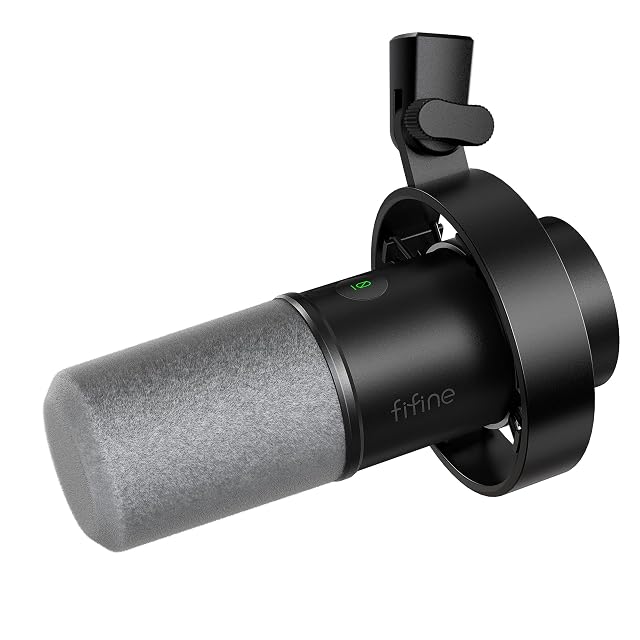
Dynamic · XLR and USB · S/N above 80 dB · 130 dB SPL · tap-to-mute · headphone monitoring
A dynamic microphone with both XLR and USB outputs, a signal-to-noise ratio above 80 dB, a 130 dB maximum SPL, tap-to-mute and gain on the body, and a 3.5 mm (0.14 in) headphone socket with its own volume control.
Best for: A podcast or a stream that starts on USB and moves to an interface later, where the mute button needs to be a button.