A microphone that goes both ways: USB for plug-and-play now, XLR for an interface later. MAONO states 192 kHz/24-bit and supplies a boom arm kit, pop filter and windscreen.
What it amounts to A bridge microphone: USB simplicity today, XLR expandability later, and the one of the three dual-output microphones here that arrives with the boom arm, the pop filter and the windscreen already in the box.
Almost every microphone in this category forces a decision — USB now and a replacement later, or XLR now and an interface immediately. The A04 Gen2 refuses the question by carrying both outputs.
Over USB it behaves like the FIFINE and the RØDE units: one cable, nothing installed, and MAONO’s own software on top for gain, EQ presets, compression, limiting and noise reduction. MAONO states 192 kHz/24-bit for this mode.
Over XLR it becomes a component in a conventional chain, and the software features stop applying — the preamp and converter are then whatever your interface provides. That is not a flaw; it is what an XLR microphone is, and MAONO says so in the listing rather than leaving it implied.
The kit is the other half of the value. A boom arm, a pop filter and a windscreen are supplied, which are three purchases that otherwise arrive one at a time over the following month.
In its favor, and its limits
Strengths
Goes both ways — USB now, XLR later — so it survives the move from laptop to interface without being replaced
Pop filter and windscreen are in the kit rather than being two further purchases
Software control of gain, EQ, compression and limiting, without a plug-in chain
Cardioid pattern with stated noise reduction for untreated rooms
Compromises
The software features work in USB mode only — over XLR it is a plain microphone
Not offered on the US store at the time of writing
Specifications
Connections
USB and XLR
Resolution
192 kHz / 24-bit (MAONO states, USB mode)
Pattern
Cardioid
Included
Metal microphone kit with pop filter and windscreen
Software
MAONO LINK — gain, EQ presets, compressor, limiter (USB mode only)
Noise control
Three-stage noise reduction (USB mode only)
Amazon reference
B07Q2WNZ9Y (identical on 5 markets)
EAN
6972237683636
The questions players ask
What changes when I switch to XLR?
The microphone becomes a component: the preamp, converter and any processing then come from your interface, and MAONO’s software features no longer apply. That is normal for dual-output microphones, and MAONO states it in the listing.
Do I still need phantom power on XLR?
Check the manual for your specific unit before connecting: condenser microphones generally require 48 V from the interface, and the switch is usually marked 48V or P48 on the front panel.
Our score
7.8/ 10
A bridge microphone: USB simplicity today, XLR expandability later, and the one of the three dual-output microphones here that arrives with the boom arm, the pop filter and the windscreen already in the box.
Accessories confirmed for this instrument
Shown because the accessory names this instrument itself.
A reference exists on these Amazon stores: France, Germany, Italy, Spain, United Kingdom. Listed is not the same as in stock — availability changes daily.
Details checked on August 18, 2026.
Who should pick this one, among music instruments and gear
Someone who will start on USB and knows an interface is coming.
Our music instruments and gear guides that pick it
Specifications: the manufacturer sheet for musical instruments and gear and the matching Amazon product page. Prices and availability: Keepa. Every figure on this page names its source.
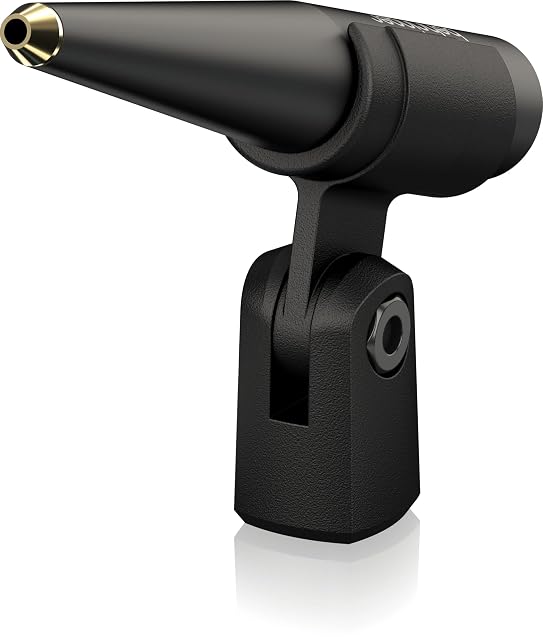
The thinnest listing on this shelf by a distance: a condenser microphone whose single bullet is its own title, with no pattern, no diaphragm, no sensitivity, no SPL and no power requirement published anywhere.
Best for: A buyer who already knows this microphone, because the listing answers nothing about it.
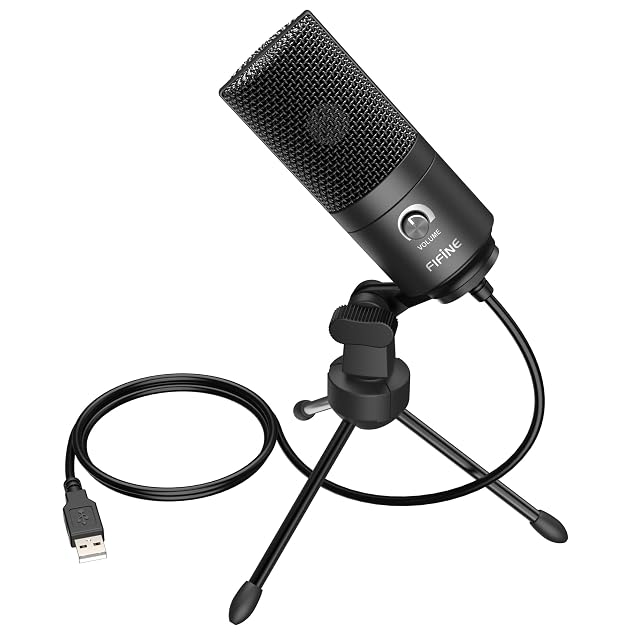
USB condenser · cardioid · tripod included · volume knob
A metal-bodied USB condenser with a tripod stand and its own volume control, sold at a price where the alternative is usually a headset. Cardioid, and stated as PC, Mac, PS4 and PS5 compatible.
Best for: A first microphone for calls, streaming and rough demos on a computer.
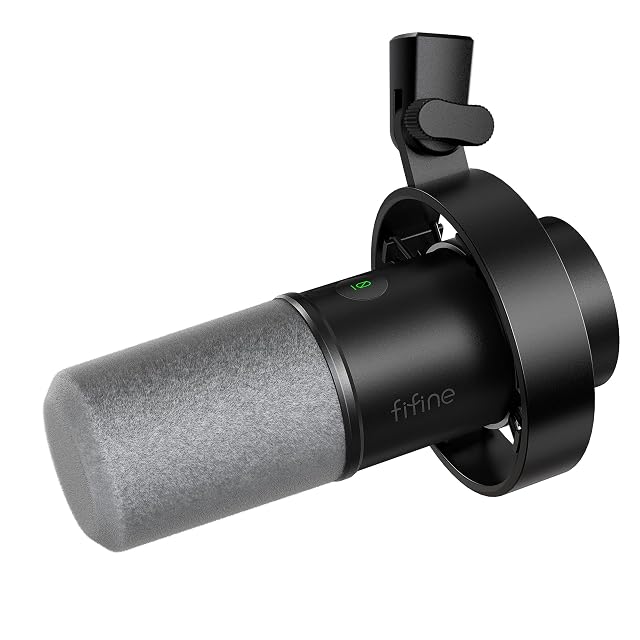
Dynamic · XLR and USB · S/N above 80 dB · 130 dB SPL · tap-to-mute · headphone monitoring
A dynamic microphone with both XLR and USB outputs, a signal-to-noise ratio above 80 dB, a 130 dB maximum SPL, tap-to-mute and gain on the body, and a 3.5 mm (0.14 in) headphone socket with its own volume control.
Best for: A podcast or a stream that starts on USB and moves to an interface later, where the mute button needs to be a button.