Skip to content

Yamaha

The broadest catalog on this site, and the one least present on the US store

Yamaha appears in more of our families than any other manufacturer: an ARIUS console piano, two PSR keyboards, two beginner guitars and a pair of HS monitors. That is not a preference — it is what the catalog looks like when you sort each family by what is actually sold and supported.

What we found writing the reviews

The specifications are published where they matter. The PSR-E383 states 48-note polyphony, which almost nothing else in its price bracket does. The HS4 states 60 Hz – 22 kHz and 102 dB SPL. The ARIUS names its action as Graded Hammer Standard. Where a figure decides a purchase, Yamaha tends to print it.

The entry guitars are the most consistent instruments here. The F310 and the C40II have been in production long enough that their build quality is a known quantity, which matters more at this price than any single specification.

Four of the six are absent from the US store, including both guitars and the ARIUS. That is a distribution decision rather than a defect, and it is why our American readers are sent to a local search on those pages rather than to a reference that does not exist there.

One caution on price. The Spanish price for the ARIUS stood well above the German one at the time of writing, and the UK price for the PSR-F52 at roughly double the German. Same reference, very different money — check your own store.
Every Yamaha product we have reviewed

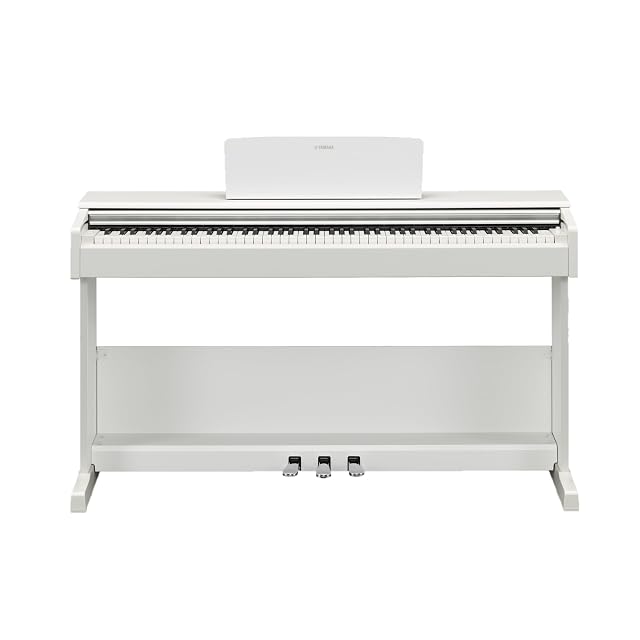
  • Yamaha ARIUS YDP-105

    88 GHS keys · three pedals · console cabinet

    A console piano rather than a portable one: 88 Graded Hammer Standard keys, three pedals and a cabinet that stays where you put it. Yamaha also fits a volume limiter, which sets a ceiling on output.

    Best for: A permanent practice piano in a room where it can stay assembled.

    8.3/10

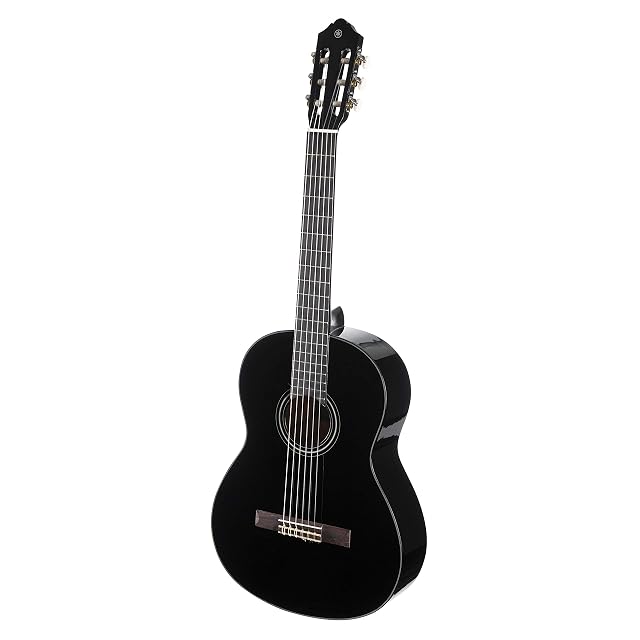
  • Yamaha C40II

    Classical · nylon strings · wider fingerboard · 4/4

    The nylon-string counterpart: a full-size classical with a wider fingerboard, spruce top and meranti back and sides — softer on the fingers and a different instrument entirely.

    Best for: Classical and fingerstyle, or anyone whose fingertips are the obstacle.

    7.8/10

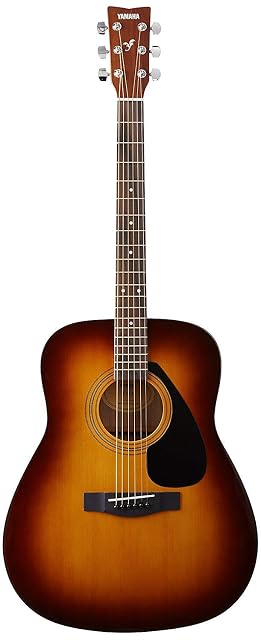
  • Yamaha F310

    Dreadnought · spruce top · rosewood fingerboard · steel strings

    The steel-string that turns up on every beginner list: spruce top, rosewood fingerboard, meranti back and sides, and chrome enclosed tuners.

    Best for: A first steel-string for an adult or teenager who wants the classic strummed sound.

    7.8/10

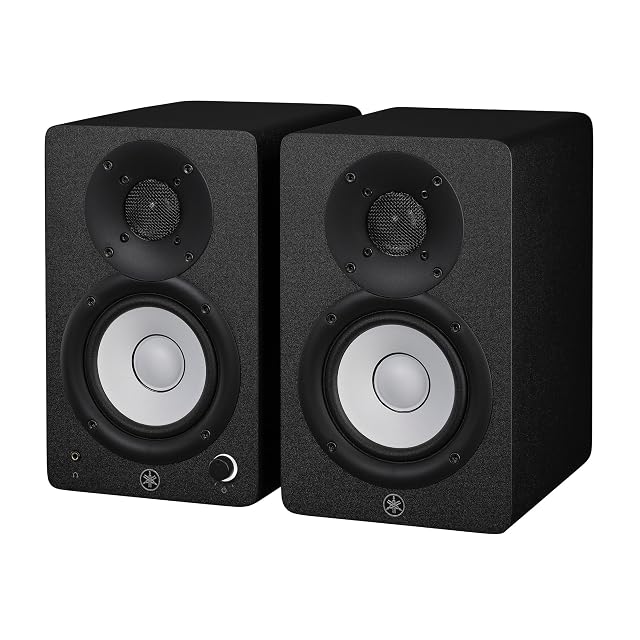
  • Yamaha HS4

    Pair · 4.5" woofer · 60 Hz – 22 kHz · room control

    Sold as a pair, unlike much of this category: 2-way bass-reflex monitors with a 4.5-inch woofer, a stated 60 Hz – 22 kHz response, 102 dB SPL maximum, and ROOM CONTROL and HIGH TRIM switches on the back.

    Best for: A small room where the speakers have to sit near a wall.

    8.4/10

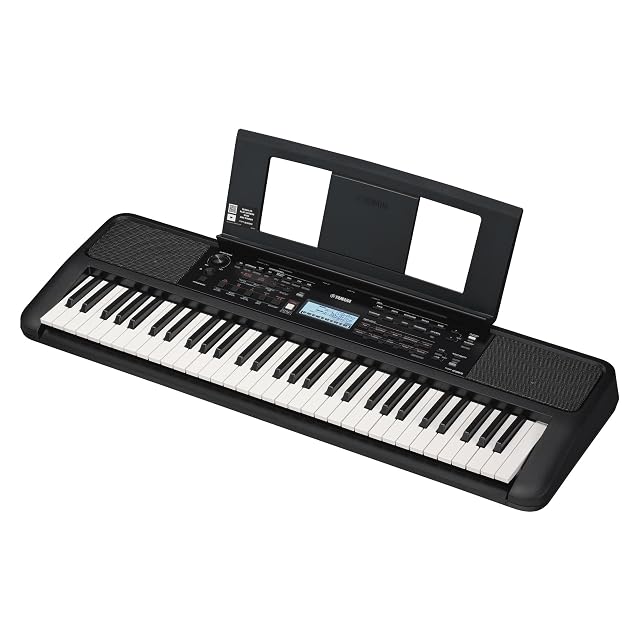
  • Yamaha PSR-E383

    61 touch-sensitive keys · 650 sounds · 260 styles · 48-note polyphony

    The arranger answer to the Casio: 650 sounds, 260 accompaniment styles, 48-note polyphony and a structured lesson system with 125 built-in songs.

    Best for: A beginner who wants to play songs with accompaniment from the first week.

    7.8/10

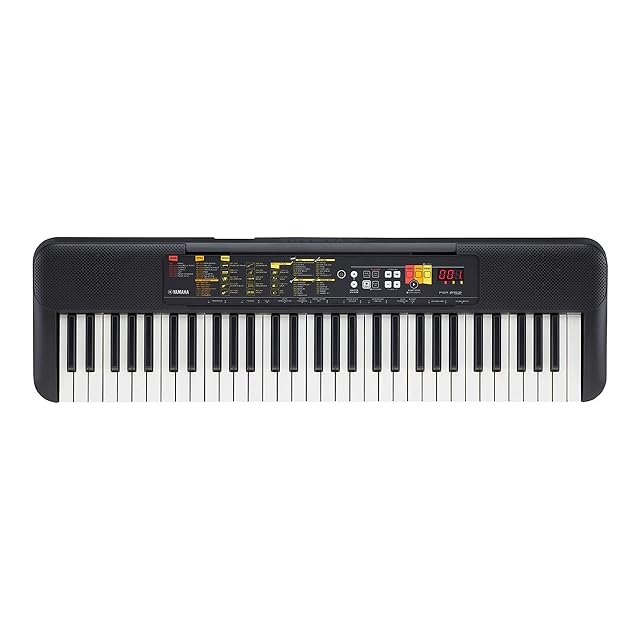
  • Yamaha PSR-F52

    61 keys · 144 sounds · 158 styles

    The simplest instrument in this group: 61 full-size keys, 144 sounds and 158 accompaniment styles, at a price where the alternative is usually a toy with 32 small keys.

    Best for: A first keyboard for a child, or a second one to leave at a grandparent’s house.

    7.2/10