A compact 48 kHz interface with a combo XLR input carrying phantom power, a separate line/instrument input, RCA outputs and a USB/Direct switch for latency-free monitoring.
What it amounts to The desktop-friendly option: RCA outputs and a direct monitoring switch, with the same one-preamp limit as its rivals.
The M-Track Solo covers the same ground as the UMC22 and the Scarlett Solo, and differs in its sockets — which is exactly where interfaces stop being interchangeable.
The outputs are RCA. If your speakers are the powered desktop kind with RCA or 3.5 mm (0.14 in) inputs, that is convenient and saves buying adapters. If they are studio monitors with balanced TRS or XLR inputs, it is the wrong shape and you will need cables to bridge it.
The input side is conventional and complete: a combo XLR/line socket with phantom power for a condenser microphone, plus a line and instrument input. The USB/Direct switch does what a mix knob does elsewhere — lets you hear yourself without going through the computer first.
The headphone socket is 3.5 mm (0.14 in). Almost every studio headphone in this group terminates in 6.35 mm, so budget for the adapter before the first session rather than during it.
In its favor, and its limits
Strengths
RCA outputs suit desktop speakers that have no balanced inputs
Phantom power on the combo input, so a condenser microphone works out of the box
A physical USB/Direct switch is the simplest possible answer to monitoring latency
Comes with MPC Beats, which is a genuinely capable free starting point for beat making
Compromises
The headphone output is 3.5 mm (0.14 in), so 6.35 mm (0.25 in) studio headphones need an adapter
One microphone preamp, like the Solo and the UMC22
Specifications
Resolution
48 kHz (M-Audio states)
Inputs
Combo XLR/line with phantom power, plus line/instrument
Outputs
Stereo RCA, 3.5 mm (0.14 in) headphone
Monitoring
USB/Direct switch for latency-free monitoring
Preamp
M-Track Crystal preamp
Software
MPC Beats, Revalver, 3 virtual instruments, 80 FX plug-ins
Amazon reference
B08Q1NJSBQ (identical on 6 markets)
EAN
0694318024980
The two closest instruments on price
Same section, nearest price — what the same money else sounds like.
Most studio headphones terminate in 6.35 mm or ship with an adapter; this interface has a 3.5 mm (0.14 in) socket. It costs almost nothing, and it is the sort of detail that stops a first session on the evening it arrives.
What are the RCA outputs for?
They connect to consumer-style powered speakers and hi-fi inputs. Studio monitors more often take balanced TRS or XLR, so check which sockets your speakers actually have before ordering cables.
Our score
7.2/ 10
The desktop-friendly option: RCA outputs and a direct monitoring switch, with the same one-preamp limit as its rivals.
Accessories confirmed for this instrument
Shown because the accessory names this instrument itself.
A reference exists on these Amazon stores: France, Germany, Italy, Spain, United Kingdom, United States. Listed is not the same as in stock — availability changes daily.
Details checked on August 18, 2026.
Who should pick this one, among music instruments and gear
A desktop setup feeding powered speakers through RCA rather than through balanced jacks.
Our music instruments and gear guides that pick it
Amazon reports what buyers took in the month before this page was last checked: at least 500.
The figure is a floor, rounded by Amazon, and read through Keepa — it says what buyers picked, not what a maker claims.
Sources
Specifications: the manufacturer sheet for musical instruments and gear and the matching Amazon product page. Prices and availability: Keepa. Every figure on this page names its source.
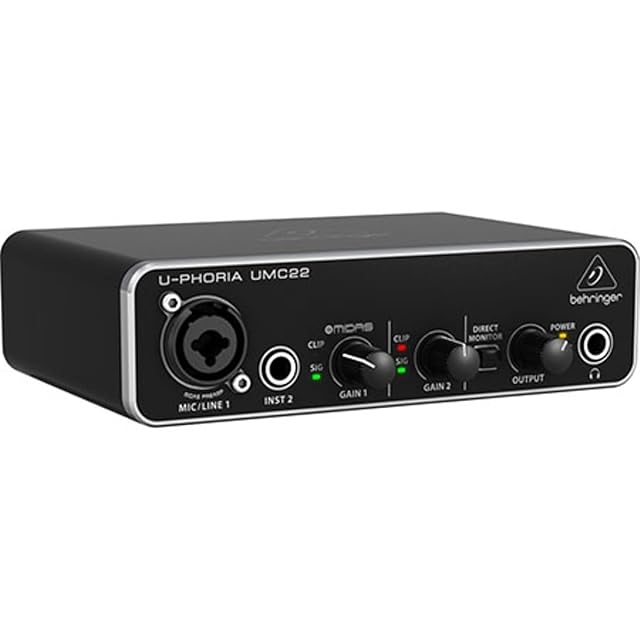
The cheapest honest way into recording: one XLR/TRS combo input with a Midas-designed preamp, a separate instrument input, direct monitoring and USB power. Forty-eight kilohertz, and no pretense beyond it.
Best for: A first interface for one voice or one instrument at a time.
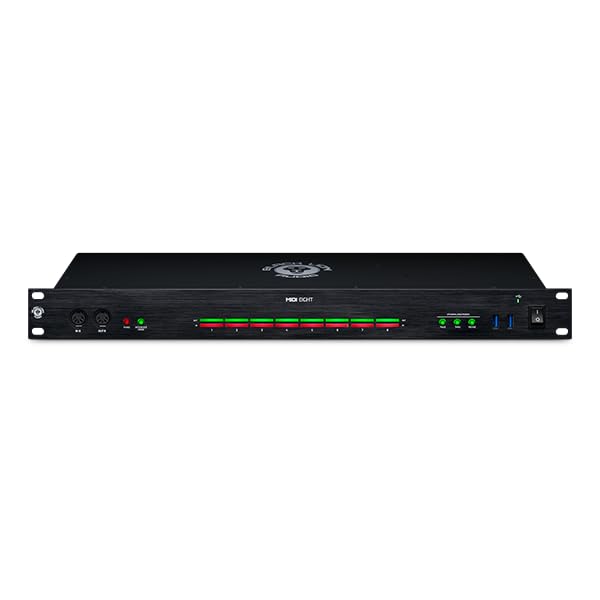
No audio at all · 8 in / 8 out MIDI · three standalone routing modes
The one listing on this shelf that passes no audio: an 8-in, 8-out MIDI interface with three standalone routing modes, per-port activity indicators and front-mounted sockets.
Best for: A studio with more than two MIDI instruments, where the problem is routing rather than recording.
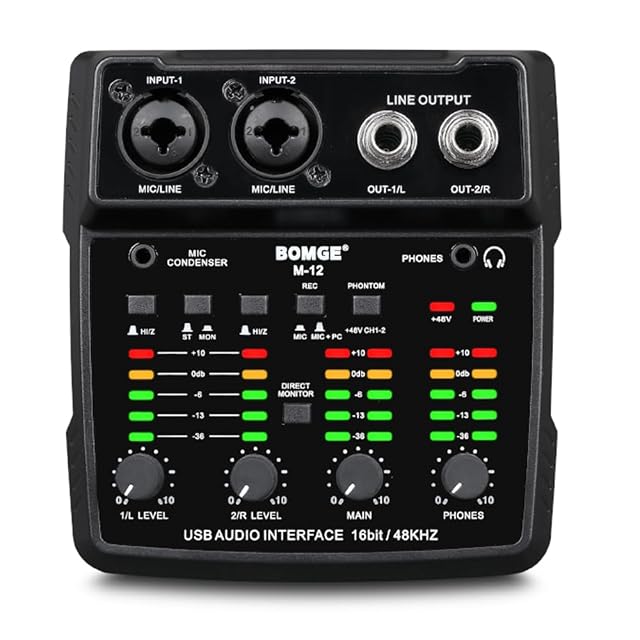
2 channels · 48 V phantom power · gain meter −36 to 10 dB · 3.5 mm (0.14 in) mic input
The least expensive interface on this shelf by a wide margin, with two XLR inputs, 48 V phantom power, a published gain-meter range of −36 to 10 dB, and an extra 3.5 mm (0.14 in) microphone jack.
Best for: A first interface for someone who already has recording software and wants two XLR inputs for the least money.