Novation’s 49-key controller, built around integration with a DAW rather than around a control count — the fourth generation of a design aimed squarely at Ableton Live users.
What it amounts to A current-generation 49-key controller from a strong line — with a listing too thin to say more than that honestly.
The Launchkey line has been one of the two default choices for DAW-integrated controllers for years, and this is its fourth generation in the 49-key size.
What this page cannot do is tell you what the controls are, because the listing does not say. It states 49 keys, USB MIDI and the generation, and nothing else of substance. Where a manufacturer publishes little, this site reports little rather than filling the space with what it assumes.
What the price data does show is unusual consistency: at the time of writing the German, French, Italian and Spanish prices sat within a few dollars of each other, with the UK lower and the US higher. One reference, six stores.
If the control layout is what decides your purchase — and on a controller at this price it should be — read Novation’s own manual for the MK4 before ordering, and compare it against the Arturia above, which publishes its knob, fader and pad counts in full.
In its favor, and its limits
Strengths
49 keys for two-handed playing, in a controller line known for DAW integration
Sold under one reference across all six Amazon stores
The most consistent pricing in this family — under ten per cent spread across the European stores
A current generation rather than old stock
Compromises
This listing is unusually thin: Novation states little beyond keys and connection
Nothing here tells you what the pads and controls do — check the manual before ordering
Specifications
Keys
49
Connection
USB MIDI
Generation
MK4
Amazon reference
B0D6YXHYCX (identical on 6 markets)
EAN
0815301001676
The questions players ask
Why is this page shorter than the others?
Because the listing is. Novation publishes very little on this Amazon page beyond the key count and the connection, and this site does not fill gaps with what it assumes the product does. The manufacturer’s manual is the source to read before ordering.
Launchkey or KeyLab?
Both are 49-key controllers at a similar level. Arturia publishes its control count in full — nine knobs, nine faders, eight pads — while this listing does not, so a like-for-like comparison cannot be made from the listings alone.
Our score
8.4/ 10
A current-generation 49-key controller from a strong line — with a listing too thin to say more than that honestly.
Accessories confirmed for this instrument
Shown because the accessory names this instrument itself.
A reference exists on these Amazon stores: France, Germany, Italy, Spain, United Kingdom, United States. Listed is not the same as in stock — availability changes daily.
Details checked on August 18, 2026.
Who should pick this one, among music instruments and gear
Someone already working in a DAW who wants the hardware to match it.
What buyers actually choose
Amazon reports what buyers took in the month before this page was last checked: at least 100.
The figure is a floor, rounded by Amazon, and read through Keepa — it says what buyers picked, not what a maker claims.
Sources
Specifications: the manufacturer sheet for musical instruments and gear and the matching Amazon product page. Prices and availability: Keepa. Every figure on this page names its source.
25 mini keys · pressure-sensitive MPC pads · full-color screen · USB-C · MIDI Out
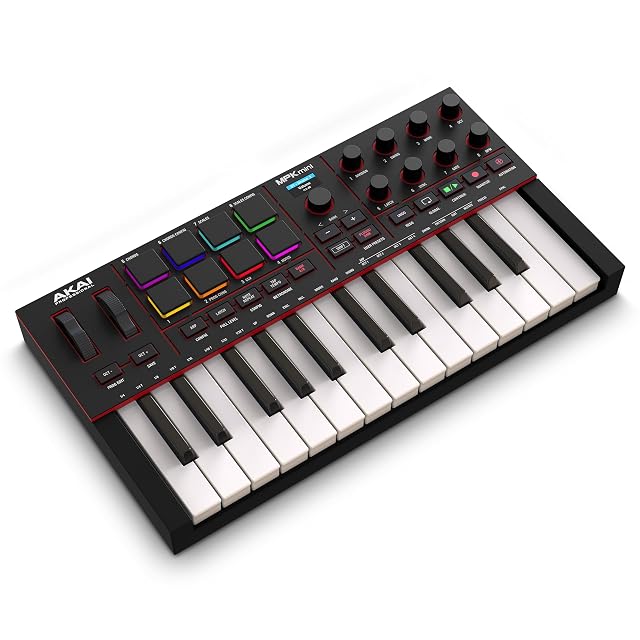
The fourth generation of the MPK Mini, and the only controller here whose pads sense pressure as well as velocity — with a full-color screen, a push/turn encoder, USB-C and a full-size MIDI output.
Best for: Finger-drumming and beat work on a desk, where the pads matter more than the keys.
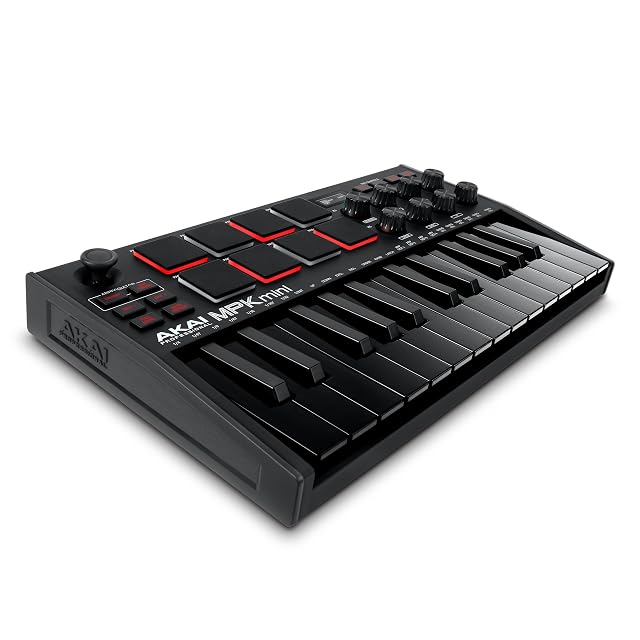
The default small controller: 25 velocity-sensitive mini keys, eight backlit MPC pads, eight 360-degree knobs, a four-way thumbstick, an arpeggiator and NKS integration.
Best for: Beat making and production on a laptop, where pads matter as much as keys.
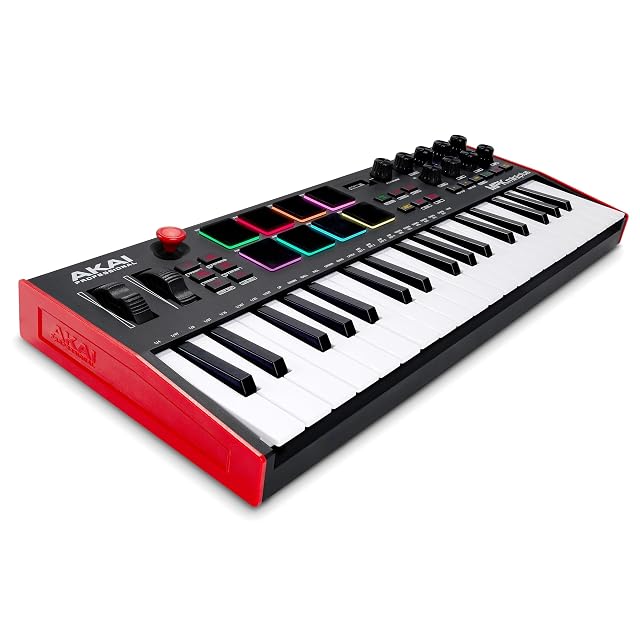
The only controller on this shelf with CV/Gate and the only one with a sequencer: 37 keys, MIDI in and out, a 64-step sequencer with separate drum and melody tracks, and eight RGB MPC pads.
Best for: A desk with hardware on it: a synth, a module or a modular rack that needs a keyboard and a sequencer.