The most expensive microphone here and the only one with 32-bit-era conversion on board: a studio condenser with both XLR and USB-C, the maker’s Revolution preamp, 192 kHz analog-to-digital conversion and a machined aluminum body under a ceramic coating.
What it amounts to A studio condenser that is also a complete digital chain, in a machined body, from a range whose parts stay orderable. Its two most important properties — self-noise and maximum SPL — are published as adjectives, and three cheaper microphones on this shelf publish numbers.
Two connections, and on this microphone they mean two different products. Over XLR it is a capsule and a preamp feeding an interface. Over USB-C it is the whole chain: capsule, Revolution preamp and 192 kHz analog-to-digital conversion inside the body, with nothing between it and the computer.
Three microphones on this shelf have both outputs. This is the only one where the digital path carries its own conversion at a published rate, and 192 kHz is the highest figure on the shelf.
The Revolution preamp is named rather than described, and it is the same preamp RØDE names on a USB microphone already published here — ultra-low-noise and high-gain, which is the combination a quiet voice in a quiet room actually needs. The body is machined aluminum, nickel-plated, under what RØDE calls a military-grade ceramic coating; the practical value of that is less the coating than the range, because a model in a long-running catalog keeps its shock mounts and its spares orderable.
And then the two sentences this page has to report as sentences.
Extremely low self-noise.Self-noise is the figure for a studio condenser. It is the hiss the microphone makes with nothing in front of it, and it sets the floor under every quiet recording. It is normally published in dBA, and it is not published here.
High SPL handling capability. Also unquantified, in the same bullet.
A FIFINE on this shelf at $67.99 publishes a signal-to-noise ratio higher than 80 dB. Another at $36.99 publishes −43 dB of sensitivity and 130 dB of maximum SPL. Neither is a better microphone for it — that is not what a published figure proves. What it proves is that those two can be compared with something, and this one can only be trusted.
The product record gives 52 × 52 × 189 mm (2.05 × 2.05 × 7.44 in) and 308 g (10.9 oz), which for once is a microphone rather than a box: there is no stand and no cable in it.
Availability
Read on the day this page was built: $212 at the American Amazon shop.
Read from Keepa on the day this page was last revised; stock and price both move without notice.
Prices quoted in this text were read on 2026-10-07. The live price is at the top of the page.
In its favor, and its limits
Strengths
Both XLR and USB-C, with the digital conversion in the microphone rather than in an interface
192 kHz conversion on board, the highest sample rate published on this shelf
A machined aluminum body under a ceramic coating, and a range whose spares stay catalogued for years
Compromises
Claims extremely low self-noise and publishes no figure for it, where a microphone at a sixth of the price publishes a signal-to-noise ratio
Claims high SPL handling and publishes no figure, where two microphones here publish 130 dB
No polar pattern in the bullets read, which is true of four of the five XLR microphones on this shelf
Specifications
Type
Studio condenser
Connections
XLR and USB-C — one of three microphones on this shelf with both, and the only one where the USB path carries its own conversion
Conversion
Up to 192 kHz analog-to-digital, on board — the highest sample rate published on this shelf
Preamp
RØDE’s ultra-low-noise, high-gain Revolution preamp — the same preamp named on a USB microphone already on this shelf
Body
Machined high-grade aluminum with nickel plating and a military-grade ceramic coating
Self-noise
Described as extremely low and not published as a figure. Two microphones on this shelf publish a sensitivity and one publishes a signal-to-noise ratio
Maximum SPL
Described as high and not published as a figure. Two microphones on this shelf publish 130 dB
Dimensions
52 × 52 × 189 mm (2.05 × 2.05 × 7.44 in), from the product record
Pattern
RØDE puts nothing in writing on this in the bullets read.
Manufacturer reference
NT1GEN5B
Amazon reference
B0BQHHZ1QQ
EAN
0698813009770
The questions players ask
Why does it have both XLR and USB-C?
So the microphone is not the thing that has to be replaced. On USB it is a complete chain — capsule, Revolution preamp and 192 kHz conversion in one body, straight into a computer. On XLR it is a capsule and a preamp feeding whatever interface arrives later. Three microphones on this shelf have both outputs; this is the only one whose USB path carries conversion of its own rather than a generic chip.
It says “extremely low self-noise”. How low?
The listing does not say, and that is the one criticism this page has of it. Self-noise is the figure for a studio condenser — the hiss the microphone makes on its own, which sets the floor under every quiet recording — and it is normally published in dBA. The same bullet claims *high SPL handling capability* without a decibel figure either. A FIFINE at a sixth of the price publishes a signal-to-noise ratio above 80 dB, and another publishes −43 dB of sensitivity and 130 dB of maximum SPL. The claims here are almost certainly true; they are simply not comparable.
Accessories confirmed for this instrument
Shown because the accessory names this instrument itself.
Who should pick this one, among music instruments and gear
A voice that will be recorded for years, where the one microphone has to work on a laptop today and an interface later.
What buyers actually choose
Amazon reports what buyers took in the month before this page was last checked: at least 400.
The figure is a floor, rounded by Amazon, and read through Keepa — it says what buyers picked, not what a maker claims.
Sources
Specifications: the manufacturer sheet for musical instruments and gear and the matching Amazon product page. Prices and availability: Keepa. Every figure on this page names its source.
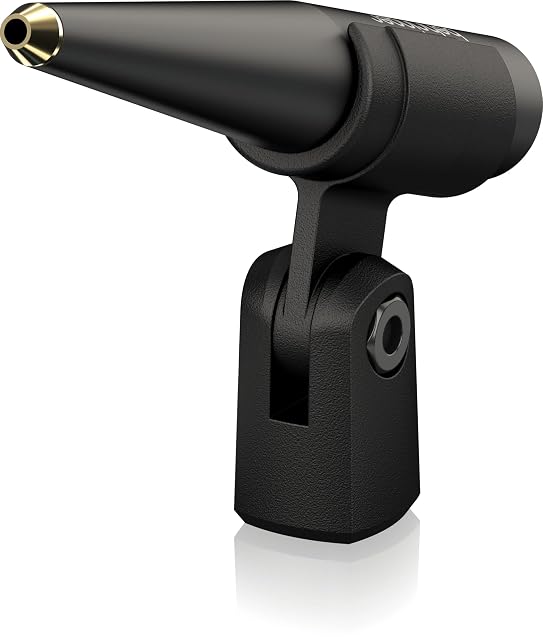
The thinnest listing on this shelf by a distance: a condenser microphone whose single bullet is its own title, with no pattern, no diaphragm, no sensitivity, no SPL and no power requirement published anywhere.
Best for: A buyer who already knows this microphone, because the listing answers nothing about it.
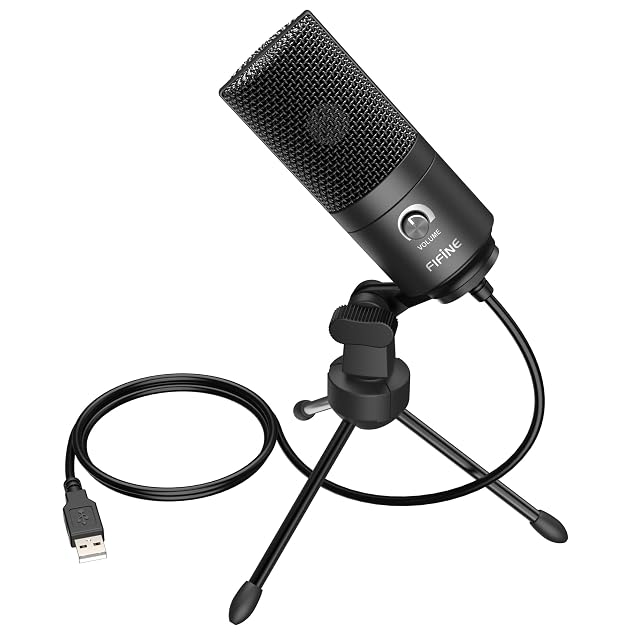
USB condenser · cardioid · tripod included · volume knob
A metal-bodied USB condenser with a tripod stand and its own volume control, sold at a price where the alternative is usually a headset. Cardioid, and stated as PC, Mac, PS4 and PS5 compatible.
Best for: A first microphone for calls, streaming and rough demos on a computer.
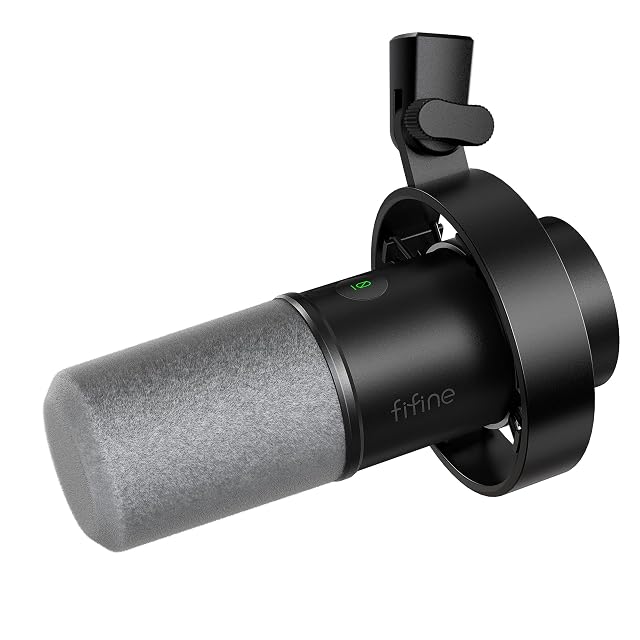
Dynamic · XLR and USB · S/N above 80 dB · 130 dB SPL · tap-to-mute · headphone monitoring
A dynamic microphone with both XLR and USB outputs, a signal-to-noise ratio above 80 dB, a 130 dB maximum SPL, tap-to-mute and gain on the body, and a 3.5 mm (0.14 in) headphone socket with its own volume control.
Best for: A podcast or a stream that starts on USB and moves to an interface later, where the mute button needs to be a button.