Skip to content

The best studio headphones

Closed back for recording, open back for mixing. All three of these are closed, and what separates them is what the manufacturer publishes and what can be replaced.

The pair that publishes its numbers

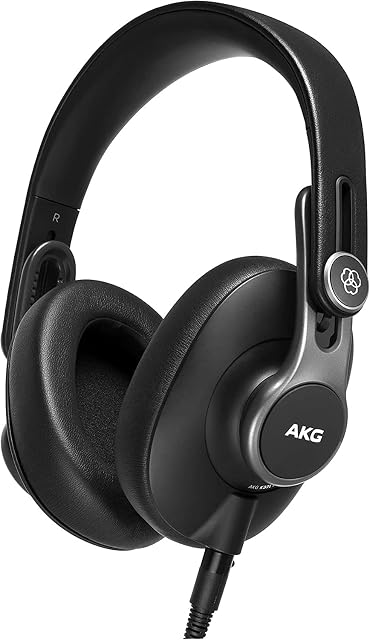
The AKG K371 states 32 ohms and 114 dB SPL/V at 1 kHz, which together mean a laptop drives them properly. Most manufacturers in this bracket publish neither, and those two figures are exactly what decides whether a pair works with what you own.

The pair that can be repaired

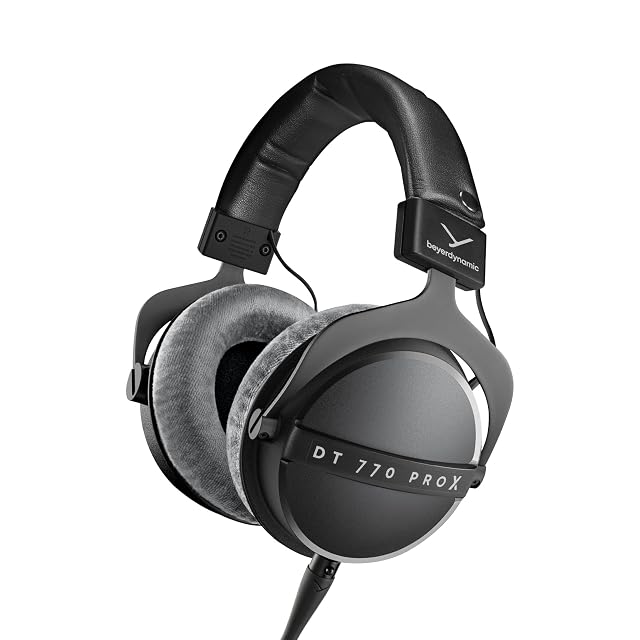
The beyerdynamic DT 770 PRO X has a detachable cable, which turns the most common failure in studio headphones into a cheap spare part, and beyerdynamic sells the earpads separately. That is what makes a pair last ten years.

The budget pair that is not disposable

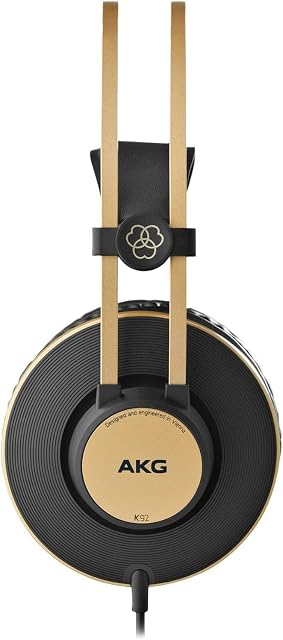
The AKG K92 has replaceable, washable earpads at around seventy dollars, which is rare. AKG also states a slight low-frequency lift — pleasant to practice with, wrong for judging a mix, and honest to print.

What we would not do

We would not buy studio headphones with a fixed cable and unavailable pads. Both parts fail, and both are cheap when the maker sells them.

Which instrument fits how you play?

You record with a microphone open
Closed-back headphones, because open ones spill into the microphone.
You mix and edit
Open-back headphones give a more natural stereo image and less listening fatigue.
You do both
Closed for recording, open for mixing, is the conventional pair. One set is always a compromise.
You use them for long sessions
Comfort and clamping force decide more than frequency response does.

Picking by how you play

Recording

Closed-back, so the click track and backing do not leak into the microphone. It is the practical requirement, not a preference.

Mixing

Open-back, where the wider image and lower fatigue make long sessions possible. They are useless around an open microphone.

Practicing an instrument

Comfort and isolation matter, and accuracy matters less. Any comfortable closed pair does.

Checking a mix elsewhere

Headphones are consistent between rooms, which is their real advantage over speakers in an untreated space.

The things you will notice while playing

Closed or open back
The decision that governs everything. Closed isolate and leak less; open sound more natural and leak freely.
Comfort and clamping force
You wear these for hours. A pair that pinches is a pair you take off, and no frequency response compensates.
Impedance and what will drive them
High impedance headphones need a decent amplifier. Plugged into a phone or a weak output they sound thin and quiet.
Replaceable parts
Earpads and cables wear out long before the drivers do. Headphones with available parts last for years; sealed ones become disposable.
Cable type
Coiled, straight, detachable. It is mundane and it is the part that fails, usually at the plug.

Which figure for which playing

What you doThe typeWhy
Recording with a micClosed backNo spill into the microphone
MixingOpen backWider image, less fatigue
Long practiceComfortable closedIsolation and comfort
Checking a mixEither, consistentlyHeadphones travel; rooms do not

The mistakes players make

Using open-back headphones to record
They leak, and the microphone records the leakage. It is audible on quiet passages and impossible to remove afterwards.
Mixing at high level
Headphones sit against the ear and loud mixing damages hearing quickly. It also skews decisions, because loud always sounds better.
Ignoring impedance
High impedance headphones on a weak output sound thin, and people conclude the headphones are poor when the amplifier is the problem.
Buying sealed headphones with no spare parts
Pads and cables are consumables. Headphones whose parts cannot be replaced have a shorter life for no good reason.

By the musician you are

The home recordist
One comfortable closed pair. It is the pair you need first and the one you use most.
The mixer
Open-back, and time spent learning how they translate to speakers.
The long-session player
Comfort above everything: weight, pad material and clamping force decide whether you finish the session.

Care, keys and how long it stays good

Headphones are killed by their cables and their earpads, not their drivers. A cable that has been yanked from a socket fails at the plug, and worn pads change the sound as much as they change the comfort.

  • Replace earpads when they flatten or crack: sound and comfort both depend on the seal.
  • Unplug by the plug, never by pulling the cable.
  • Store them on a hanger rather than crushed in a bag.
  • Keep them out of prolonged damp: foam and pleather degrade fastest in it.

Safety

The single hearing risk in a home studio that is entirely within your control.

  • Set a level you could hold a conversation over, and take breaks.
  • Turn the level down before connecting or disconnecting anything.
  • Be aware that headphones remove your awareness of the room around you.
  • Stop and rest if you notice ringing after a session rather than continuing.

The choices, and the reasoning

  1. AKG K371

    Closed back · 50 mm (1.97 in) drivers · 32 ohms · foldable

    AKG’s closed-back reference: 50 mm (1.97 in) drivers, 32 ohms and a stated 114 dB SPL/V sensitivity, tuned towards the AKG Reference Response curve. Low impedance, so it also works from a laptop.

    Best for: One pair for recording and for checking a mix, driven from an interface or a laptop.

    8.4/10

    ≈ $190

  2. beyerdynamic DT 770 PRO X

    Closed back · STELLAR.45 driver · detachable cable

    The closed-back studio standard, rebuilt around beyerdynamic’s STELLAR.45 driver and given a detachable cable. Made in Germany, and designed to be worn for hours rather than minutes.

    Best for: Recording, where leakage into the microphone is the thing that ruins takes.

    8.4/10

    ≈ $230

  3. AKG K92

    Closed back · 40 mm (1.57 in) drivers · low impedance

    The cheapest way into closed-back monitoring here. AKG states 40 mm (1.57 in) drivers, a low impedance chosen so phones and interfaces can drive it, and replaceable earpads at a price where that is unusual.

    Best for: A second pair, a practice pair, or a first pair on a strict budget.

    7.2/10

    ≈ $70

The questions players ask

Why do my headphones sound quiet on my laptop?

Usually impedance. A 250-ohm pair driven from a phone or a laptop sounds thin and quiet; a 32-ohm pair does not. It is a specification, not a fault.

Closed or open?

Closed keeps the backing track out of the microphone, which is why it is used for recording. Open sounds more spacious and leaks in every direction, which is why it is used for mixing and never for tracking.

Can one pair do everything?

A comfortable closed pair covers most home needs. The conventional answer is two pairs, and the practical answer for most people is one good closed pair first.

What is impedance and does it matter?

High impedance headphones need a decent amplifier to sound their best. On a weak output they sound thin, and the headphones get blamed.

Can I mix on headphones?

Yes, and many people do, especially in untreated rooms. It takes time to learn how your headphones translate to speakers.

How loud is too loud?

If you could not hold a conversation over the level, it is too loud for a long session. Headphones sit against the ear and the damage is cumulative.

Do earpads matter?

A great deal: the seal affects the bass response as much as it affects comfort. Worn pads change the sound and are cheap to replace.

Each instrument, and the player it answers

AKG K371 · $190

For players who: One pair for recording and for checking a mix, driven from an interface or a laptop.

Its finest point: 32 ohms is low enough to be driven properly by a laptop or an interface headphone output

Its weakest point: Foldable hinges are one more mechanical part than a fixed headband has

Read the full review →

beyerdynamic DT 770 PRO X · $230

For players who: Recording, where leakage into the microphone is the thing that ruins takes.

Its finest point: A detachable cable removes the single most common cause of death in studio headphones

Its weakest point: This listing does not state impedance, so the figure is not repeated here

Read the full review →

AKG K92 · $70

For players who: A second pair, a practice pair, or a first pair on a strict budget.

Its finest point: Around seventy dollars, and the only pair here whose earpads are published as replaceable and washable

Its weakest point: AKG describes a slight bass lift, so it is not the pair to judge low-end balance on

Read the full review →

What to get with it

Stands, pedals and cables from the same aisle, at the price we read. Confirm they suit the instrument you choose before ordering: it turns on the fitting and the part number, which the product page gives.

  • CME C2MIDI Pro · Cables & adapters — USB-C MIDI · 32-bit processor · filter, map, route · works with no computer
  • Cyberguys! 190 0027 · Cables & adapters — 3.5 mm (0.14 in) TRS to 6.35 mm (0.25 in) TRS · 3.3 ft · oxygen-free copper · braided
  • AudioSilk Room Kit, Natural · Acoustic treatment — 4 panels at 46 × 23 in · recycled polyester, not foam · removable strips, sold separately
  • DMSKY 18-pack 12 × 12 in · Acoustic treatment — 18 panels · 12 × 12 × 0.4 in · polyester fiber, not foam · 45° chamfered edges

If you want one line

  • If what you want first is the price → look at AKG K92
  • If what you want first is our rating → look at AKG K371

Comparisons worth hearing out

Instrument against instrument, where that page is already written.

What stands behind this ranking

What is listed is taken from the catalog of this site. Specifications come from the manufacturer and from the Amazon listing; prices are what Keepa reported on the date shown, and both move. The order follows declared specifications, stated strengths against stated limits, and price. Nothing here has been played or recorded with by us, and no page pretends otherwise.

Last checked on

Prices quoted in these summaries are dated readings. The live price is shown next to each product.

The tool we use ourselves

Chosen your instrument? Now buy it at the right price.

Digital pianos and electronic drum kits swing by a hundred dollars or more across the year, and the biggest "discounts" often land at prices the same model sold for six weeks earlier. UniverTrack tracks the real price history across retailers, spots fake reductions, and alerts you when it is genuinely the moment to buy.

Real price historyBuy-now alertsAI buying assistant
Try free for 14 days →
No commitment · Cancel in one click · 5 languages